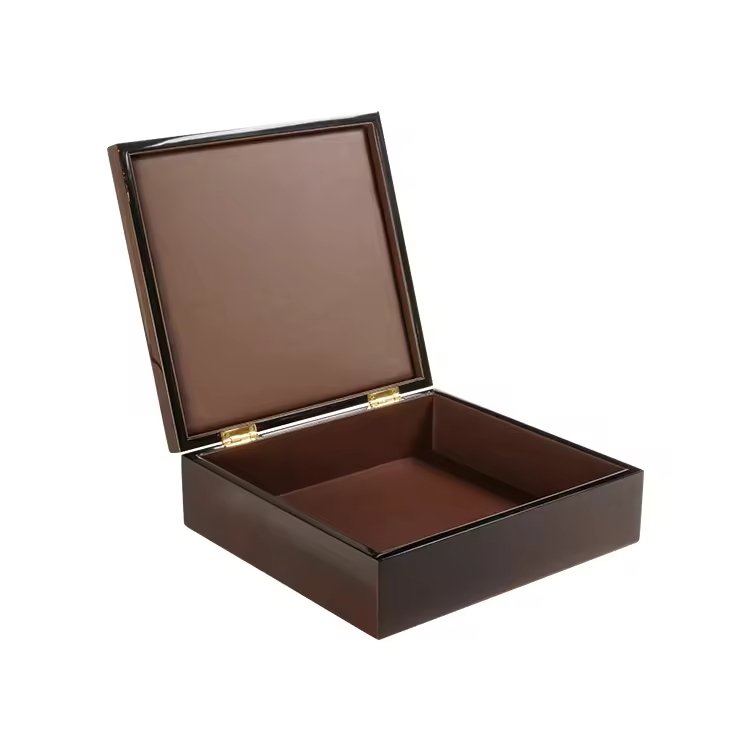

Drawer-style cigar boxes look elegant and feel convenient. But can they hold humidity as reliably as traditional lid designs?
Yes, a drawer-style design can work well for cigar storage—if the structure includes sealing elements, precise joinery, and airflow control to keep humidity stable.
Without proper sealing, drawers can let moisture escape through gaps or moving parts. Let’s break down when this design works—and how to do it right.
What advantages does a drawer-style cigar box bring in terms of access and organization?
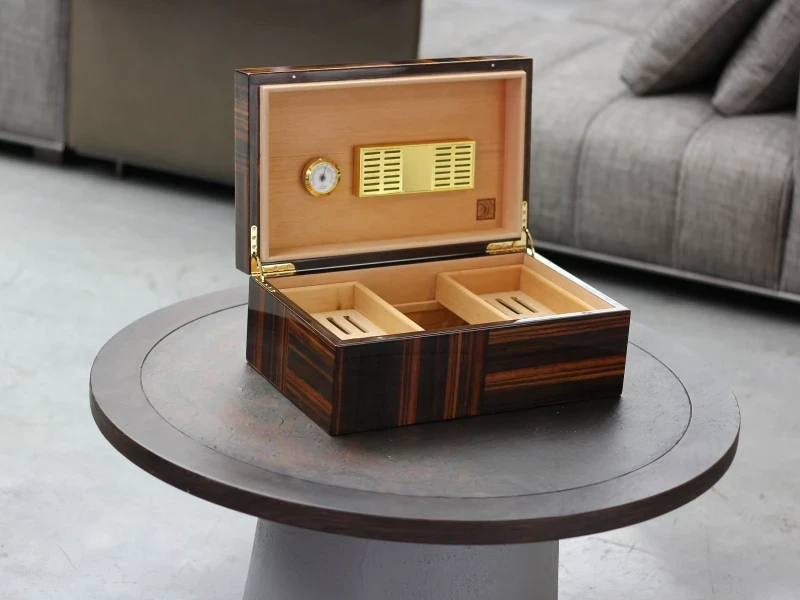
Drawer designs feel premium and make organizing cigars easier. They also add a sense of ritual and refinement to the unboxing experience.
A drawer layout offers smooth access, tiered storage, and stylish presentation—ideal for collectors, gift packaging, and retail display.
Key Benefits:
| Feature | Benefit |
|---|---|
| Slide-Out Access | Easy cigar retrieval without lid removal |
| Multiple Compartments | Store different vitolas separately |
| Flat Top Surface | Allows stacking or display |
| Modern Aesthetic | Sleek, minimalist, upscale appearance |
We often recommend drawer designs for gift boxes, display humidors, or multi-layer collectors’ cases. For cigar brands, it adds a luxury touch and stands out on the shelf. For personal use, it helps organize cigars by size, wrapper, or age.
How do drawer gaps and sliding tracks influence airtightness compared to hinged lids?
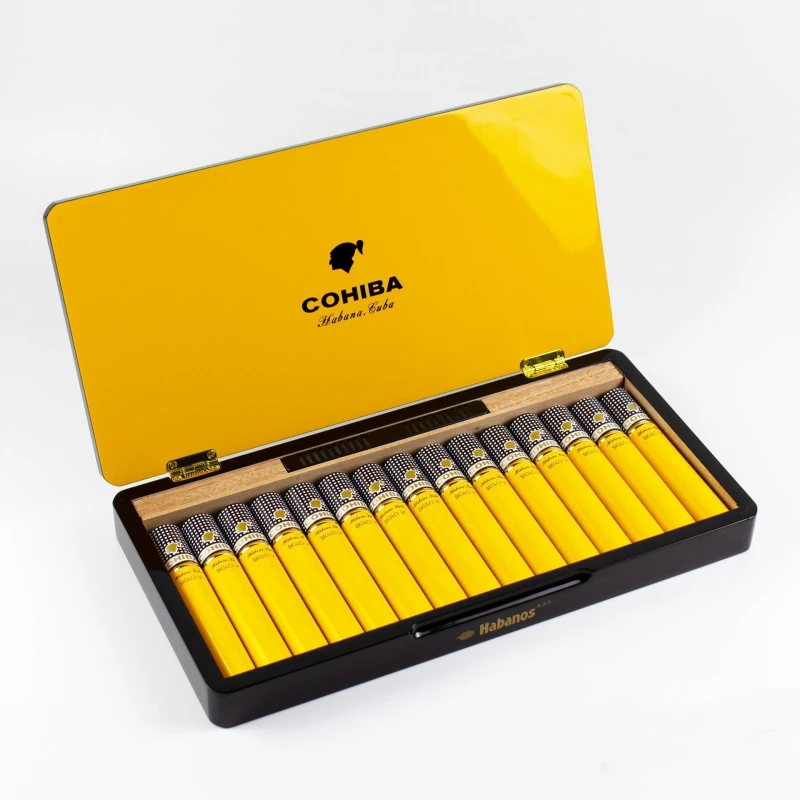
Unlike hinged lids, drawers create multiple air gaps—around the front face, along the sides, and at the base rail.
Drawer-style boxes generally have more potential for air leakage than hinged lids unless carefully sealed at every contact point.
Drawer vs Lid: Airtightness Comparison
| Design Aspect | Hinged Lid Box | Drawer-Style Box |
|---|---|---|
| Top Seal | Single lid seam | 3-4 surrounding edges |
| Closure Pressure | Hinge and gravity | Friction or guides |
| Potential Leak Points | 1–2 zones | 4–6 zones |
| Natural Airflow Path | Vertical | Horizontal |
To reduce leakage, drawer rails must be tight-fitting and ideally include soft seals or felt. Otherwise, even small gaps will lead to fast moisture escape.
In one test we ran, an unsealed drawer box lost 9% RH in 24 hours—compared to only 2% in a sealed lid box. Sealing strategies are key to making drawer designs viable.
What sealing methods (gaskets, felt, magnetic guides) can improve drawer humidity control?
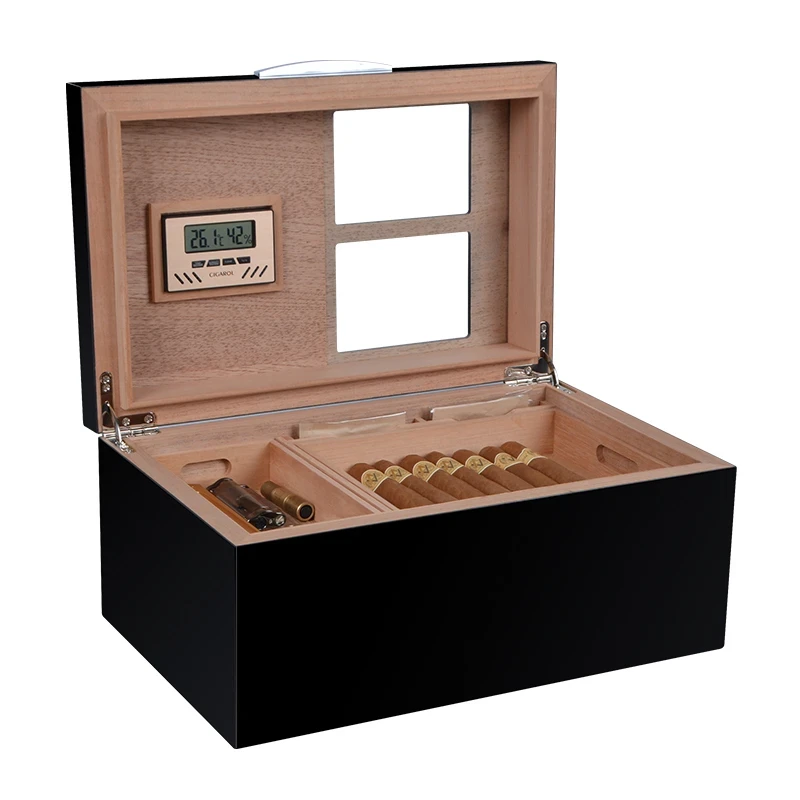
To work well, a drawer box needs more than just tight wood joints. It needs passive sealing layers around its frame.
Use felt strips, soft foam gaskets, and magnetic rails to reduce airflow and create an airtight drawer channel.
Effective Sealing Methods:
| Method | Function | Best Placement |
|---|---|---|
| Felt Tape | Soft edge seal, friction buffer | Drawer edges, top rail |
| Foam Gasket | Compresses to block air gaps | Frame perimeter |
| Magnetic Rails | Keeps drawer snug against back wall | Side or rear runners |
| Brush Strip (velvet) | Soft friction + particle barrier | Drawer top + back |
| Cedar Inlay Stopper | Adds pressure and aroma | Inner front panel |
In premium drawer builds, we often combine felt + magnet + wood overlap. This way, the drawer “clicks” into a soft stop, stays sealed, and opens smoothly without external hardware.
Avoid plastic seals, as they often emit odor and interfere with the cedar’s natural humidity function.
Does frequent sliding open/close cause faster moisture loss than a traditional lid?
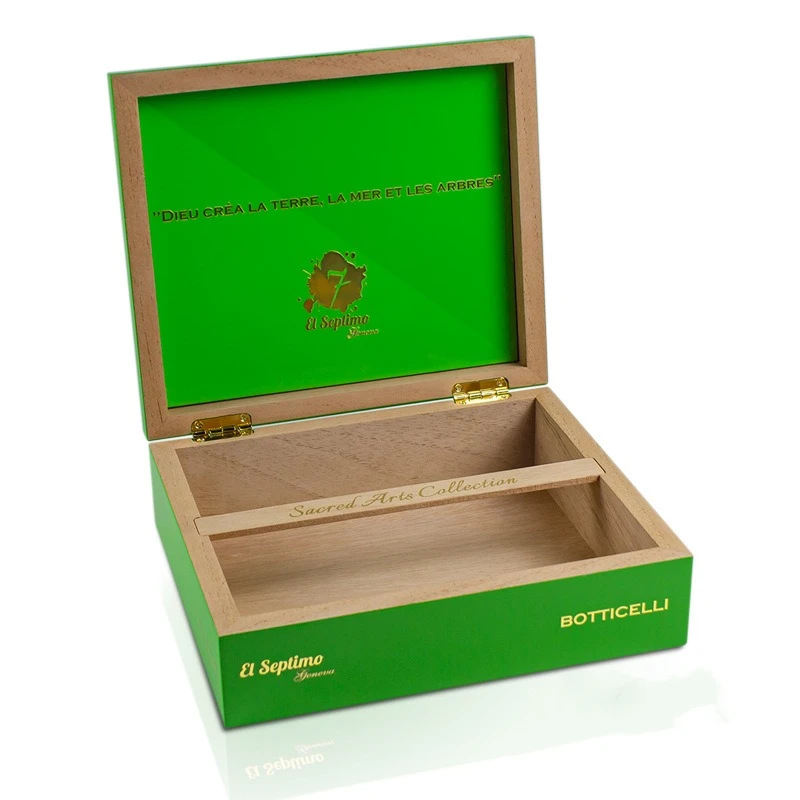
Every time you open a cigar box, some humid air escapes. With drawers, opening involves pulling out a large section—possibly exposing cigars more than a hinged lid would.
Yes, frequent drawer sliding can cause faster humidity loss—especially if there’s no seal or the box is opened multiple times a day.
Key Differences:
| Action | Air Exposure Area | Impact on RH |
|---|---|---|
| Open Lid | Top only | Limited vapor escape |
| Pull Drawer | Front + top + sides | Higher vapor exchange |
To reduce this risk:
- Limit drawer opening distance with stoppers (e.g., 2/3 extension)
- Use inner tray covers or cedar flaps over cigars
- Add slow-release humidifiers that replenish RH gradually
We also suggest keeping drawer boxes in stable room environments (not near HVAC or sunlight) so that every opening doesn’t cause a drastic RH imbalance.
How do material choices and precision joinery reduce air leakage in drawer designs?
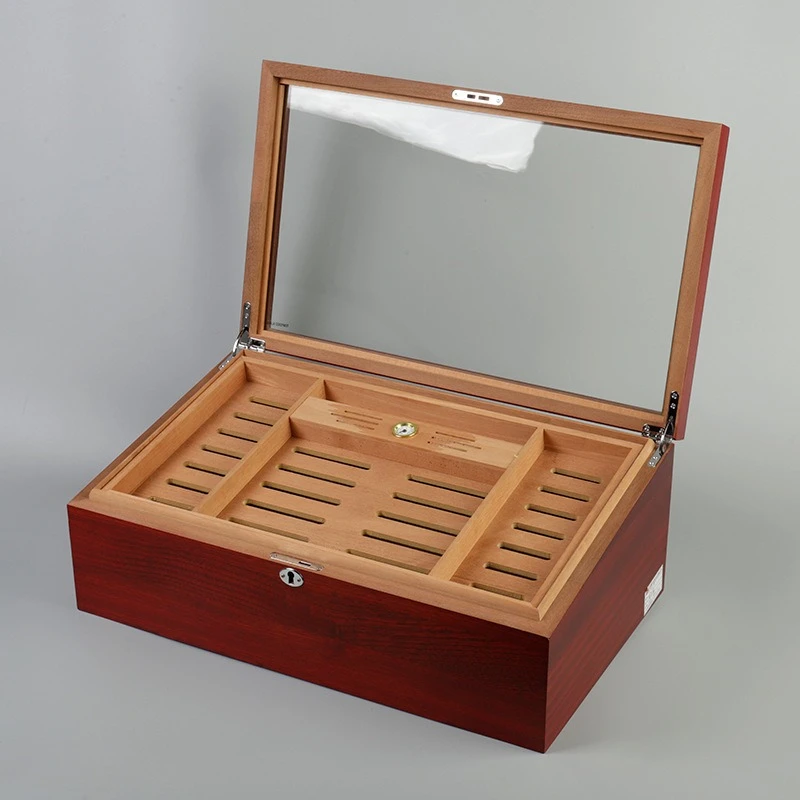
Loose wood rails, uneven corners, and rough drawer edges all increase the chance of leaks.
Using stable materials like MDF or well-seasoned cedar, plus tight CNC or dovetail joinery, ensures a smooth fit that holds humidity better.
Best Practices for Drawer Construction:
1. Material Selection
- Spanish Cedar (solid or veneered): balances humidity naturally
- MDF core with cedar veneer: less expansion, perfect for runners
- Avoid okoume or low-grade plywood—they warp easily
2. Precision Joinery
- Tongue and groove rails: control drawer movement and sealing
- Dovetail sides: add strength and reduce lateral play
- Routered front lip: creates air pressure resistance at final close
3. Edge Buffing
- All sliding surfaces should be finely sanded and waxed to avoid scratches or gaps over time
I personally prefer veneered MDF for outer structure and solid cedar inside—this hybrid gives the best structural stability without losing the cedar’s aroma and breathability.
What tests can verify whether a drawer-style box maintains consistent RH for cigars?

Beautiful boxes aren’t enough. To be reliable, drawer-style cigar boxes must pass tests that simulate real use.
Test the drawer box using RH sensors, sealed packs, and real-use opening cycles to ensure humidity stays consistent.
Recommended Testing Workflow:
| Test Type | Description | Pass Criteria |
|---|---|---|
| RH Stability Test | Place a 69% Boveda + digital hygrometer inside | ±3% RH over 5–7 days |
| Drawer Open Test | Open drawer 3×/day, log RH recovery after 10 mins | Full recovery within 30 mins |
| Salt Test (Multi-zone) | Place salt packs in front/back of drawer | <4% RH difference across zones |
| Drop Test | Drop box from 40cm while closed | Drawer should stay sealed |
| Cycle Test | Slide drawer open/close 500 times | No looseness or alignment shift |
We log all this data in our QC reports, especially for export humidors. With drawer designs, even a 1mm misalignment can break the seal, so every prototype gets real-world simulated use before production.
Conclusion
Drawer-style cigar boxes can be both beautiful and functional—if you engineer the details. Smart sealing, joinery, and testing make all the difference.
Brand Name: WoodoBox
Slogan: Custom Wooden Boxes, Crafted to Perfection
Website: www.woodobox.com
WhatsApp: +86 18359265311




 English
  Español
  Português
  Deutsch
  Français
  Italiano
  العربية