Internal dividers help organize cigars—but if not designed carefully, they might block airflow and ruin humidity balance.
Yes, cigar box dividers are useful for sorting and protection. But they must be breathable, well-placed, and humidity-friendly to avoid creating “dry zones.”
While dividers offer structure, they also influence how moisture moves through the box. Let’s look at how to design partitions that help—not hurt—your cigars.
In what scenarios are dividers truly useful (size sorting, travel, protection)?
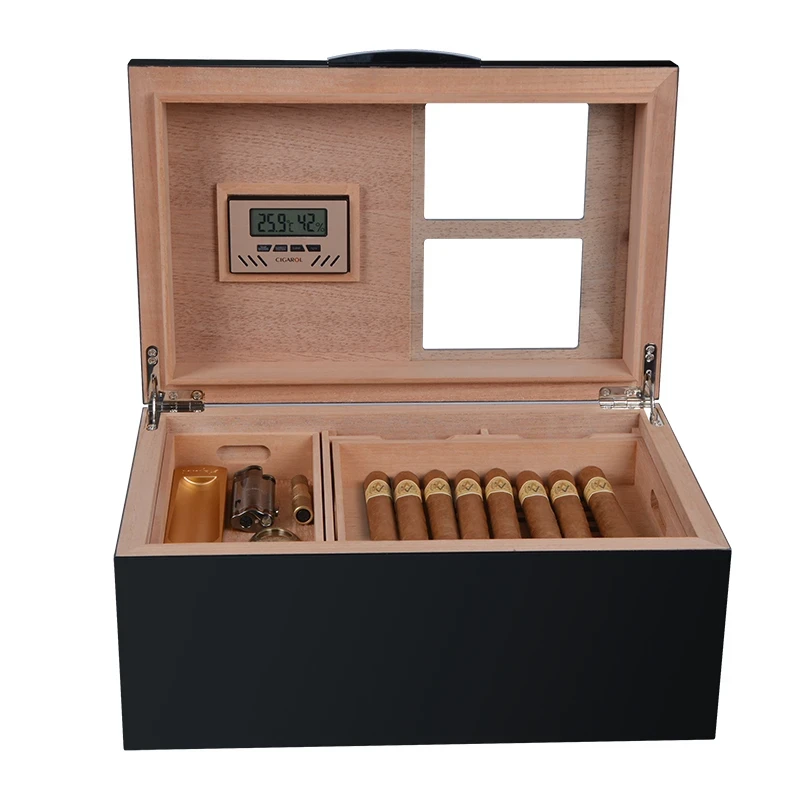
Not every box needs dividers. But for certain users, they make a big difference in storage quality, convenience, and safety.
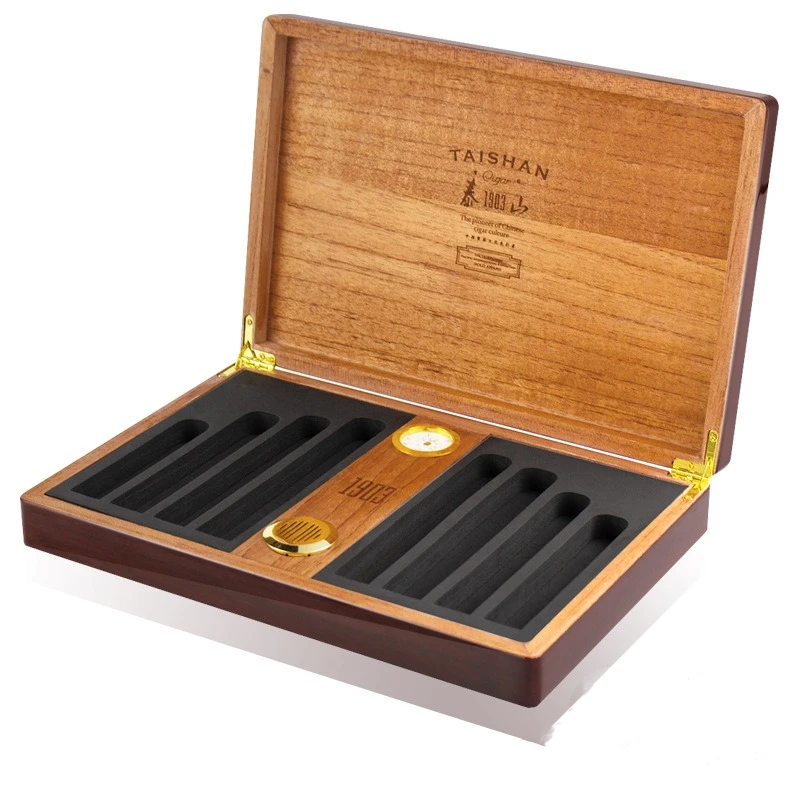
Dividers are especially helpful in mixed-size collections, travel boxes, or retail packaging where cigars must stay separated and intact.
Common Use Cases for Dividers:
| Scenario | Divider Purpose |
|---|---|
| Retail Display | Present cigars in rows or groups |
| Travel Boxes | Prevent cigars from sliding/moving |
| Mixed Sizes/Brands | Keep formats sorted (robusto, toro) |
| High-Value Storage | Protect wrapper leaf from damage |
In our workshop, we recommend dividers for:
- Boxes holding over 10 cigars
- Mixed ring gauge boxes
- Any situation where cigars shift during transport
For personal humidors, they also help create visual structure and reduce physical contact between cigars, which prevents wrapper friction.
How do partitions change airflow and moisture diffusion inside the box?

Dividers don’t just hold cigars—they change the way air moves. If the design blocks moisture flow, cigars can dry out unevenly.
Partitions alter airflow and vapor movement. Solid dividers can create stagnant pockets, while ventilated or spaced designs keep RH more even.
Cedar naturally balances humidity by absorbing and releasing moisture. But if moisture from a humidifier can’t flow freely, some cigars stay dry while others over-absorb.
Airflow Impact Summary:
| Divider Type | Airflow Result |
|---|---|
| Solid Cedar Panels | Blocks cross-flow, risks RH layering |
| Slotted Rails | Encourages smooth side-to-side airflow |
| Bottom-Raised Grid | Allows under-cigar vapor diffusion |
| Removable Trays | Support airflow but may block vertical |
We ran a test with two boxes:
- One with solid cedar dividers
- One with perforated slotted rails
After 5 days, the box with slotted dividers had only ±2% RH variation, while the solid one had nearly 7% between compartments.
What divider designs (slots, adjustable rails, perforations) keep RH more even?
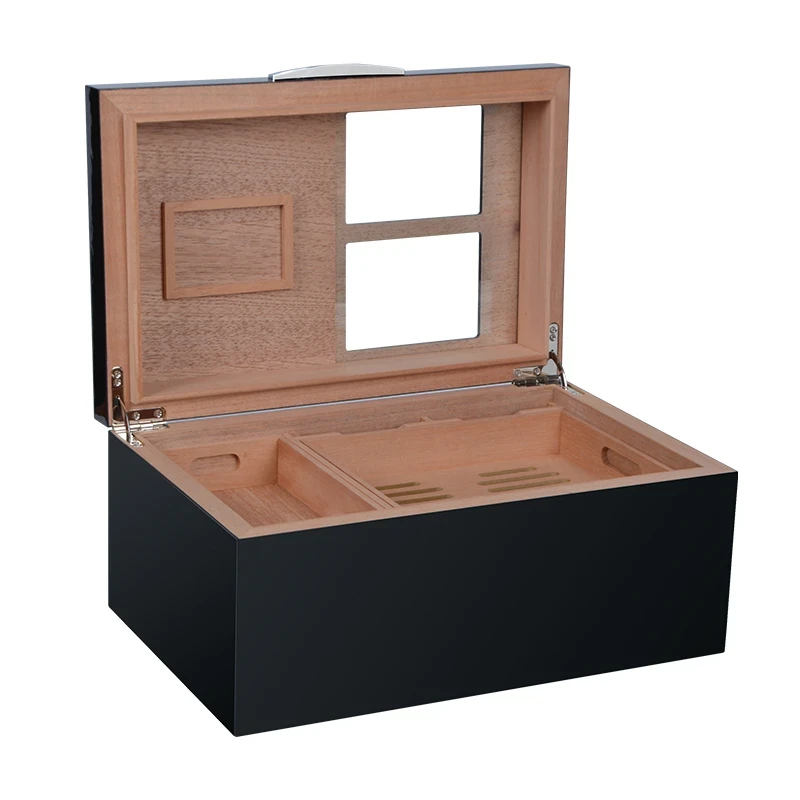
Design matters more than people think. It’s not just about wood walls—it’s about how air and vapor can travel through and around them.
Use open slats, adjustable rails, or perforated cedar panels to create flexible layouts without trapping moisture.
Ideal Divider Designs:
1. Slotted Vertical Panels
- Evenly spaced openings every 10–15mm
- Allows side-to-side vapor movement
- Easy to make with CNC or laser cutter
2. Perforated Cedar Trays
- Multiple cigar rows with drilled base holes
- Keeps cigars off the base
- Ideal for large humidors
3. Adjustable Rail System
- Cedar rails with routed grooves
- Insert/remove panels based on cigar size
- Great for collector editions
4. Floating Crossbars
- Cedar bars suspended 3–5mm above base
- Minimal contact with cigars
- Good for boxes under 10 cigars
We often advise customers to avoid full-height solid dividers. Instead, keep the height slightly lower than the cigars themselves, leaving headroom for air to circulate.
Do tight compartments create “microclimates,” and how can we prevent them?

Over-partitioning can backfire. Tight spaces with poor flow act like isolated cells—what we call “microclimates.”
Yes, tight compartments can create uneven humidity zones. To prevent this, ensure each section has open sides, top clearance, and airflow pathways.
This happens often in boxes with many compartments, especially when each cigar is boxed individually or isolated with hard walls.
Signs of Microclimates:
- One section always dries out faster
- RH sensors in different areas show 5%+ difference
- Cigars feel unevenly firm depending on location
Prevention Strategies:
- Use horizontal slats instead of full walls
- Add 1–2mm gaps between divider ends and box walls
- Keep top clearance of 3–5mm above cigar head
- Avoid gluing dividers directly to the base—use floating rails
We once built a collector’s box with 20 compartments. Early tests showed that corner compartments stayed at 61% RH while the center stayed at 67%. After replacing solid panels with slotted dividers, the variation dropped to just 1.8%.
Which materials and thicknesses for dividers best balance structure and breathability?

Cedar is the gold standard—but not all cuts are suitable. Thickness and flexibility also impact airflow and structural strength.
Use 4–6mm thick Spanish cedar or veneered MDF for dividers. These offer breathability, aroma, and structural integrity.
Material Comparison Table:
| Material | RH Stability | Aroma Impact | Structural Strength | Notes |
|---|---|---|---|---|
| Solid Spanish Cedar | Excellent | Strong | Moderate | Preferred for small dividers |
| Cedar Veneered MDF | Very Good | Moderate | High | Great for CNC or trays |
| Okoume | Poor | Neutral | Good | Not recommended |
| Acrylic | Blocks RH | None | High | Only for display-only boxes |
For dividers over 200mm long, veneered MDF offers better dimensional stability. For smaller modular sections, solid cedar is preferred for aroma and breathability.
Always seal or sand edges smoothly to avoid splinters. If using slot-in dividers, we allow a 0.2–0.3mm tolerance for wood expansion in high-humidity environments.
How can we test humidity uniformity (sensor mapping, simple salt tests) and fine‑tune the layout?
Guesswork doesn’t work. You need to test how your divider layout affects actual humidity performance.
Place multiple RH sensors across zones, or use salt packs, to measure and adjust for even humidity.
Testing Methods:
1. Sensor Mapping
- Place 3–5 digital hygrometers in different sections
- Log RH over 72–120 hours
- Chart differences and airflow patterns
2. Salt Test (Low Cost)
- Place identical salt-based RH packs (e.g., 69% Boveda) in multiple zones
- Observe weight change or RH feedback
3. Touch Test
- After several days, gently squeeze cigars from different zones
- Look for differences in firmness, aroma, and wrapper texture
4. Humidity Dye Paper (Advanced)
- Insert paper that changes color at specific RH levels
- Provides visual mapping of uneven zones
Once we find a dry or “wet” spot, we adjust by:
- Increasing perforation in nearby dividers
- Reducing wall height slightly
- Replacing solid panels with slotted ones
Humidity is not just science—it’s an art of balance. With testing, you can fine-tune any design.
Conclusion
Dividers can protect and organize cigars—but only if they support airflow and moisture balance. Design them right, and your cigars stay fresh and beautiful.
Brand Name: WoodoBox
Slogan: Custom Wooden Boxes, Crafted to Perfection
Website: www.woodobox.com
WhatsApp: +86 18359265311


 English
  Español
  Português
  Deutsch
  Français
  Italiano
  العربية