I know many new cigar lovers struggle with dry humidors because the wood pulls moisture from the cigars. This small problem often ruins good cigars fast.
You season a humidor to let the dry wood absorb moisture first. This helps the humidor hold stable humidity and protect your cigars from drying out or cracking.
When the humidor is ready, your cigars age slowly and stay full of flavor. This step looks simple, but it decides the long-term performance of the box.
Why does a humidor need seasoning before storing cigars, and what happens if you skip this step?
I see many people skip seasoning because they think new wood is fine. But dry wood steals moisture from cigars the moment you put them in.
A humidor needs seasoning because dry cedar pulls humidity from your cigars, which makes them dry, harsh, and uneven-burning. If you skip this step, cigars lose flavor and structure fast.
I want to explain this deeper because I see this mistake every year when I talk with cigar brand buyers. Seasoning is not a decoration step. It is the core of cigar storage. Spanish cedar is a natural material. It behaves like a sponge. When the wood is dry, it pulls water from anything around it. If that “anything” is your cigar, the cigar loses its natural oils. These oils carry aroma and flavor. Once they are gone, the cigar tastes thin and burns hot.
How Dry Wood Affects Cigar Quality
| Issue | Cause | Result |
|---|---|---|
| Cracking wrapper | Humidor wood too dry | Fragile cigars break easily |
| Uneven burn | Moisture pulled from cigars | Tunneling or canoeing |
| Loss of flavor | Oils evaporate | Flat, bitter smoke |
| Hard draw | Filler dries | Airflow changes |
Dry humidors also take a long time to stabilize once cigars are already inside. Some buyers told me they spent months fighting humidity swings because they skipped seasoning. When the wood finally absorbed moisture, half their cigars were already ruined.
Seasoning prevents this. It gives the wood time to reach a balanced moisture level. Once it reaches that point, the cedar becomes your partner. It releases humidity slowly and keeps the environment consistent. That is why every serious cigar smoker considers seasoning the first rule of storage.
What materials inside the humidor—like Spanish cedar—require proper moisture absorption?
Many people think only Spanish cedar needs moisture, but every interior wood or veneer layer absorbs water during seasoning.
Spanish cedar needs moisture because it regulates humidity and protects cigars. Other woods or MDF with veneer also need moisture so the humidor stays stable and does not warp or crack.
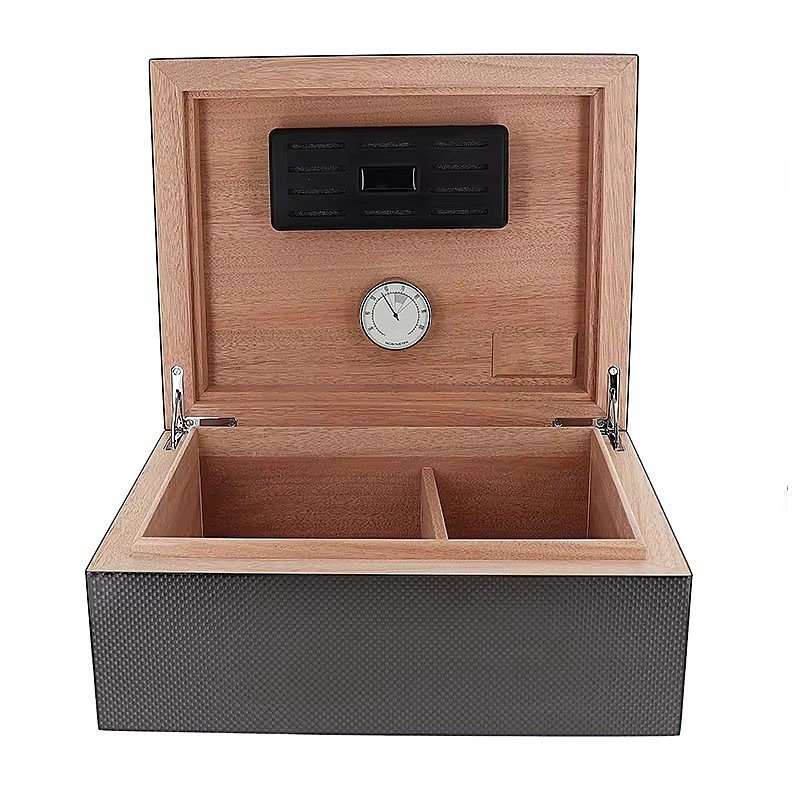
I work with many types of internal structures in luxury cigar boxes, from solid Spanish cedar to MDF with cedar veneer. All of them need moisture because all wood breathes. But Spanish cedar is special. It has a unique cell structure that holds and releases moisture in a slow and controlled way. It also repels tobacco beetles and adds a soft fragrance.
Common Humidor Interior Materials
| Material | Why It Needs Moisture | Notes |
|---|---|---|
| Spanish cedar | Absorbs and releases humidity slowly | Best for premium humidors |
| Honduran mahogany | Stable but weaker aroma | Good alternative to cedar |
| Okoume | Light, stable | Often used in veneer interiors |
| MDF + Cedar veneer | Cost-effective and stable | Still needs seasoning because veneer is natural wood |
When these materials stay dry, they lose stability. Panels warp. Joints open. Veneer lifts. I see this when buyers bring me old humidors for repair. In many cases, the damage began with improper seasoning. Moisture absorption is not only about cigars. It is also about protecting the structure of the box.
How Moisture Changes Wood Behavior
Wood expands when it absorbs water. It shrinks when it loses water. Good seasoning ensures the wood expands to its natural working range before cigars enter the box. When this happens, the humidor becomes stable. The lid closes tightly. The seal remains consistent.
Cigar brands trust Spanish cedar because it is predictable. When properly seasoned, it becomes the stabilizer of the whole system. When unseasoned, it becomes the source of instability.
Which seasoning methods work best: distilled-water wipe-down, bowl-of-water method, or humidity packs?
There are many ways to season a humidor, but each has its own results. Some are faster, some are safer.
The best method depends on your humidor. Distilled-water wipe-down is quick, the bowl-of-water method is slow and even, and humidity packs give the safest and most controlled result.
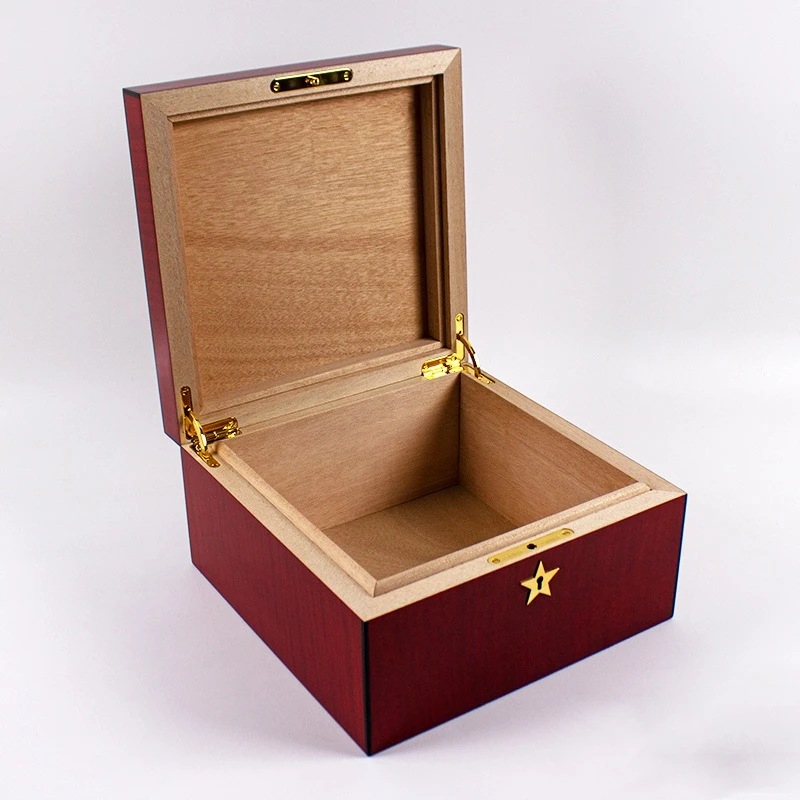
From my experience with luxury humidors, the wipe-down method works well for large cedar surfaces. But it also introduces risk. If you apply too much water, the wood swells too fast. Panels warp. Veneers bubble. I have seen this many times when customers over-soaked their humidors.
Method Comparison
| Method | Pros | Cons | Best For |
|---|---|---|---|
| Distilled-water wipe-down | Fast, simple | Risk of over-wetting | Solid cedar interiors |
| Bowl-of-water method | Very safe, even moisture | Takes several days | All humidors |
| Humidity packs (84%) | Easiest, most controlled | Higher cost | High-end humidors |
My Honest Advice
If your humidor is made with veneer, always avoid the wipe-down method. Veneers react badly to surface water. Use humidity packs or a bowl of water instead. If you have a solid Spanish cedar humidor, the wipe-down + bowl-of-water combo works well.
Why Slow Moisture Absorption Is Better
When the wood absorbs water slowly, fiber expansion happens gently. This keeps panels flat and joints tight. It also forms a more stable humidity buffer. Fast absorption creates stress inside the wood. That stress causes future changes in shape.
This is why many premium humidor brands tell buyers to season for at least one week. They want the cedar to adapt slowly, so the humidor lasts many years.
How long should seasoning take, and what humidity levels show the humidor is ready?
People often rush this step because they want to store cigars right away. But wood needs time to reach balance.
Seasoning usually takes 5–14 days. The humidor is ready when the interior stays between 65–75% humidity for 24–48 hours without dropping.
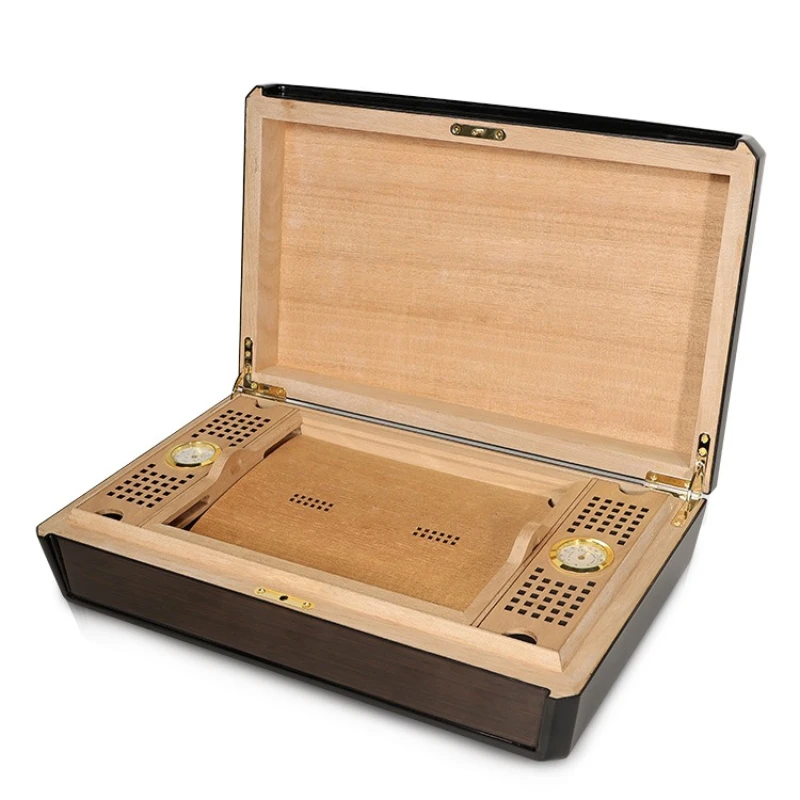
I have tested hundreds of humidors during production. I learned that every box behaves differently because wood density varies. Large humidors take longer. Cedar-lined ones absorb moisture faster. This is normal.
Typical Seasoning Timeline
| Day | What Happens |
|---|---|
| 1–3 | Wood starts absorbing moisture |
| 4–7 | Humidity rises and becomes steady |
| 8–14 | Wood reaches full saturation balance |
How to Test Readiness
I tell my buyers to run a simple test:
- Remove all seasoning elements (bowls, packs, sponges).
- Close the humidor.
- Check the hygrometer after 24 hours.
If humidity stays above 65%, your humidor is ready. If it drops below 60%, keep seasoning for a few more days.
Why Humidity Stability Matters
Cigars need a stable environment. If your humidor cannot hold humidity without help, it will struggle once cigars go in. Stability shows the wood has become a buffer. Once that buffer forms, the humidor can maintain ideal humidity automatically with very little effort.
What common seasoning mistakes lead to mold, over-humidification, or long-term storage issues?
Most seasoning mistakes come from trying to speed up the process. I see this with new smokers all the time.
The biggest mistakes are over-wetting wood, using tap water, closing the humidor too soon, and adding cigars before humidity stabilizes. These mistakes cause mold, swelling, and unstable storage.
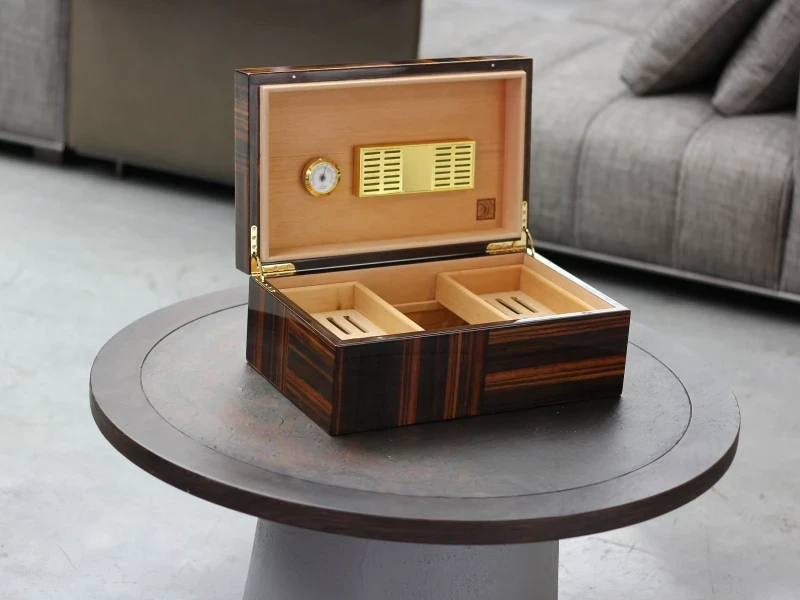
I want to break these mistakes down because they destroy more humidors than anything else.
Common Mistakes and Why They Matter
| Mistake | Result |
|---|---|
| Using tap water | Mineral buildup and mold |
| Over-wetting wood | Warping and veneer damage |
| Rushing the process | Humidity crashes |
| Adding cigars too early | Dry cigars and uneven burn |
| Not checking hygrometer accuracy | Wrong readings lead to bad decisions |
Mold Is Usually From Excess Water
Mold grows when wood stays wet for too long. Most mold cases I’ve seen come from wipe-downs done with too much water. The wood absorbs water unevenly, and the wet spots become mold-friendly zones.
Veneer Damage Comes From Swelling
Veneer is thin. When water penetrates the edge or surface, it expands. This pulls glue loose and causes bubbles. Once veneer bubbles, repair is almost impossible without replacing the panel.
Why Patience Prevents All Problems
Seasoning is slow by nature. When you let wood absorb water at its natural speed, everything works the way it should. The humidor stays flat. The cedar smells rich. The humidity becomes stable.
This simple patience protects cigars for years.
Conclusion
Season your humidor slowly so the wood becomes stable and protects your cigars with steady humidity.
Brand Name: WoodoBox
Slogan: Custom Wooden Boxes, Crafted to Perfection



 English
  Español
  Português
  Deutsch
  Français
  Italiano
  العربية