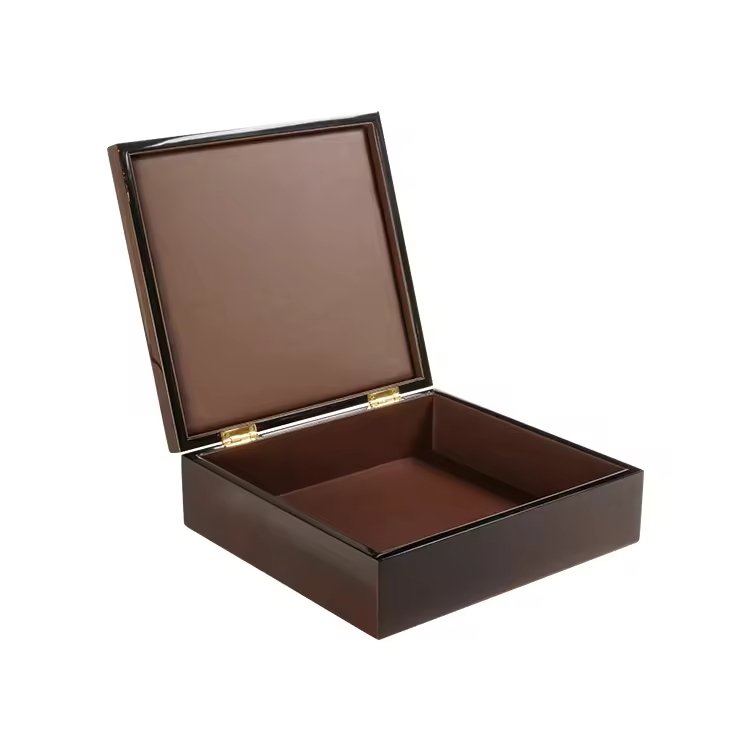
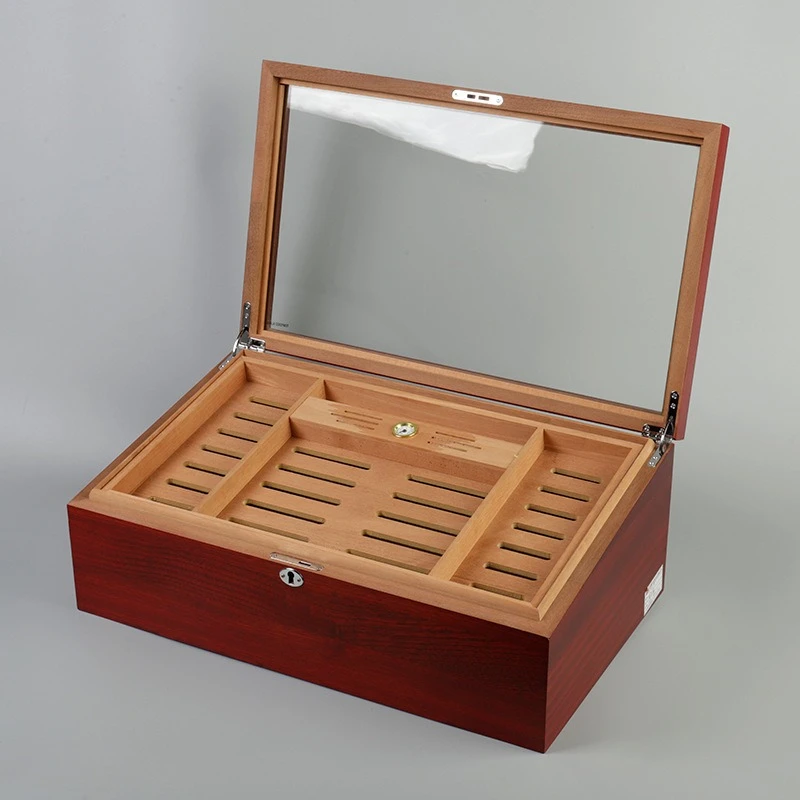
I know many cigar lovers try to save money and reuse wooden cigar boxes, but most boxes cannot hold humidity well and this leads to dry cigars.
Yes, you can use a wooden cigar box as a humidor, but only if the box is well-sealed, made with proper wood, and upgraded with the right humidity system.
I want to explain why some boxes work and some fail, so you can avoid the common mistakes that damage cigars.
What Conditions Must a Wooden Cigar Box Meet to Function as a Humidor?
I see many people try to use cigar boxes directly, but thin wood and loose joints often leak moisture fast and ruin cigars.
A wooden cigar box can work as a humidor only when it is airtight, thick enough to hold moisture, and properly lined with cedar or humidity-friendly materials.
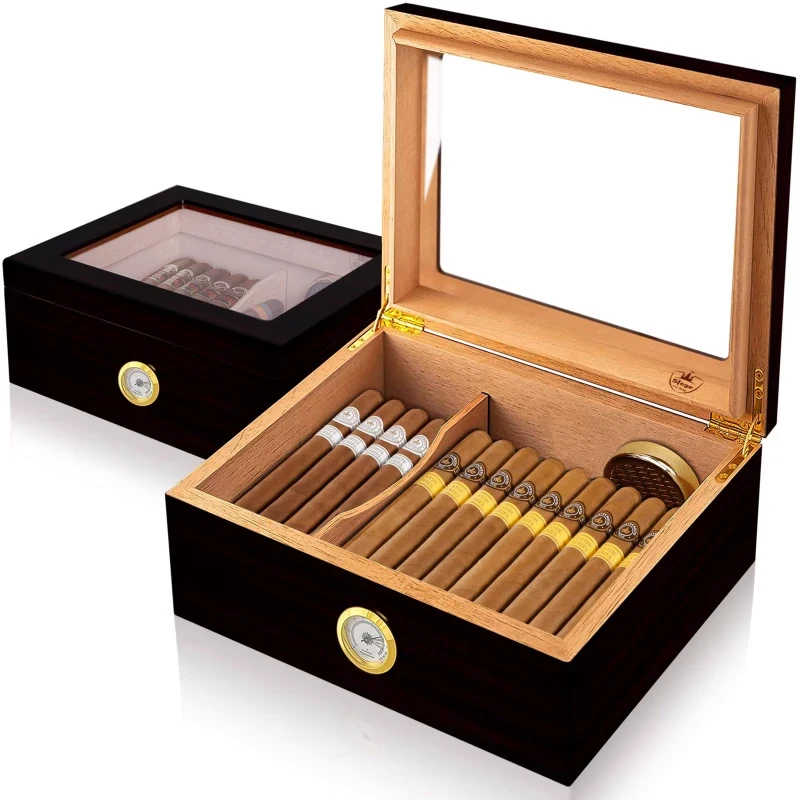
A cigar box needs to meet several technical conditions before it can act like a humidor. Many commercial cigar boxes look nice, but they are not made for humidity control. I see this problem often when I produce luxury wooden boxes for clients. They focus on appearance, but the structure does not support long-term moisture stability.
Key Structural Requirements
| Condition | Why It Matters | My Notes |
|---|---|---|
| Airtight seal | Keeps humidity inside | Loose joints cause fast moisture loss |
| Thick wood panels | Reduces humidity swings | Thin MDF or plywood absorbs moisture too fast |
| Quality hinges | Helps lid close evenly | Cheap hinges create gaps |
| Cedar lining | Stabilizes humidity | Spanish cedar is best for aroma and moisture |
| Smooth interior | Prevents micro-gaps | Rough surfaces create leakage points |
Wood Thickness and Construction
A cigar box must have thick walls. Many factory cigar boxes use 2–4 mm plywood. This is too thin. It breathes too fast and does not hold humidity. A real humidor usually starts at 8–12 mm thickness. In my factory, luxury cigar boxes for premium clients use 10–15 mm solid wood or MDF with thick veneer. This gives the box real strength against moisture swings.
Airtightness and Lid Engineering
The lid must sit tight. Even a 0.5 mm gap will drain humidity. When I produce high-end humidor boxes, we test the lid by placing light inside the box. If any light escapes, we fix the joint. That level of precision is rare in standard cigar boxes.
Interior Surface and Lining
Spanish cedar is still the best choice. It absorbs moisture slowly and releases it steadily. It also protects cigars from beetles. If the original cigar box does not have cedar lining, you must add it. I will explain more in later sections.
A simple cigar box can work, but it must meet these basic conditions. If not, it will fail very fast.
How Does Wood Type Affect Moisture Control in a Converted Cigar Box?
People often think any wood works, but I see big problems when the wrong wood reacts too fast or too slow to moisture.
The wood type affects humidity control because some woods absorb and release moisture more evenly, while cheaper woods cause unstable humidity swings inside the box.
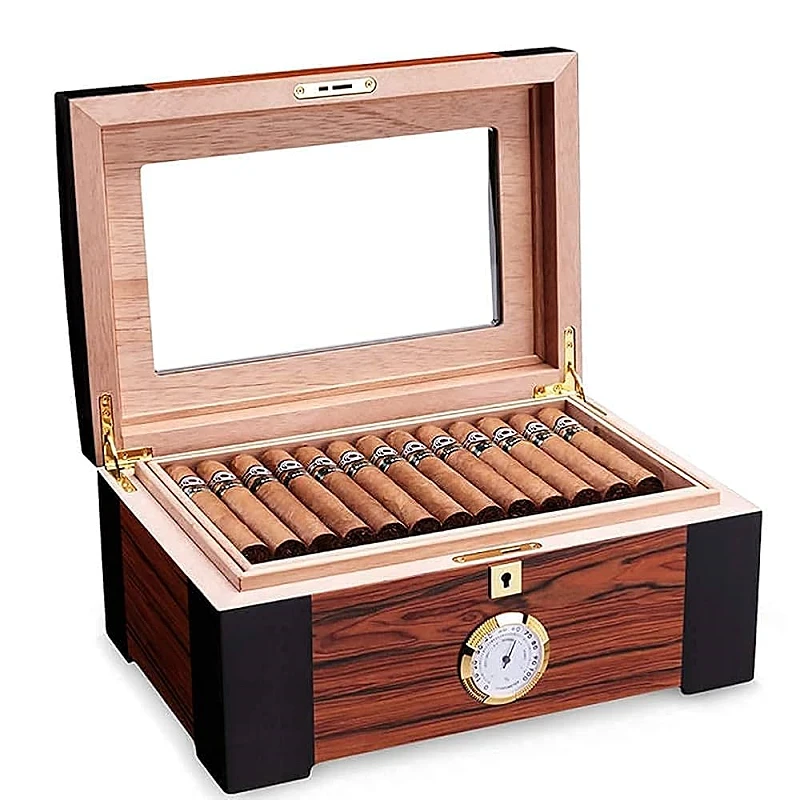
Wood type is the heart of humidity control. When I work with global cigar brands, they always ask for Spanish cedar. This is not only for the smell. The science behind the wood matters a lot.
Common Woods Found in Cigar Boxes
| Wood Type | Moisture Behavior | Suitable for Humidor? | My Comments |
|---|---|---|---|
| Spanish Cedar | Slow, stable absorption | Yes | Ideal for cigars |
| Mahogany | Medium stability | Yes | Good alternative |
| Pine | Absorbs too fast | No | Warps easily |
| Plywood | Unstable layers | No | For presentation only |
| MDF + Veneer | Stable when thick | Yes (with lining) | Best for custom humidors |
Why Spanish Cedar Works Best
Spanish cedar holds moisture like a sponge, but very slowly. This helps the humidor stay stable even when outside air changes. It also adds aroma that cigar makers love. When I produce humidors with Spanish cedar, clients always say the cigars taste better after storage.
Problems With Softwoods and Plywood
Softwood like pine warps easily. It also absorbs humidity too fast, then releases it too fast. This causes big swings inside the box. Cigars hate swings.
Plywood is worse. Each layer reacts differently to moisture. Over time, it twists or separates. Many cigar boxes use plywood to save cost, so they cannot keep humidity stable.
MDF With Veneer: A Good Modern Option
Many of my premium clients choose MDF with real-wood veneer. It is very stable and heavy. When the MDF is thick and the box is lined with Spanish cedar, it performs as well as solid cedar. It is cost-effective for brands that want luxury without high material cost.
Wood type decides how stable your humidity will be. If the wood is wrong, no humidifier can fix the problem.
What Modifications Are Needed Before Turning a Cigar Box Into a Humidor?
Many converted cigar boxes fail because people skip sealing or lining, and the box leaks humidity from every corner.
You must seal gaps, add cedar lining, upgrade hinges if needed, and install humidity control before the box can work like a real humidor.
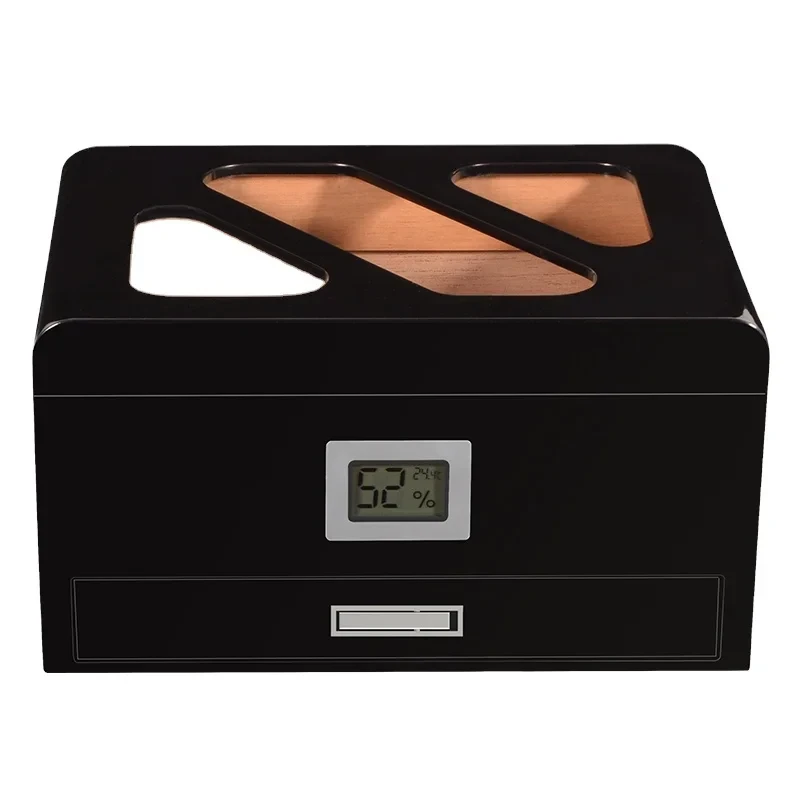
When I help clients upgrade their cigar boxes, the same mistakes appear. People think adding a humidity pack is enough. It is not. The box must be rebuilt from the inside.
The Essential Modifications
| Step | Purpose | Notes From My Experience |
|---|---|---|
| Seal joints | Stop moisture leaks | Wood glue or gasket works |
| Add cedar lining | Stabilize humidity | 4–6 mm thick lining is best |
| Improve hinges | Create even lid pressure | Soft-close or piano hinges work well |
| Add humidifier | Maintain humidity | 65–72% packs work for most cigars |
| Add hygrometer | Track humidity | Digital is better |
Sealing the Joints
Humidity escapes through gaps you cannot see. I use high-quality wood glue or silicone gaskets. In luxury boxes, we use custom-cut rubber seals. This makes the lid shut like a vault.
Adding Spanish Cedar
I install 4–6 mm Spanish cedar panels inside the box. This improves structure and humidity stability. Some clients like cedar trays and dividers too. They look good and help airflow.
Humidity System
For small cigar boxes, I suggest using humidity packs. They are easy and stable. For larger boxes, a mini humidifier works better. But you must monitor humidity with a digital hygrometer.
Lid and Hardware Upgrades
Cheap hinges bend over time. The lid becomes uneven. This destroys the seal. I replace them with stronger hinges or a piano hinge. This makes the lid close evenly and hold humidity inside.
These upgrades turn a simple box into a functional humidor. Without them, the box fails within days.
Why Do Some Cigar Boxes Fail to Maintain Proper Humidity Levels?
I see many beautiful boxes fail because the structure was never meant to hold moisture, no matter how much the user tries.
Cigar boxes fail when the wood is too thin, the joints are loose, or the lid does not seal properly. Humidity escapes faster than the system can replace it.
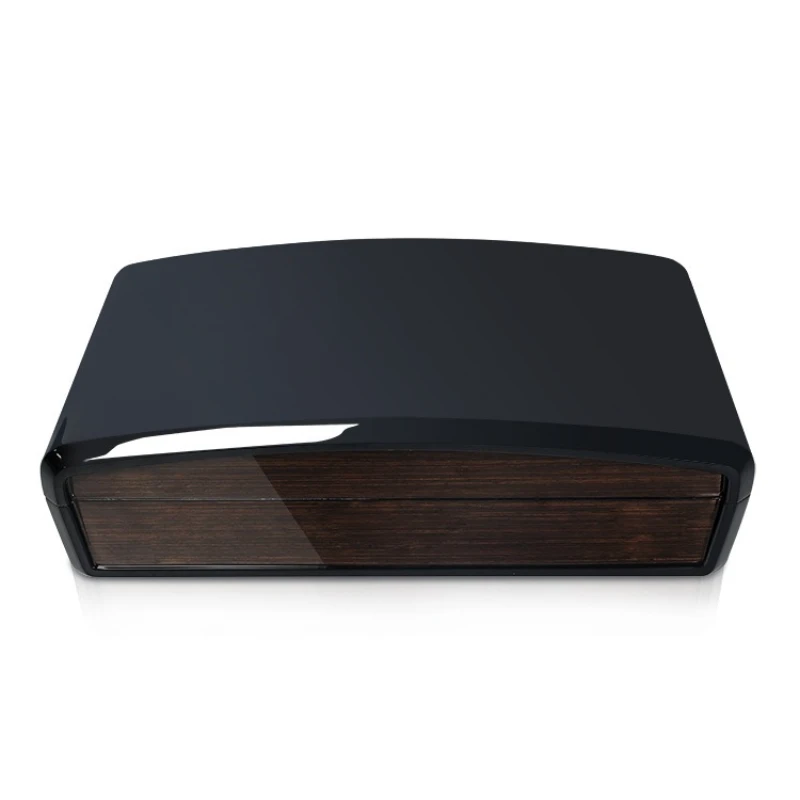
A cigar box can look perfect outside but fail inside. I have inspected hundreds of boxes from clients. The same patterns appear again and again.
Common Failure Points
| Failure Cause | Effect on Humidity | My Observations |
|---|---|---|
| Thin wood panels | Fast moisture loss | Under 5 mm is too thin |
| Loose joints | Continuous leakage | Often found in decorative boxes |
| Poor hinges | Lid shifts and gaps | Cheap hinges bend easily |
| Wrong wood type | Unstable humidity | Plywood is the worst |
| No cedar lining | No moisture buffering | Interior becomes unstable |
Why Thin Wood Matters
Thin wood cannot resist outside temperature and moisture changes. Even a small room change makes the box react. Cigars inside suffer. This is why display cigar boxes at shops never work as humidors.
The Lid Seal Problem
Humidity escapes from the lid first. If the lid is not heavy or tight enough, humidity drops fast. Some boxes use magnets, but they are too weak. In my factory, we use hidden mechanical locks or compression closures for premium humidors.
Unstable Wood Choices
Plywood and softwood breathe too much. They swell when humidity rises and shrink when humidity drops. This creates micro-cracks that ruin the box over time.
When a box fails to hold humidity, the cigars dry out or grow mold. Both cause big damage. Prevention is always easier than repair.
Is Converting a Wooden Cigar Box a Practical Choice for Beginners or Small Collections?
Many beginners want a cheap way to store cigars, but they often underestimate the work needed to convert a box.
Converting a cigar box is practical only for small collections and hobby use. For long-term storage or premium cigars, a real humidor is a better choice.
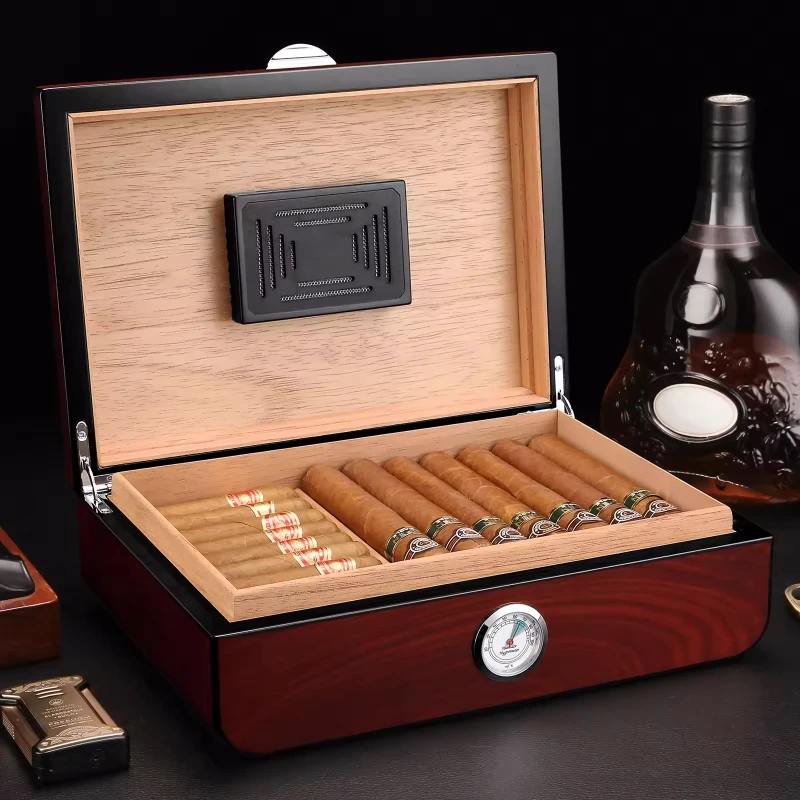
I work with new cigar brand owners often. They want a simple humidor for small batches. A converted box can work, but only if expectations are realistic.
When It Makes Sense
| Situation | Good Choice? | My Advice |
|---|---|---|
| Small cigar collection | Yes | Upgrade the box first |
| Beginner trying DIY | Yes | Keep humidity packs inside |
| Premium cigars | No | Use a real humidor |
| Retail or commercial use | No | Needs professional build |
| Long-term storage | No | Converted box is unstable |
Pros for Beginners
A converted cigar box is cheap. It is fun to build. It is small and portable. It teaches you about humidity control. Many beginners enjoy the process.
The Limitations
The box will never be as airtight as a humidor. Humidity control will not be perfect. It needs more monitoring. The box cannot handle large quantities of cigars. If you store expensive cigars, do not risk it.
When a Custom Humidor Is Better
If you need something reliable, I always suggest a custom cedar-lined box with proper sealing. This is what I produce for global brands. It protects cigars for years and looks beautiful.
A converted box works for learning, but not for long-term protection.
Conclusion
A wooden cigar box can work as a humidor, but only with the right structure, wood, and upgrades.
Brand Name: WoodoBox
Slogan: Custom Wooden Boxes, Crafted to Perfection



 English
  Español
  Português
  Deutsch
  Français
  Italiano
  العربية