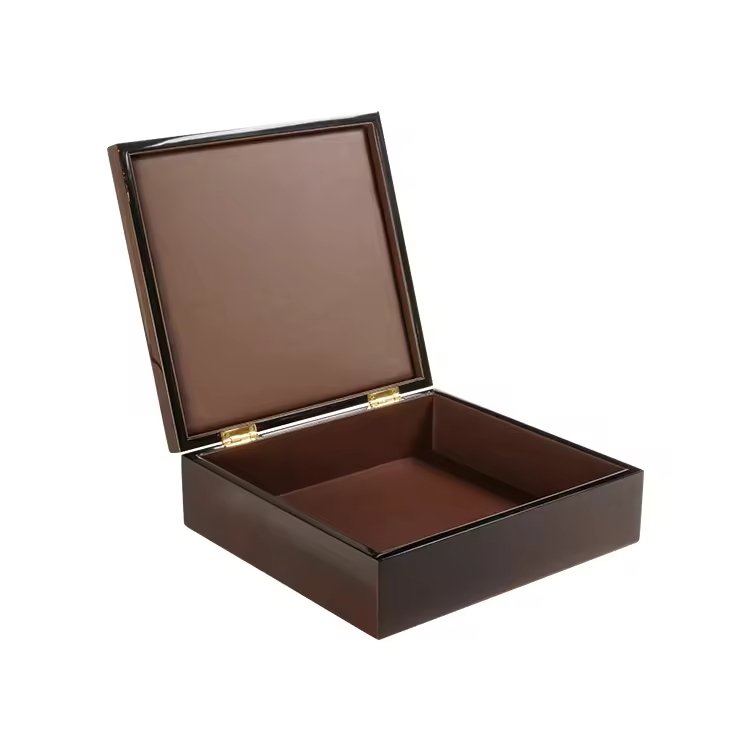
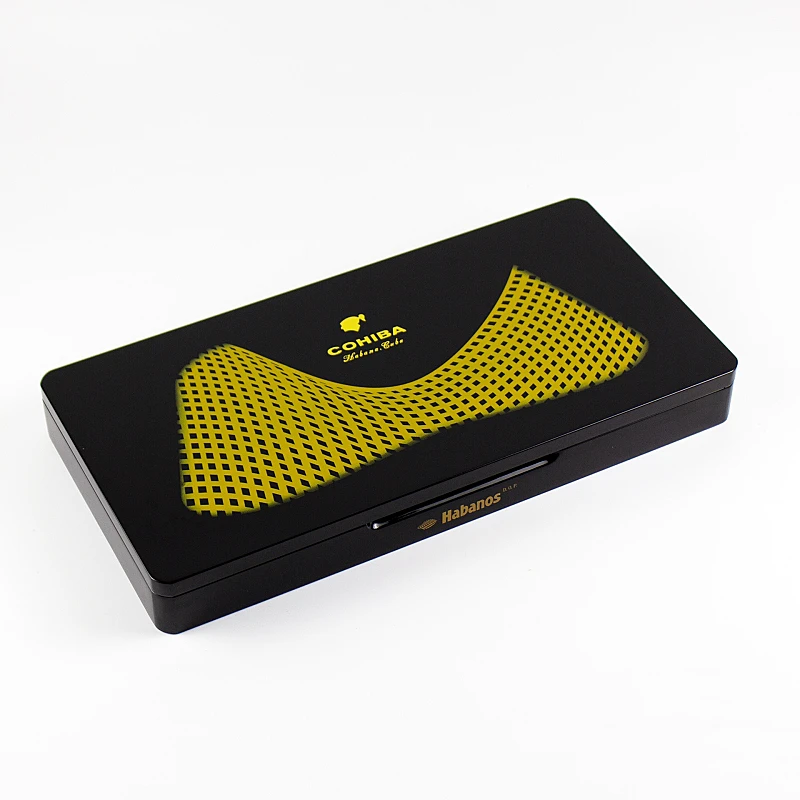
Cigar boxes mix metal and wood for beauty, but this mix can create problems like oxidation.
An insulation layer is often recommended because direct metal-to-wood contact can speed up oxidation, tarnish, and discoloration, especially in humid storage.
Without smart design, cigar boxes lose their luxury feel. Let’s explore why this happens and how to prevent it.
Why can direct contact between metal and wood accelerate oxidation or discoloration?
Cigar boxes look elegant when wood and metal meet, but the hidden reaction is faster wear.
Direct contact between wood and metal can create micro-galvanic reactions that cause oxidation and discoloration over time.
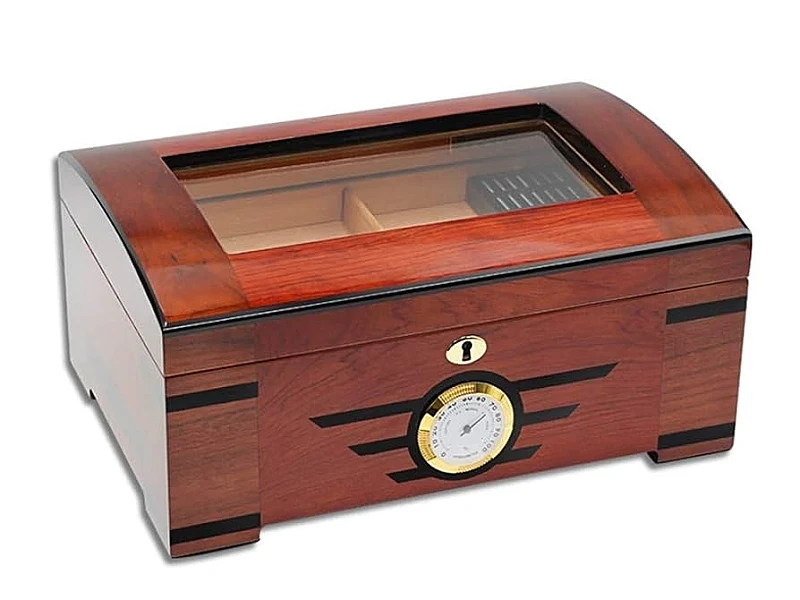
When metal strips touch wood, the wood absorbs and releases moisture. This process creates small cycles of swelling and shrinking. These cycles trap water molecules against the metal. Even small humidity changes push the problem further.
Another reason is acidity. Many woods contain natural acids. For example, oak has high tannin levels. These acids can attack champagne-gold coatings on metal strips. Even though gold itself is stable, the alloy beneath the coating is not always as resistant. Once the coating wears or scratches, discoloration appears faster.
There is also mechanical stress. When wood expands, it presses against the metal. The pressure can open tiny cracks in the champagne-gold finish. Through these cracks, oxygen and moisture can reach the base metal. Once that happens, tarnishing or oxidation spreads quickly.
This is why high-end cigar boxes must be engineered beyond simple assembly. The combination of wood’s behavior and metal’s sensitivity means direct contact is risky. The luxury look may not last long if no protective measures are taken.
Key factors in metal–wood oxidation
| Factor | Effect on Metal Strips |
|---|---|
| Moisture absorption | Traps water against metal, speeds oxidation |
| Wood acidity (tannins) | Chemical attack on coating and base alloys |
| Mechanical expansion | Cracks coatings, exposes weak points |
How do wood’s natural oils, tannins, and humidity contribute to metal corrosion risks?
Wood feels natural and warm, but its chemistry can silently damage metals.
Wood releases oils, acids, and tannins that, combined with humidity, can corrode champagne-gold coated metals in cigar boxes.
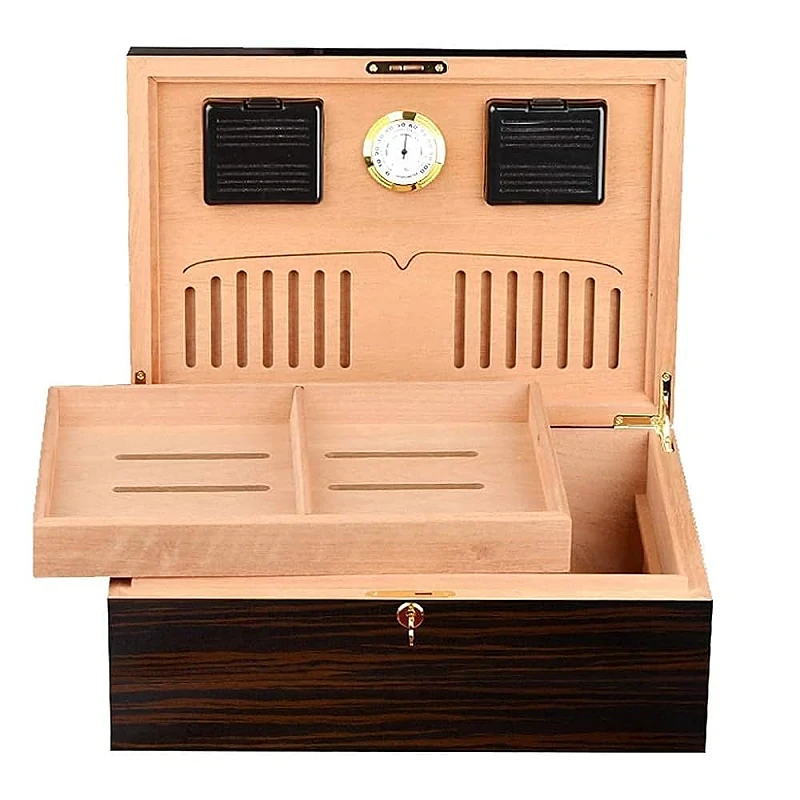
Every wood species has a chemical profile. Some woods release more tannins, while others release resins or oils. Tannins especially react with metal ions. This is visible in outdoor furniture, where iron nails leave black stains on oak. The same happens, on a smaller scale, inside cigar boxes.
Humidity plays a key role. When wood absorbs water, it becomes a carrier. The water dissolves tannins and oils, then spreads them onto metal strips. The longer the box stays in this condition, the stronger the reaction. A champagne-gold coating may resist at first, but it is only microns thick. Once the base alloy is exposed, it loses shine.
The risk also grows in tropical climates. Constant humidity cycles make wood expand and contract. This movement pumps out chemical compounds from inside the fibers. When these compounds reach the champagne-gold strips, they leave stains, tarnish marks, or cloudy patches.
I learned this during a project with a client from Singapore. Their cigar boxes looked stunning at the start. But after six months in storage, the metal strips lost their golden clarity. Testing showed high tannin migration from the chosen mahogany veneer. We solved it later by adding a barrier layer.
How wood chemistry affects metal
| Wood Component | Action on Metal Surface |
|---|---|
| Oils | Leave sticky films, trap dust, dull shine |
| Tannins | React with alloys, create stains |
| Humidity | Spreads acids/oils, accelerates damage |
What types of insulation or buffer layers are commonly used in luxury packaging design?
The solution to metal oxidation is often invisible but essential.
Common insulation methods include thin films, clear lacquers, specialized adhesives, and PU or velvet linings between wood and metal.
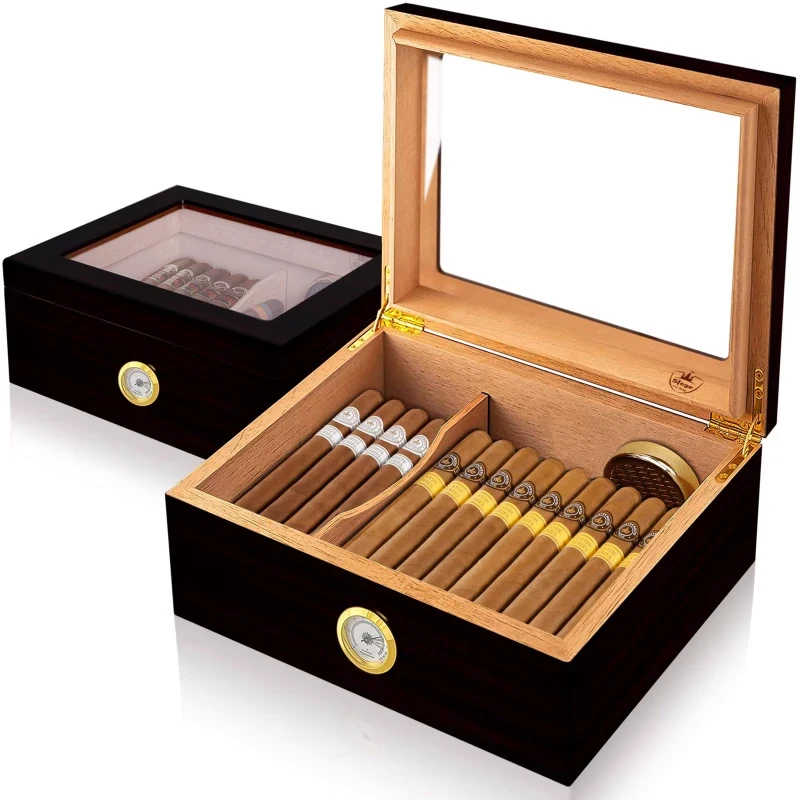
Luxury packaging design uses several techniques to separate wood from metal. One simple way is to add a clear lacquer layer on the wood surface before attaching metal strips. This creates a barrier so acids and moisture cannot touch the metal.
Another method is to use adhesives with insulating properties. High-quality epoxy or PU glue not only bonds metal to wood but also stops moisture transfer. Some brands prefer velvet or PU lining as a cushion layer. These linings give a soft touch while acting as a buffer.
In more advanced designs, we use specialized PET or PVC films. They are nearly invisible once applied, yet they stop chemical migration. I often suggest this when working with veneers that contain high tannins. For high-end cigar boxes, even a thin transparent layer makes a big difference in long-term durability.
Buffer layers do more than protect. They also add to the sense of refinement. A velvet lining under champagne-gold strips not only preserves the shine but also adds luxury detail. The customer sees beauty, but the hidden purpose is protection.
Common buffer materials in cigar boxes
| Material Type | Advantage | Limitation |
|---|---|---|
| Clear lacquer | Invisible, thin, easy to apply | Can crack if too brittle |
| Epoxy/PU glue | Bonds and insulates | Hard to rework once applied |
| Velvet/PU lining | Adds luxury look, soft cushion | Adds thickness, changes feel |
| PET/PVC films | Strong barrier, transparent | Extra production step |
Can surface treatments like electroplating or clear coating replace the need for insulation?
It is tempting to rely only on metal treatments, but is it enough?
Surface treatments help, but they cannot fully replace insulation layers when metal touches active woods in humid environments.
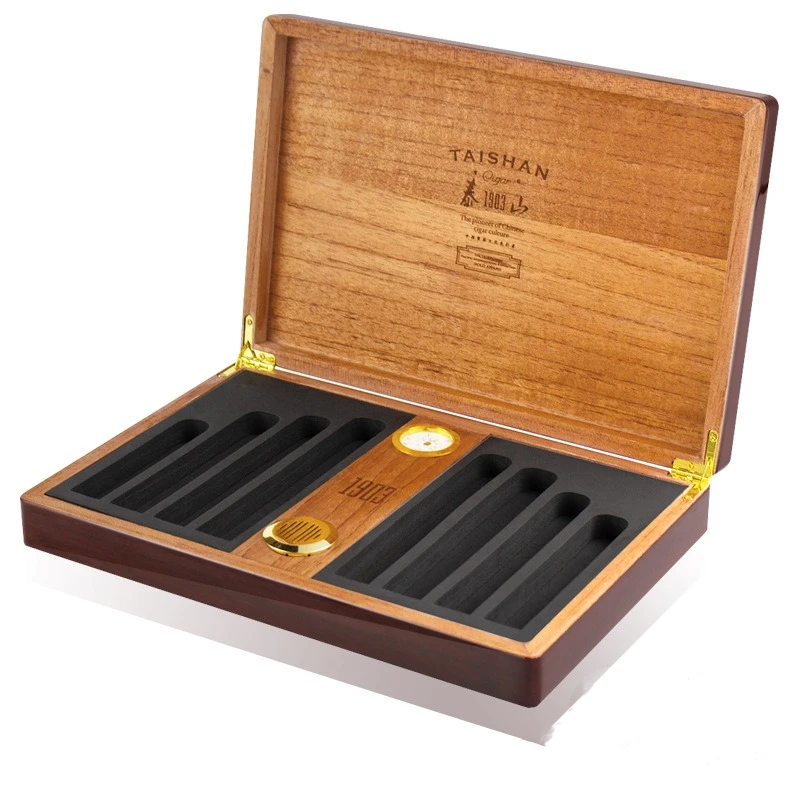
Electroplating, like champagne-gold finishes, improves resistance. The surface looks elegant and polished. A clear coat adds another shield. But these methods depend on the integrity of the finish. If there is even one scratch, the protection is broken.
Wood is dynamic. It expands, contracts, and releases compounds. This constant movement presses against the plated surface. Over years, micro-cracks can form in coatings. Once the base alloy is exposed, corrosion begins. At this stage, no coating can repair itself.
In contrast, insulation layers stop wood from ever reaching the metal surface. This means even if plating is thin, the metal stays safe. I have seen luxury brands rely only on plating. Their boxes looked great at the start. But customer complaints came later when gold strips turned cloudy. Adding a buffer could have prevented this.
So the best approach is a combination. Strong plating or coating on the metal surface plus an invisible insulation layer between wood and metal. This dual protection gives both visual beauty and long-term stability.
Why coatings alone are not enough
| Treatment | Strengths | Weaknesses |
|---|---|---|
| Electroplating | Strong shine, luxury finish | Cracks under wood stress |
| Clear coating | Simple, transparent protection | Weak against scratches |
| With buffer | Dual protection, long lifespan | Higher production complexity |
How does long-term storage environment (humidity, temperature) affect metal–wood interaction?
The environment decides how fast materials age, especially in cigar boxes.
High humidity and fluctuating temperatures increase the risk of oxidation and discoloration in champagne-gold metal strips touching wood.
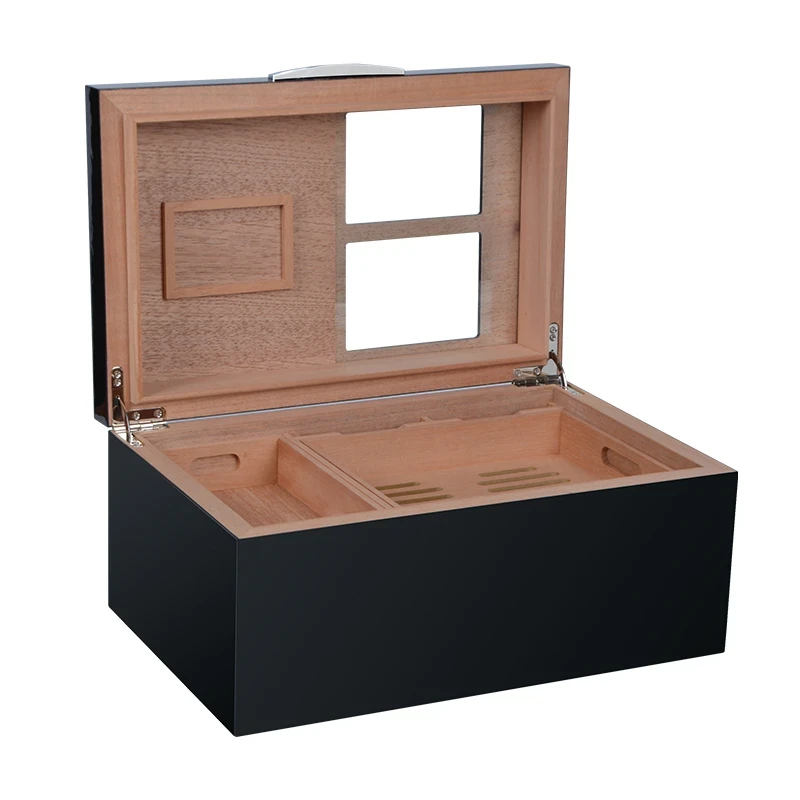
Cigar boxes are often stored in humidors or humid spaces. While this is good for cigars, it is not always good for mixed materials. High humidity accelerates chemical reactions between wood tannins and metal strips. It also weakens adhesives used for bonding.
Temperature swings make the problem worse. When air cools, condensation can form on metal. When air warms, wood expands and releases absorbed water. This cycle repeats daily in many storage rooms. Over time, champagne-gold strips lose luster.
Controlled storage helps reduce these risks. But many buyers do not have strict conditions. Boxes may travel long distances by sea, passing through tropical climates. During shipping, they face both high heat and salty air. This is why insulation is important at the production stage.
I once shipped boxes to a client in Miami. Despite proper plating, the champagne-gold strips tarnished in six months. Testing showed high humidity and salt in the air combined with wood acidity. After adding PU lining in the next order, the problem stopped.
Storage condition effects
| Condition | Effect on Wood–Metal Contact |
|---|---|
| High humidity | Speeds tannin release, oxidation |
| Temperature swings | Causes expansion and contraction |
| Salty air | Increases corrosion risk |
| Stable climate | Slows down material aging |
What practical design tips ensure both durability and luxury aesthetics in mixed-material cigar boxes?
Good design prevents problems before they appear.
Practical tips include using barrier layers, combining plating with insulation, choosing low-tannin veneers, and designing for stable storage.
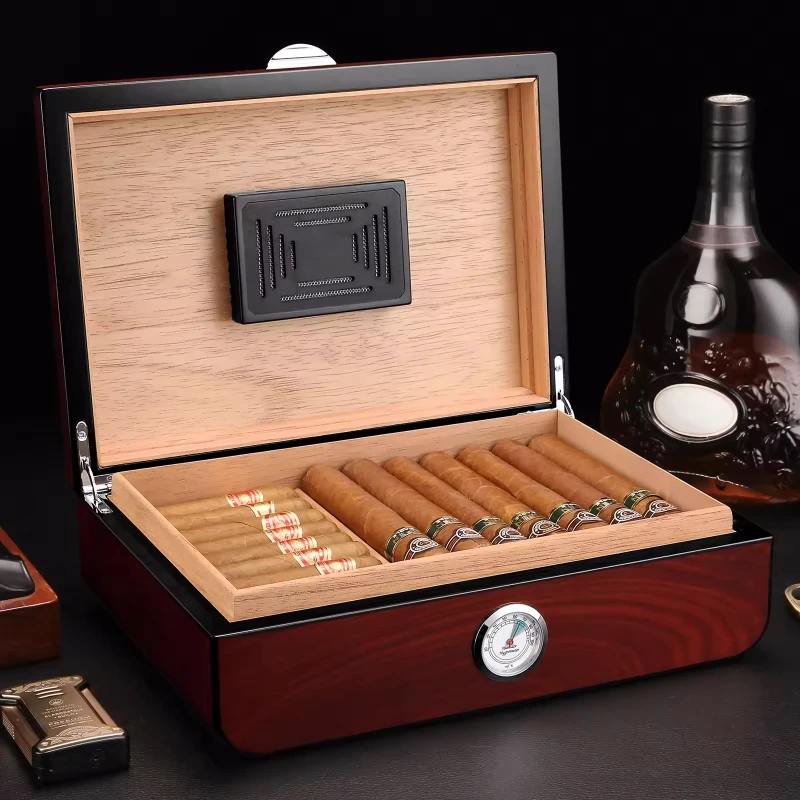
The first tip is to always add an insulation layer. Even if the champagne-gold finish looks perfect, invisible protection is needed. Clear lacquer, PU lining, or PET film all work depending on the design style.
The second tip is to select wood wisely. Some veneers like oak and walnut have high tannins. Others, like maple or ebony, are more stable. By choosing low-tannin veneers, the risk of oxidation decreases.
Third, plating must be combined with a buffer. Champagne-gold looks rich, but only if protected. Coatings cannot handle wood stress alone. Dual protection ensures the luxury appearance lasts longer.
Finally, think about the customer’s storage. If the target market is in humid regions, stronger insulation is needed. If in dry climates, thinner coatings may last longer. Every cigar box design should match the lifestyle and climate of its users.
Practical design checklist
- ✅ Always add insulation between wood and metal
- ✅ Combine electroplating with buffer layers
- ✅ Choose low-tannin veneers when possible
- ✅ Match design to climate and storage habits
- ✅ Use adhesives with moisture-blocking properties
Conclusion
Insulation layers keep champagne-gold strips shiny and wood stable, ensuring cigar boxes remain both durable and luxurious.
Brand Name: WoodoBox
Slogan: Custom Wooden Boxes, Crafted to Perfection
Website: www.woodobox.com
WhatsApp: +86 18359265311



 English
  Español
  Português
  Deutsch
  Français
  Italiano
  العربية