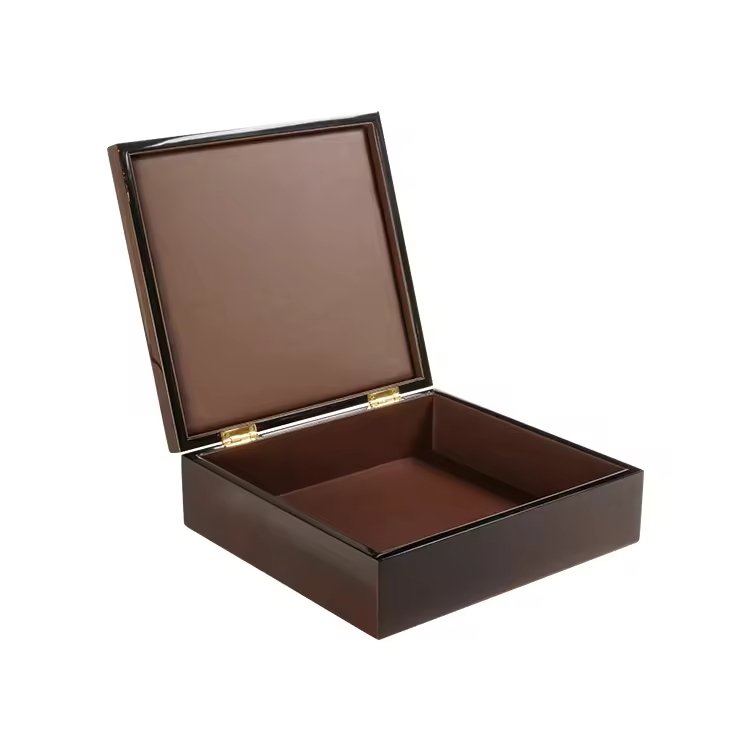
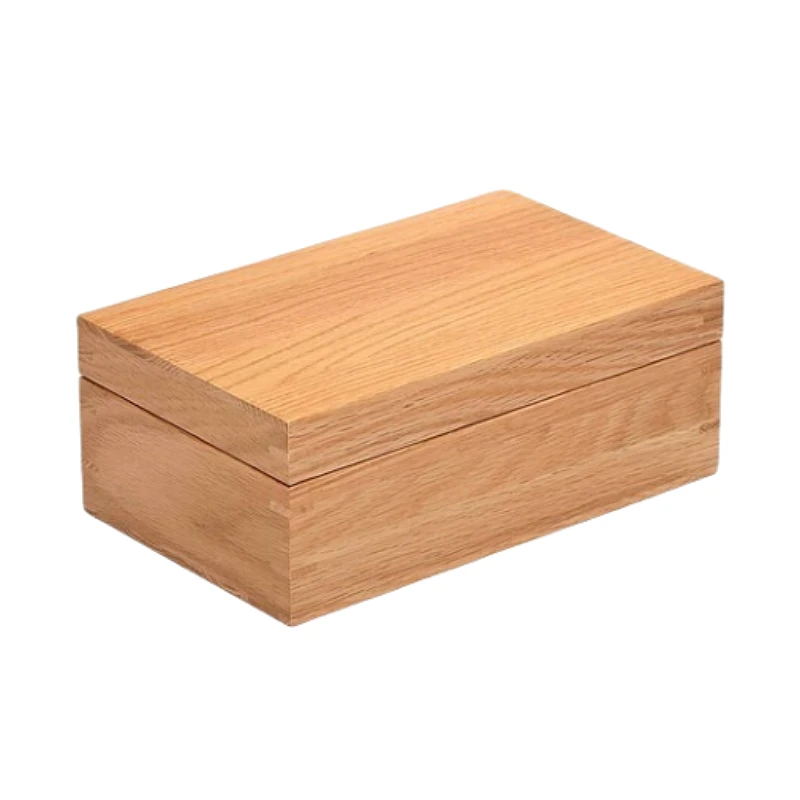
Natural wood looks perfect in photos. Many buyers expect every box to look identical. Then reality hits. Grain shifts. Color changes. Small lines appear. That surprise can become a problem.
Solid wood boxes with clear lacquer look premium because nothing is hidden, but they are harder to control, more expensive, and less uniform than veneer or painted options. They suit brands that value authenticity, not strict visual consistency or tight budgets.
I have worked on many solid wood packaging projects. Some clients loved the results. Some struggled with expectations. So I want to explain everything in simple terms.
What You Really See with Clear Lacquer on Solid Wood
Natural beauty attracts people. But that beauty also means full exposure. Nothing is covered. Nothing is corrected.
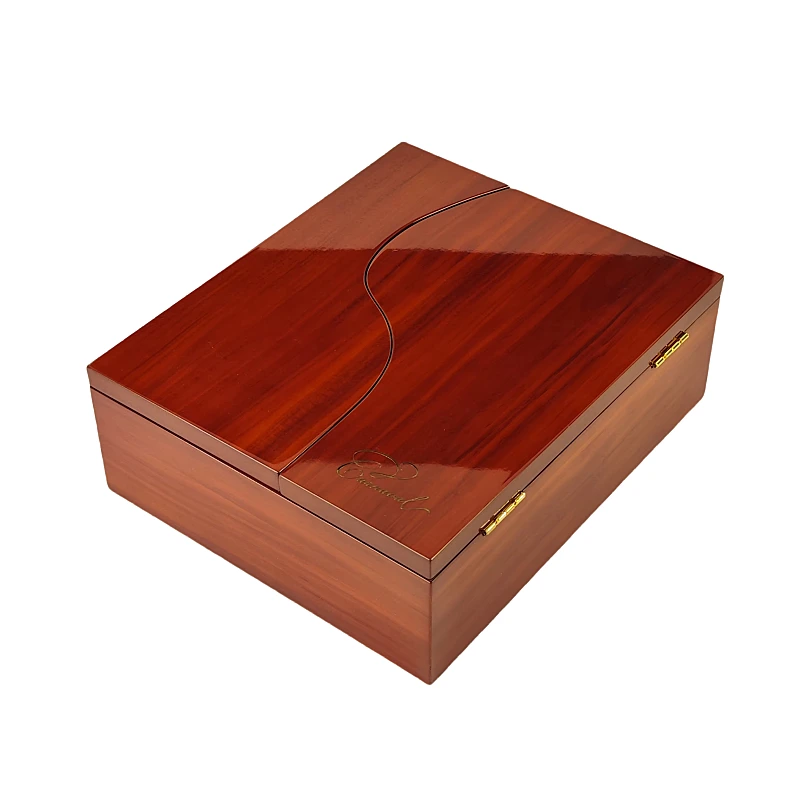
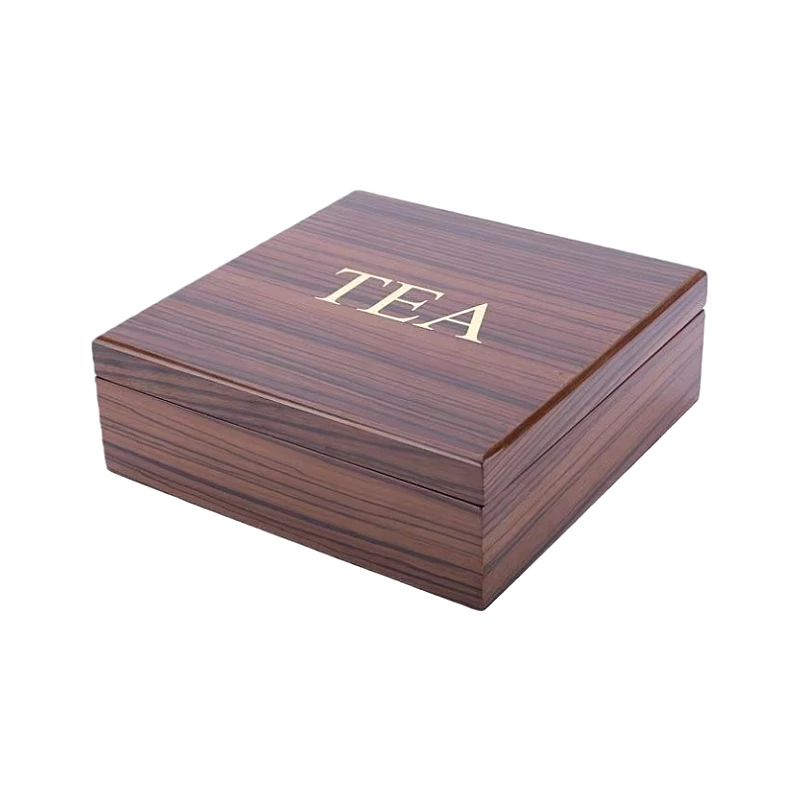
Clear lacquer on solid wood does not change the wood’s character. It protects the surface and enhances the grain, but it also reveals color differences, mineral lines, and natural variation. What you see is exactly what the tree created.
When I apply clear lacquer on solid wood, I am not adding color. I am not hiding defects. I am sealing and protecting the material. That is very different from veneer or painted MDF.
What Clear Lacquer Actually Does
| Function | What It Means for You |
|---|---|
| Protection | Protects against moisture and scratches |
| Enhancement | Makes grain deeper and more vivid |
| Transparency | Does not hide color variation |
| Surface Feel | Creates smooth, slightly glossy touch |
Many clients expect the lacquer to “fix” color inconsistency. It does not. If one board is slightly darker, it will stay darker. If there is a small mineral line, it will show more clearly after finishing.
Why Buyers Sometimes Feel Surprised
I remember one project where the client approved a sample. The mass production looked slightly warmer in tone. The wood came from a different batch. The species was the same. The grade was the same. But nature is never 100% repeatable.
That is the key difference between natural wood and engineered materials. Veneer sheets are sliced and selected for more uniform appearance. MDF can be painted in any Pantone color. Solid wood under clear lacquer gives up that level of control.
The Emotional Value
At the same time, this is exactly why many luxury brands choose it. When customers open the box, they feel something real. They see natural depth. They touch real grain. It feels honest.
But honesty also means unpredictability. If you want perfection in uniformity, this is not the right path.
Why Solid Wood Never Looks 100% the Same
Many buyers ask me, “Can you guarantee every box looks exactly like this sample?” My honest answer is always the same: no, not 100%.
Solid wood varies because each tree grows under different conditions. Even with kiln drying and strict grading, grain pattern, color tone, and texture cannot be identical across all pieces.
Wood Is a Living Material
Even after cutting and kiln drying to 8–12% moisture content, wood still reacts to its environment.
Here is what affects appearance:
- Soil condition
- Sunlight exposure
- Growth speed
- Tree age
- Cutting position in the log
Two boards from the same tree can look different. Boards from different trees will look even more different.
Movement After Production
Let me talk about something many buyers do not consider: movement.
Even when we control moisture carefully, shipping from China to the USA or Europe takes 30–40 days by sea. Humidity changes during transit.
Here is what I have seen:
- Lids become slightly tighter after arrival
- Alignment shifts by 0.5–1 mm
- Panels expand or contract slightly
Why Tolerance Matters
If your box design has very tight structure tolerance, problems can appear.
| Structural Design | Risk Level |
|---|---|
| Loose lid fit | Low |
| Magnetic closure | Medium |
| Tight friction lid | High |
| Precision drawer system | High |
If your tolerance is too tight, even 1 mm movement becomes a serious issue. I always advise clients to allow small flexibility in design when using solid wood.
Accepting Natural Difference
Some brands see variation as a problem. Others see it as character.
If your brand story talks about craftsmanship, nature, authenticity, then variation supports your story.
But if your marketing shows identical product photos and promises perfect uniformity, solid wood may create tension between expectation and reality.
Where the Cost Actually Goes
Many people see a higher quotation and think the supplier is adding extra profit. That is not the case.
Solid wood boxes cost more because of lower material yield, stricter material selection, more manual labor, multiple lacquer layers, and longer production time.
Let me break it down clearly.
1. Material Yield Is Lower
We cannot use boards with:
- Large knots
- Cracks
- Heavy color difference
- Warping
For high-end packaging, visual quality must be clean.
That means we reject more material.
| Material Type | Average Usable Yield |
|---|---|
| MDF | 90–95% |
| Veneer on MDF | 80–90% |
| Solid wood (high grade) | 50–70% |
This alone increases cost.
2. Labor Is Much Heavier
Solid wood boxes normally require:
- 3–5 lacquer coats
- Sanding between each coat
- Hand inspection
Each sanding step takes time. Workers must wait for each layer to dry. This adds many labor hours.
3. Longer Lead Time
Standard MDF boxes may take 20–25 days.
Solid wood clear lacquer boxes usually take 35–45 days.
Why?
- Wood acclimation time
- More finishing steps
- Slower curing
Longer production time means higher factory overhead cost.
4. Higher Risk Cost
If wood moves or cracks, we must repair or remake parts. That risk is built into pricing.
When clients understand this breakdown, they see the price difference more clearly. It is not just material. It is process, time, and risk.
Common Production Problems Buyers Should Expect
I prefer to speak honestly. No product is perfect. Solid wood clear lacquer boxes have specific risks.
Buyers should expect small color variation, minor dimensional movement, possible slight lid tightness after shipping, and longer production timelines compared to engineered materials.
1. Slight Color Variation
Even within one production batch, color can shift slightly. Lighting conditions also affect perception.
2. Small Dimensional Change
Humidity differences during sea shipping can cause:
- Lid tighter or looser
- Drawer slightly harder to slide
- Small gap changes
Usually, the change is within 1 mm. But if your design tolerance is very tight, this becomes visible.
3. Hairline Cracks in Extreme Conditions
If the final customer places the box in very dry or very humid environment, hairline cracks may appear over time.
4. Longer Approval Process
Solid wood often requires:
- Pre-production sample
- Production batch photo confirmation
- Clear understanding of acceptable variation
Managing Expectations
I always tell buyers:
- Do not expect perfect uniformity
- Allow structural tolerance
- Plan longer lead time
- Budget higher
When expectations are realistic, projects succeed smoothly.
Who Should (and Should Not) Choose This Option
Not every brand needs solid wood with clear lacquer. It is not automatically “better.” It is simply different.
Choose solid wood with clear lacquer if your brand values authenticity and natural character. Avoid it if your budget is tight or if you require strict color uniformity and precise structural tolerance.
Who Should Choose It
You are a good fit if:
- Your brand story focuses on nature and craftsmanship
- You accept small visual differences
- You target premium positioning
- You can accept 35–45 day lead time
- Your structure allows slight flexibility
This solution feels honest and premium. Customers can feel the real material.
Who Should Avoid It
You should reconsider if:
- Your budget is limited
- You need exact Pantone color matching
- Your structure requires extreme precision
- Your marketing requires perfect visual consistency
In those cases, veneer or painted MDF will serve you better.
My Honest Advice
I always ask clients one question:
“Do you want control, or do you want character?”
If you want control, engineered materials win.
If you want character, solid wood wins.
But character costs more. It also brings small risks. You must decide what aligns with your brand.
Conclusion
Solid wood with clear lacquer feels real and premium, but it demands budget, patience, and acceptance of natural variation.
WoodoBox - Premium Wooden Packaging Manufacturer in China
Custom Wooden Boxes, Crafted to Perfection

 English
  Español
  Português
  Deutsch
  Français
  Italiano
  العربية