I see many cigar lovers struggle with this simple question, and the frustration grows when the flavor changes too fast in the final third.
You can smoke a cigar until the heat, flavor, or draw tells you the experience is no longer pleasant. Most smokers stop around the final third, but some enjoy it almost to the nub.
There is no fixed rule in the cigar world. So I want to share what I learned from many cigar brand owners and smokers I met through my work making high-end cigar boxes at WoodoBox.
What natural changes in heat, strength, and flavor help you decide when to stop smoking?
I watch many new smokers worry when the heat rises, and they fear they are doing something wrong.
You stop smoking when the cigar’s growing heat, strength, or concentrated flavor becomes too strong or less pleasant for your taste.
As a cigar burns, many natural changes take place. I see these same patterns no matter if the cigar is a mild Dominican or a strong Nicaraguan blend.
Heat builds in the final third
Heat always grows as the ember moves closer to your fingers. Each draw burns hotter air through the remaining tobacco, and this heat changes the taste.
In many conversations with premium cigar brand owners, they often say the heat is the first signal that tells a smoker the cigar is near its end.
Strength becomes more intense
The strength builds because oils and nicotine become more concentrated near the end.
For some smokers, this richer body feels rewarding. For others, it becomes overpowering. The judgment is personal.
Flavors get darker and sharper
The final part of a cigar often shows heavy notes—earth, pepper, roasted wood.
In my years designing cigar boxes, I often hear enthusiasts describe this shift as “the finish.” They either love it or decide it is time to stop.
Here is a simple table that shows how these changes usually behave:
| Stage of Cigar | Heat | Strength | Flavor Profile |
|---|---|---|---|
| First Third | Cool | Mild | Smooth, open, balanced |
| Middle Third | Warm | Medium | Fuller, richer |
| Final Third | Hot | Strong | Sharp, concentrated, spicy |
Each change naturally guides you to the right stopping point. You stop when these elements stop feeling good.
How does cigar size and shape influence how far comfortably you can smoke it down?
Many buyers I work with ask why some cigars smoke smoothly until the last inch while others turn hot too fast.
Larger ring-gauge cigars stay cooler longer, so you can smoke them further. Smaller or tapered cigars heat up faster and may require stopping earlier.
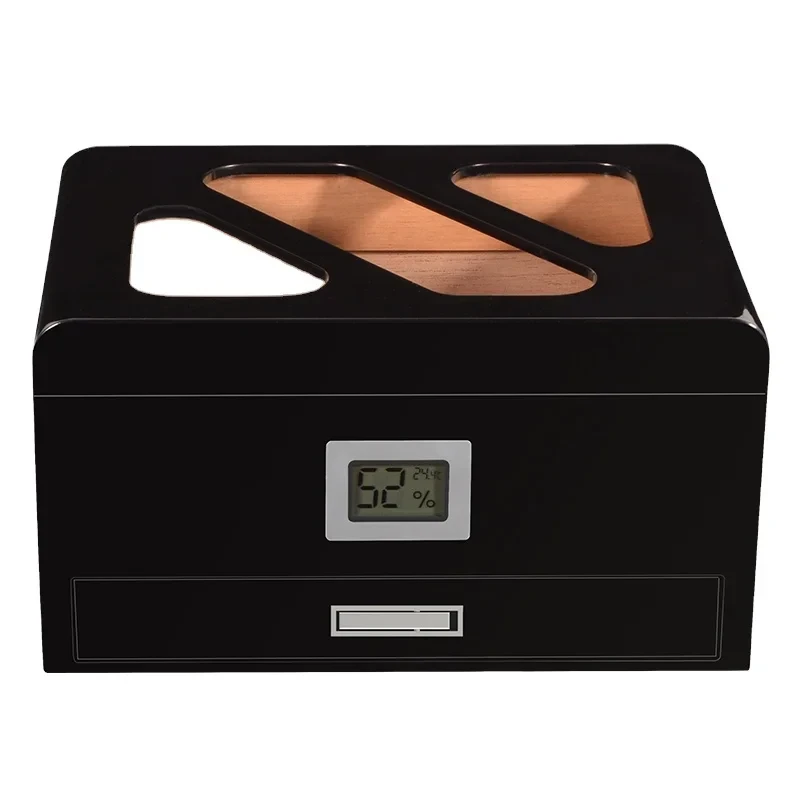
Cigar geometry matters more than people expect. I learned this from years crafting luxury humidors and storage boxes, where cigar sizes influence interior layout and airflow.
Larger ring gauges stay cool longer
A 54 or 60 ring-gauge cigar contains more tobacco. More tobacco means:
- Slower heat buildup
- Cooler smoke
- More stable flavor
This lets many smokers go deeper into the cigar before the heat gets unpleasant.
Smaller ring gauges heat up fast
A 38 or 42 gauge cigar has less leaf and burns hotter.
These cigars can deliver great flavor, but they usually reach their peak and decline sooner.
Tapered cigars change airflow
Shapes like torpedoes, perfectos, and figurados compress airflow at the tip.
This makes the burn warmer and more intense near the end.
How size affects smoking distance
| Size / Shape | Cooling Ability | How Far Most People Smoke |
|---|---|---|
| Large ring gauge (54–60) | High | Very close to the nub |
| Medium ring gauge (48–52) | Medium | Around final third |
| Small ring gauge (38–44) | Low | Middle to final third |
| Tapered shapes | Low–Medium | Earlier, depending on heat |
The size and shape do not dictate rules. They only guide comfort.
Why do some smokers enjoy cigars nearly to the nub while others stop earlier?
I have met cigar lovers who say, “I smoke it until I cannot hold it anymore,” and others who stop halfway. Both are correct.
Some smokers enjoy the intense final flavors, while others prefer the smoother early stages. Personal taste decides when the cigar feels complete.
Some smokers love deep flavor
These smokers enjoy:
- Stronger body
- Darker notes
- Richer oils
They treat the final inch as the cigar’s “reward.” They feel they wasted nothing.
Some prefer a clean, smooth experience
Other smokers dislike:
- Hot smoke
- Bitterness
- Heavy strength
So they stop earlier because they want each draw to feel clean and balanced.
Experience also plays a role
New smokers often stop earlier because the intensity surprises them.
More experienced smokers often understand how to manage heat and pace.
Cultural habits matter
In many cigar lounges I visit during sourcing trips, I notice:
- Some regions see smoking to the nub as a show of appreciation
- Some view stopping early as a sign of refinement
Both styles are valid. Smoking a cigar is personal, not performative.
What signs—hot smoke, bitterness, tight draw—suggest you’ve reached the end?
You do not need a rulebook. The cigar tells you when it is done.
You should stop when the smoke turns too hot, the flavors turn bitter, or the draw becomes tight and uncomfortable.
These signs show up in almost every cigar.
Hot smoke
This is the clearest signal. When heat overwhelms the flavor, the cigar has passed its peak.
The heat often comes from:
- Fast puffing
- Small remaining tobacco
- Concentrated oils
I see this most with smaller cigars or rushed smoking.
Bitterness
Bitterness grows when:
- Smoke saturates the remaining tobacco
- Tar collects near the nub
- The ember sits too close to the mouth
Bitterness means the tobacco is overworked.
Tight draw
As the cigar shortens, the draw can feel:
- Heavy
- Dense
- Restricted
This happens because moisture collects as the cigar burns.
In my factory visits, many rollers mention moisture as the biggest cause of tight final draws.
The three-stop signals
| Signal | What It Means | Good Time to Stop? |
|---|---|---|
| Hot smoke | Heat overrides flavor | Yes |
| Bitter taste | Oils are over-concentrated | Yes |
| Tight draw | Moisture blocks airflow | Yes |
These signs show the cigar is telling you goodbye.
This part surprised me the most in all my years meeting cigar lovers worldwide.
Your mood, company, environment, and personal ritual often decide when you stop more than the cigar itself.
Cigars are not just tobacco. They are moments.
Social settings influence pace
In cigar lounges, people talk more and puff slower.
Slow puffing reduces heat, so smokers often enjoy the cigar longer.
At events or busy gatherings, people puff faster.
Faster puffing builds heat and forces an earlier stop.
Personal ritual shapes the ending
Many smokers have habits:
- Some finish only when the cigar naturally falls apart
- Some stop as soon as the band reaches their fingers
- Some always smoke two-thirds and never more
- Some end when the conversation ends
I see these patterns often when I talk with customers ordering custom cigar boxes for gifts or branding events.
Emotional tone changes enjoyment
When someone smokes to relax, they tend to savor the cigar.
When someone smokes with focus or stress, they may feel satisfied sooner.
Rituals can be stronger than flavor
Some smokers stop at the same moment every time—
not because the cigar changed,
but because that is their rhythm.
Conclusion
You stop smoking a cigar when the experience feels complete for you, not when a rule says so.


 English
  Español
  Português
  Deutsch
  Français
  Italiano
  العربية