Cigar lovers often struggle with dry, cracked cigars because humidity changes too fast. This problem makes cigars lose aroma and value.
A cigar humidor works by holding stable humidity and temperature so cigars stay fresh, flexible, and full of natural oils. It creates a steady micro-environment that protects tobacco from drying or swelling.
I want to show how a humidor really works, because many people only focus on humidity. A humidor is a simple box, but the science behind it is precise. My years of building wooden cigar boxes taught me that cigars react to even small changes, so we must create balance, not constant adjustment.
How does a humidor maintain stable humidity levels to protect a cigar’s natural oils?
Cigars dry fast when humidity jumps up and down. This makes the wrapper crack and the oils fade.
A humidor keeps humidity stable by using moisture sources and wood that absorbs and releases water slowly. This keeps cigars flexible and keeps their oils from evaporating.
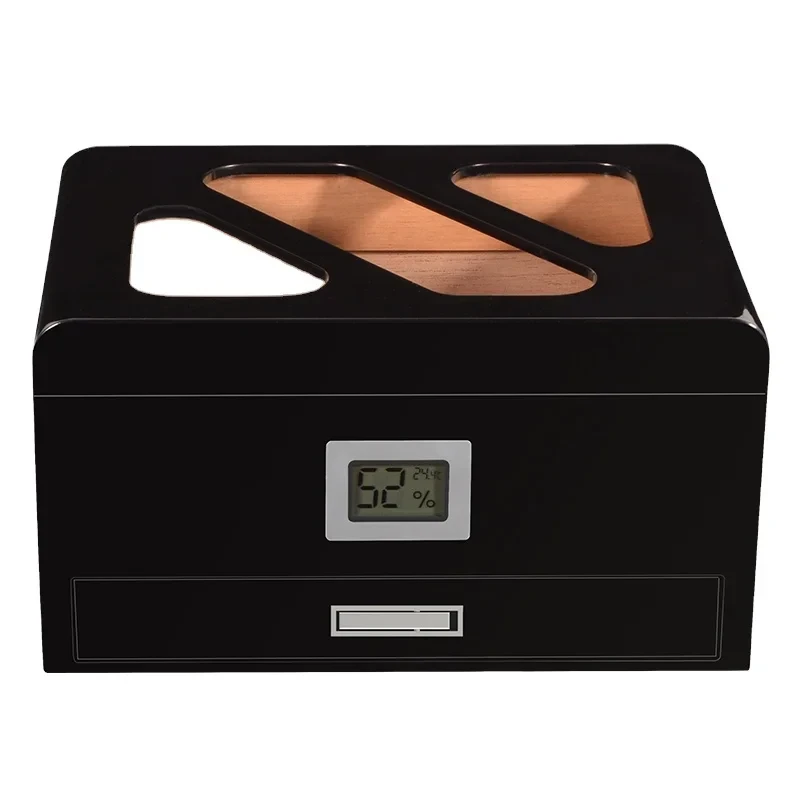
A humidor holds steady moisture because it traps air inside a sealed structure. Inside the box, the humidification unit releases moisture in small amounts. The wood lining absorbs some of this moisture and gives it back when the air becomes dry. This balance stops fast swings. Stable humidity protects the wrapper and slows the loss of aroma.
How humidity moves inside
Humidity rises until the air reaches a set point. When you open the lid, dry air rushes in. The cedar gives back moisture so the air recovers. This cycle happens again and again.
Why stable humidity protects oils
The natural oils in cigars control flavor and burn. When humidity drops below 60%, these oils evaporate faster. At very high humidity, above 75%, the cigar swells and burns unevenly. That is why most people keep humidity at 65–72%.
My work experience
Over the years, I tested many box designs for cigar clients. I learned that even a strong seal is not enough. The interior must breathe at the right speed. When I follow this rule, the humidor never shocks the cigars inside.
What role do interior materials—like Spanish cedar—play in moisture regulation?
Many cigar boxes fail because the interior wood cannot hold moisture. This causes humidity to jump up and down.
Spanish cedar absorbs and releases moisture slowly, stops mold growth, and improves cigar aging. It acts as a buffer that keeps humidity from swinging.
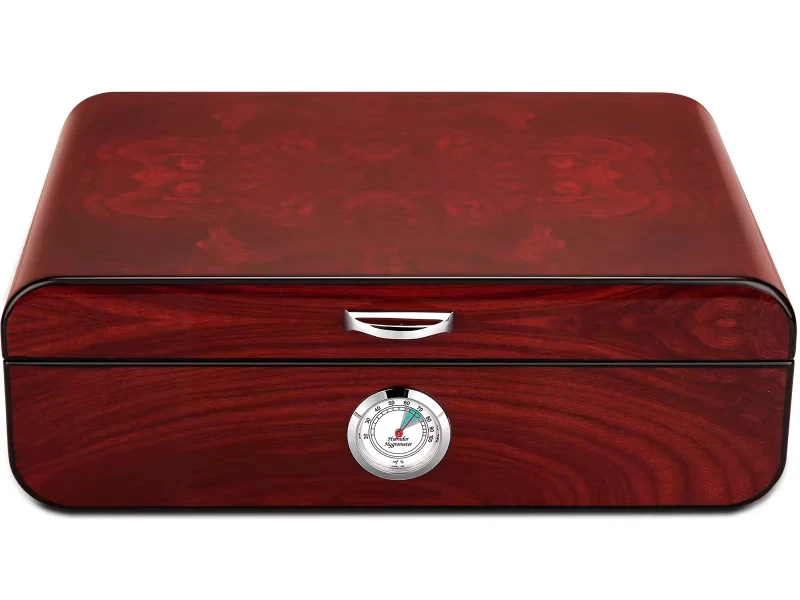
Spanish cedar is the classic wood used in humidors. I use it often when making luxury cigar boxes because it holds moisture better than other woods. It also resists insects naturally. When you season the humidor, the cedar pulls in water. Later, when humidity drops, it releases that water back.
Key benefits of Spanish cedar
| Benefit | Explanation |
|---|---|
| Moisture Buffer | Holds humidity and releases it slowly. |
| Aroma Enhancement | Adds a warm scent that blends with tobacco. |
| Mold Resistance | Natural oils stop mold growth. |
| Insect Resistance | Helps protect cigars from beetles. |
Why cedar matters for long-term storage
The wood keeps cigars aging in a slow way. The cedar oils mix gently with the tobacco aroma. Many premium brands ask for thicker cedar layers so the aging feels richer.
My manufacturing insight
I have worked with real Spanish cedar, okoume, mahogany, and MDF with veneer. Spanish cedar is the most stable. MDF veneer looks nice, but it does not hold moisture. That is why true humidors always use Spanish cedar inside.
How do different humidification systems (Boveda, sponges, beads, electronic units) actually function?
Many beginners over-humidify cigars because they choose the wrong system or use it the wrong way.
Humidification systems work by releasing moisture slowly until the air reaches a target level. Some add moisture only, while others control both adding and absorbing.
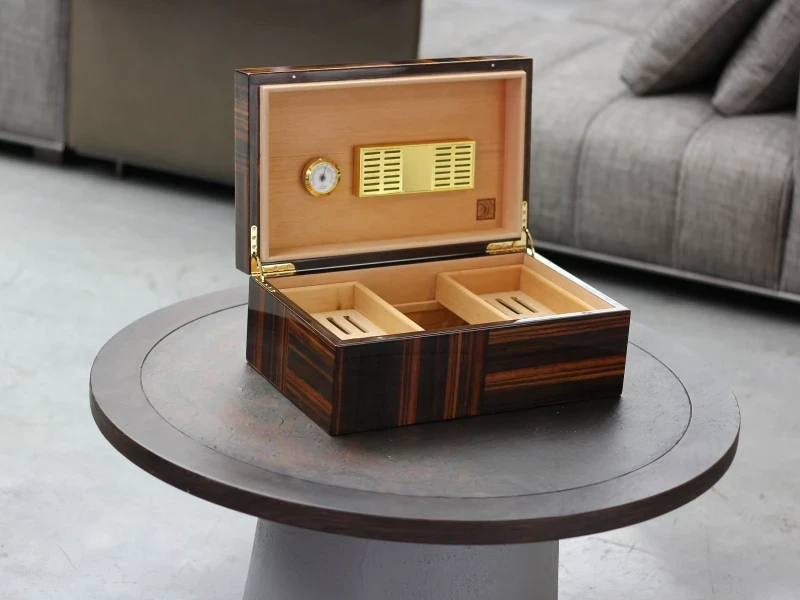
The main types of humidification systems
Boveda Packs
Boveda uses salt-based two-way control. It releases moisture when the air is dry. It absorbs moisture when the air is too wet. This makes it the easiest and safest system for beginners.
Sponges
Sponges release moisture very fast. They often cause humidity swings. Many new cigar owners over-soak the sponge, which leads to mold.
Silica Beads
Beads hold moisture inside tiny pores. They release it slowly. They can also absorb extra moisture. Many collectors like them because they are stable.
Electronic Humidifiers
Electronic units use a sensor and a fan. When humidity drops, they push out moisture. They work well for large cabinets. They need power but give very steady control.
Comparison Table
| System | Adds Moisture | Absorbs Moisture | Stability | Best Use |
|---|---|---|---|---|
| Boveda | Yes | Yes | Very high | Small–medium humidors |
| Sponge | Yes | No | Low | Beginners (not ideal) |
| Beads | Yes | Yes | High | Medium–large humidors |
| Electronic | Yes | Yes | Very high | Cabinets |
My manufacturing insight
When I build large cigar cabinets for clients, I always recommend an electronic unit plus cedar shelves. Small desktop humidors work great with Boveda. The trick is to avoid “wet spots”—when moisture hits cigars too fast.
Why does temperature control matter just as much as humidity inside a humidor?
Many people panic about humidity but forget temperature. High heat destroys cigars even when humidity is perfect.
Temperature affects how fast cigars age and whether tobacco beetles hatch. The ideal range is around 18–21°C (65–70°F).
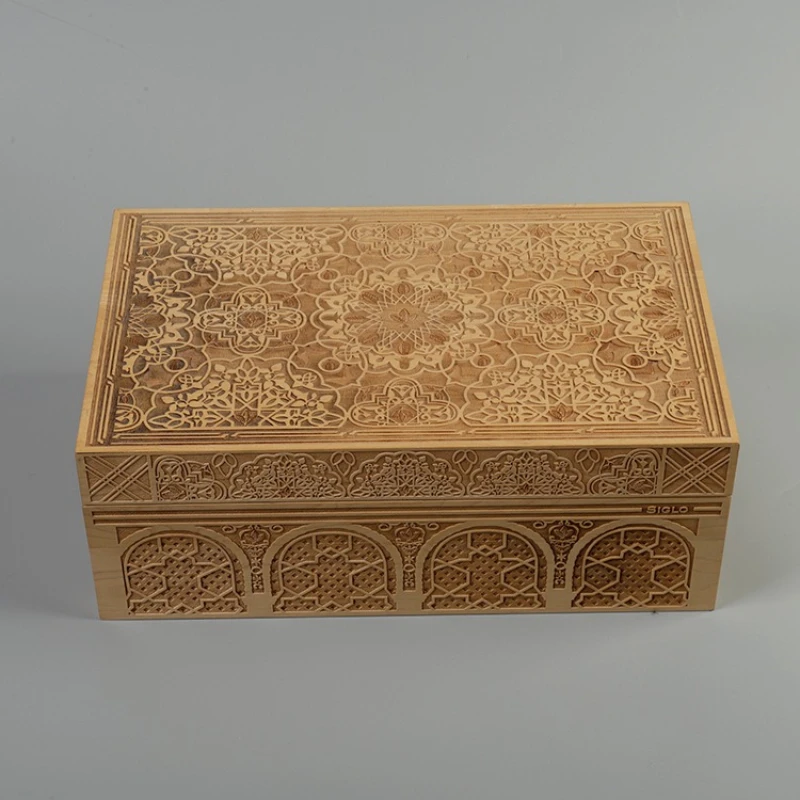
Why temperature changes everything
Humidity and temperature are linked. Warm air holds more moisture. At high temperatures, humidity rises even if you do not add water. This makes cigars swell. At low temperatures, the opposite happens.
The danger of tobacco beetles
Tobacco beetle eggs hatch around 25°C (77°F). Many clients came to me after losing an entire cigar collection because they stored the humidor near a window or heater. Once the beetles start, they create tiny holes and ruin every cigar.
Ideal storage conditions
| Factor | Ideal Range |
|---|---|
| Humidity | 65–72% |
| Temperature | 18–21°C (65–70°F) |
My experience with luxury brands
Many premium brands ship cigars worldwide. They ask me to design boxes that protect cigars from temperature swings during long flights. The best solution is thick walls, layered materials, and proper seals. A humidor must fight both humidity changes and heat.
What signs show your humidor is working properly—and what red flags indicate trouble?
People often ignore early signs of trouble until cigars start to crack or smell wrong.
A good humidor shows steady humidity, slow cigar aging, and no mold. Red flags include big humidity swings, off smells, cracked cigars, or swollen wrappers.
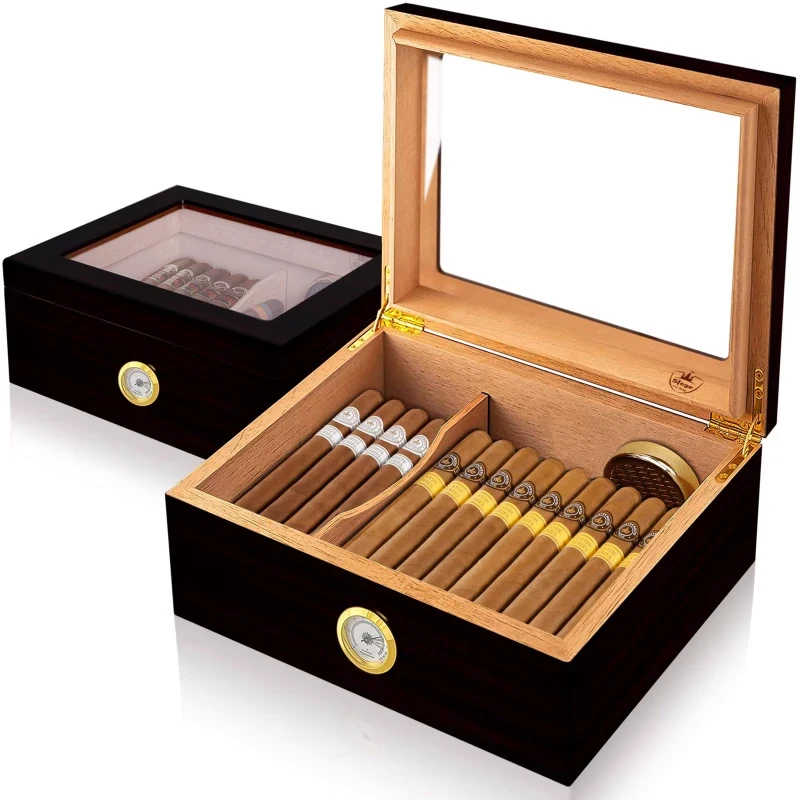
Signs everything is working
- Humidity stays within 65–72% most of the time
- Cigars feel firm but not hard
- Cigars burn evenly
- The cedar smells clean
- The hygrometer changes slowly
Warning signs
| Problem | What It Means |
|---|---|
| Humidity swings fast | The seal is weak or system is wrong |
| Mold | Too much moisture or poor airflow |
| Beetle holes | Temperature too high |
| Cracked cigars | Air is too dry |
| Swollen wrappers | Humidity too high |
My personal observations
When I test a humidor before shipping, I always check the seal first. Even luxury boxes fail when the lid does not close tight. I also test the interior with cedar strips to see how fast they absorb moisture. A good humidor recovers humidity within a few hours after opening.
Conclusion
A humidor works well when humidity and temperature stay steady so cigars age slowly and keep their natural oils.



 English
  Español
  Português
  Deutsch
  Français
  Italiano
  العربية