Many brands fall in love with high gloss at first sight. The reflection feels deep. The surface looks like a mirror. It screams luxury.
High gloss wooden boxes instantly elevate perceived value through deep reflection and visual drama. But they demand higher cost, longer lead times, stricter quality control, and greater risk management compared to matte or semi-matte finishes.
I have produced custom wooden boxes for over 16 years. I have delivered high gloss projects for perfume brands, premium watch collections, and limited-edition gift packaging. I admire high gloss. But I also respect its risks. Beauty always has a price.
Why High Gloss Instantly Signals Luxury in Wooden Packaging?
In a showroom, lighting is strong. Spotlights hit surfaces from different angles. High gloss reacts dramatically.
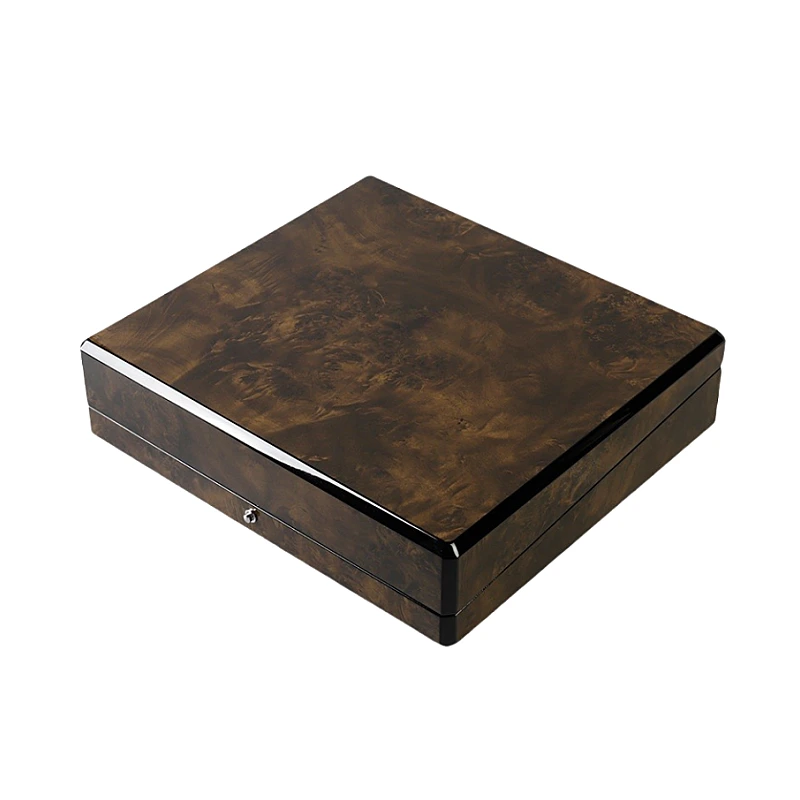
High gloss signals luxury because it reflects light deeply, creates a mirror-like surface, and visually amplifies color depth, making wooden packaging appear more refined and expensive.
When I place a high gloss box under display lighting, the transformation is immediate.
Reflection Creates Drama
High gloss does not absorb light. It reflects it clearly. This creates:
- Strong visual depth
- Mirror-like clarity
- Sharp color intensity
- A polished, jewelry-like effect
For dark colors like piano black or deep burgundy, the effect is powerful.
Emotional Impact on Customers
Customers often associate shine with value. Many luxury products use glossy surfaces, including:
- Premium cars
- Luxury pianos
- High-end lacquer furniture
This association transfers to packaging. A high gloss wooden box feels formal and ceremonial.
Perfect for Certain Product Types
High gloss works especially well for:
| Product Type | Why High Gloss Works |
|---|---|
| Perfume Boxes | Enhances glamour and femininity |
| Premium Watch Boxes | Creates strong display presence |
| Limited Editions | Signals exclusivity and rarity |
When the product price is high, the packaging must match. High gloss helps close that gap visually.
But what customers see in a showroom is only half the story. What happens in production is much more complex.
What Really Drives the Cost of High Gloss Finishing?
Many buyers think high gloss only means adding more paint. This is incorrect.
The cost of high gloss comes from multiple primer layers, repeated sanding, polishing cycles, dust-controlled environments, and higher rejection rates during inspection. Labor intensity is the main cost driver.
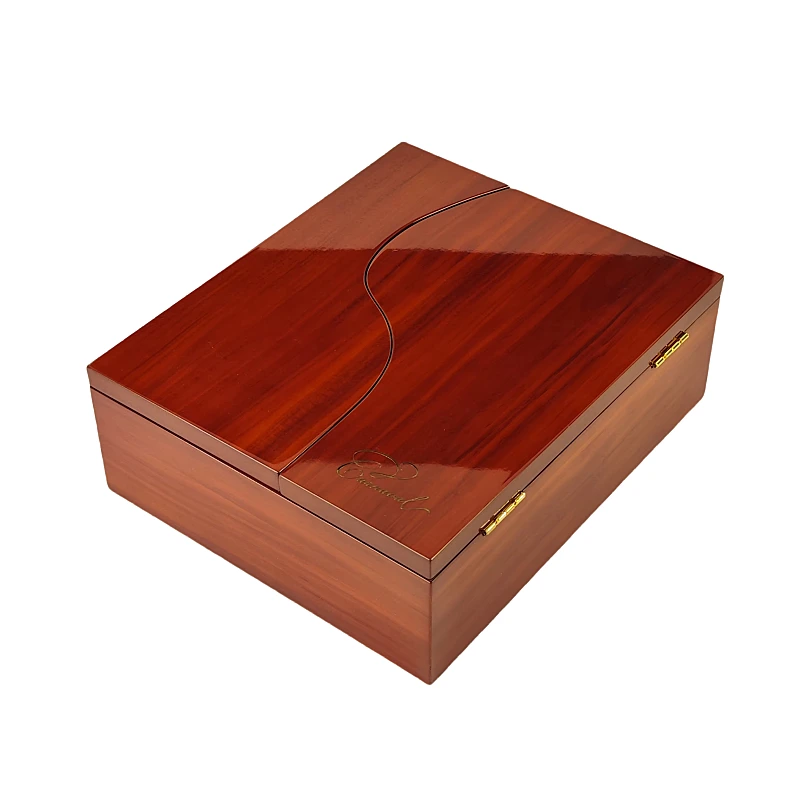
High gloss is not a simple spray-and-dry process.
Multi-Layer Structure
A typical high gloss finishing process includes:
- Base primer layer
- Drying
- Sanding
- Second primer layer
- Sanding again
- Topcoat spraying
- Drying
- Polishing
- Final inspection
Each sanding must be smooth and even. Any small defect will show later.
Polishing Is Critical
After curing, the surface must be polished to achieve mirror clarity.
Polishing requires:
- Skilled workers
- Controlled pressure
- Multiple polishing compounds
If polishing is uneven, waves appear. Under strong light, these waves become visible immediately.
Dust-Free Environment
High gloss is extremely sensitive to dust.
One tiny particle during spraying can:
- Create a visible bump
- Force re-sanding
- Cause full panel rejection
That is why spray rooms must be clean and controlled.
Cost Comparison Overview
| Finish Type | Labor Intensity | Rejection Rate | Relative Cost |
|---|---|---|---|
| Matte | Moderate | Low | Standard |
| Semi-Matte | Moderate | Low-Medium | Slightly Higher |
| High Gloss | Very High | Medium-High | Highest |
Most extra cost is labor, not material.
Quality Risks: Dust, Waves, and Micro Scratches You Cannot Ignore?
High gloss looks perfect when flawless. But flaws are easier to see.
High gloss surfaces expose dust particles, polishing waves, micro scratches, and edge defects more clearly than matte finishes, increasing rejection rates and requiring stricter inspection standards.
I always warn clients that high gloss increases visual sensitivity.
Dust Contamination
Even in controlled workshops, dust exists.
If dust lands during spraying:
- It creates a small raised point
- After drying, it becomes visible
- Rework becomes necessary
Rework increases time and cost.
Surface Waves
After multiple coating layers, slight unevenness may occur.
Under normal lighting, waves may be invisible. Under showroom lighting, they become obvious.
This is why high gloss inspection must use strong side lighting.
Micro Scratches During Handling
High gloss scratches more visibly.
Common risk points:
- Assembly process
- Hardware installation
- Packing stage
- Transportation vibration
Even soft cloth contact can leave micro marks if not handled carefully.
Higher Rejection Rates
Because defects are more visible:
- Inspection standards are stricter
- Rejection rates are higher
- Production planning must include buffer
This risk must be accepted before choosing high gloss.
Longer Lead Times and Stricter QC Compared to Matte Options?
Time is another factor many buyers underestimate.
High gloss projects usually require 50–60 days including sampling, due to extra sanding and polishing cycles, compared to 35–45 days for matte projects. Quality control must be stricter and more time-consuming.
High gloss cannot be rushed.
Extended Production Timeline
Matte project timeline:
- 35–45 days including sampling
High gloss project timeline:
- 50–60 days depending on complexity
Extra time comes from:
- Additional coating cycles
- Extended drying time
- Polishing process
- Higher inspection standards
Sampling Is Even More Important
For high gloss, I always recommend:
- Confirm color depth
- Confirm gloss level
- Approve physical golden sample
- Simulate retail lighting during approval
Photos are not reliable for high gloss. Reflection changes perception.
Shipping Protection
High gloss requires upgraded packaging protection.
We often add:
- Protective film layers
- Extra foam padding
- Separated compartment packing
Micro scratches during shipping are more visible on glossy surfaces.
Quality control continues even after production.
When High Gloss Is Worth the Investment — and When It Is Not?
High gloss is beautiful. But not every brand needs it.
High gloss is worth the investment when brand positioning, retail price, and timeline support higher production cost and stricter quality management. It is not ideal for cost-sensitive projects or tight delivery schedules.
I always ask clients three questions before confirming high gloss.
Question 1: Does Your Retail Price Support It?
If the product is positioned at the top tier, high gloss strengthens perceived value.
If margins are tight, high gloss may create pressure.
Question 2: Can You Accept Longer Lead Time?
If launch timing is strict, high gloss may increase risk.
If timeline is flexible, the process becomes safer.
Question 3: Is Your Brand DNA Glamorous?
High gloss fits brands that are:
- Bold
- Formal
- Glamorous
- Celebration-focused
If the brand is minimal and modern, matte or semi-matte may align better.
My Honest Advice
I love high gloss when the project supports it. Limited editions, flagship lines, and statement pieces benefit greatly.
But if budget is sensitive or the schedule is tight, matte or semi-matte often deliver better balance.
High gloss is not wrong. It simply requires commitment.
Conclusion
High gloss wooden boxes deliver dramatic luxury but demand higher budget, longer timelines, and strict quality control. Choose it only when your brand positioning and resources fully support the investment.
WoodoBox
Custom Wooden Boxes, Crafted to Perfection