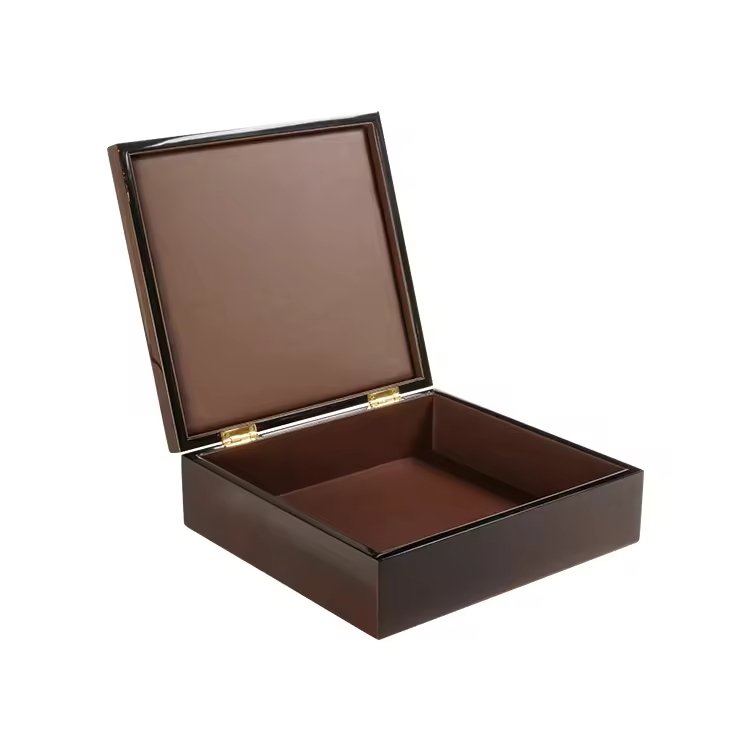
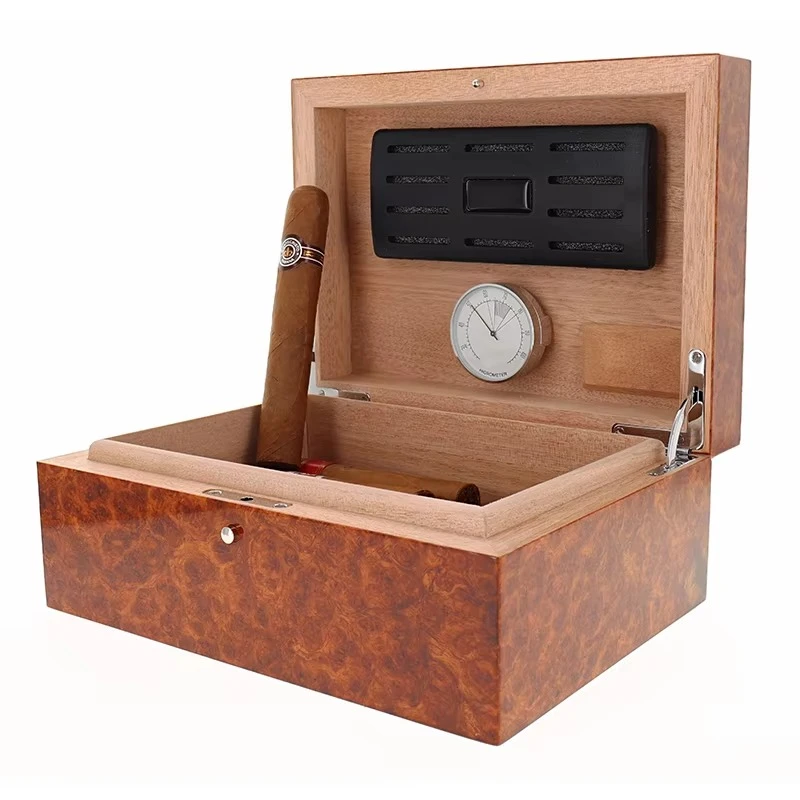
High humidity keeps cigars fresh, but it can also make wood swell. A swollen lid can stick, jam, or even damage the box.
Yes, a cigar box lid can swell and get stuck in high humidity. The right structural design—wood choice, expansion allowance, frames, liners, hinges, and finishes—prevents this problem.
Many buyers only test humidity retention, but they forget to test lid movement under humidity change. I will explain why swelling happens and which structural solutions protect against it.
Why does wood swell and cause lid sticking when humidity is high?
Wood is not stable. It reacts to air moisture, expanding and shrinking in different directions.
Wood swells across its grain when humidity rises. If the lid and rim expand unevenly, gaps close and edges jam, causing sticking.
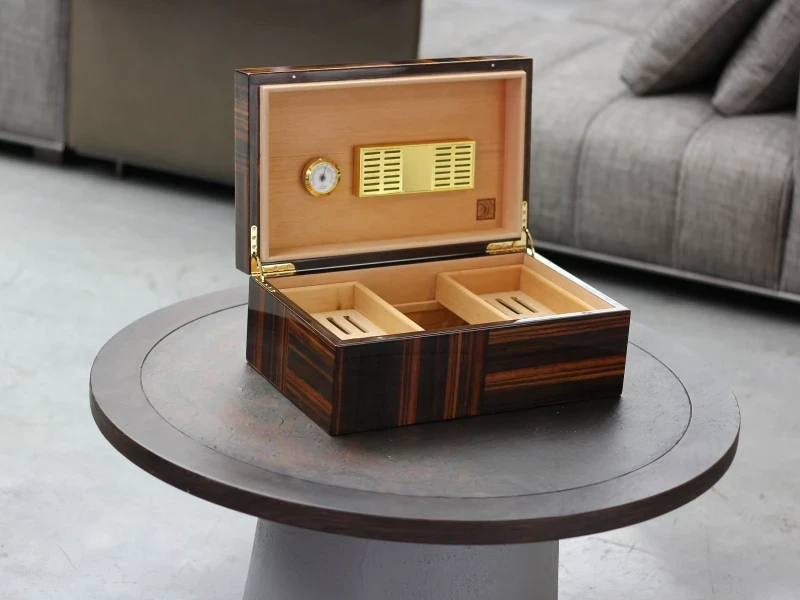
When moisture enters wood, cellulose fibers expand. Expansion is much greater across the grain than along it. In a cigar box lid, this means the panel becomes slightly wider and thicker. If the rim also swells, the gap between lid and box shrinks. Even 0.2 mm expansion is enough to create friction. In humidors, where RH often stays above 65%, swelling can accumulate over weeks, making the lid hard to open.
Swelling Effects on Box Function
| Humidity Condition | Expansion Behavior | Result on Lid |
|---|---|---|
| Dry (40% RH) | Shrinkage | Loose fit |
| Ideal (65–70% RH) | Stable | Smooth fit |
| High (80%+ RH) | Swelling | Lid sticking |
Understanding this behavior helps me design gaps and choose wood properly for each box.
Which wood species and panel thicknesses reduce swelling risk for the lid and rim?
Not all woods react the same to moisture. Choice of species and thickness makes a big difference.
Dense woods like mahogany, walnut, or maple, and thinner lid panels, reduce swelling risk. Spanish cedar swells more but is often stabilized with veneers or frames.
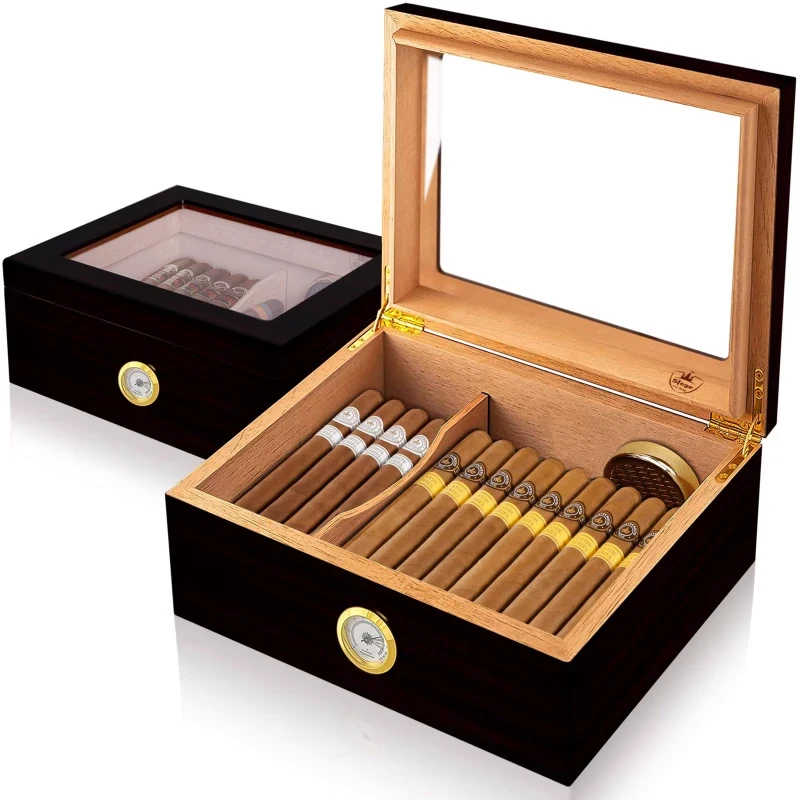
Softwoods and porous species move more with humidity. Spanish cedar, while traditional for cigar storage, is unstable if used as solid lid panels. That is why I prefer using it as an inner liner. For outer lid panels, dense hardwoods like mahogany or maple move less. Thinner panels also react less dramatically, because there is less fiber volume to expand.
Swelling Risk by Wood Species
| Wood Species | Swelling Risk | Common Use |
|---|---|---|
| Spanish cedar | High | Interior liner |
| Mahogany | Medium-Low | Luxury box lids |
| Maple | Low | High-end outer panels |
| Walnut | Medium-Low | Decorative outer lids |
| MDF + veneer | Very Low | Stable luxury panels |
For high-end production, I often recommend MDF cores with natural veneer. This structure resists swelling, while still giving a beautiful wood surface.
How can floating panels, expansion gaps, or beveled lips keep the lid moving freely?
Mechanical design tricks can let wood expand without jamming the lid.
Floating panels, expansion gaps, and beveled lips allow controlled movement, keeping the lid free even under humidity swings.
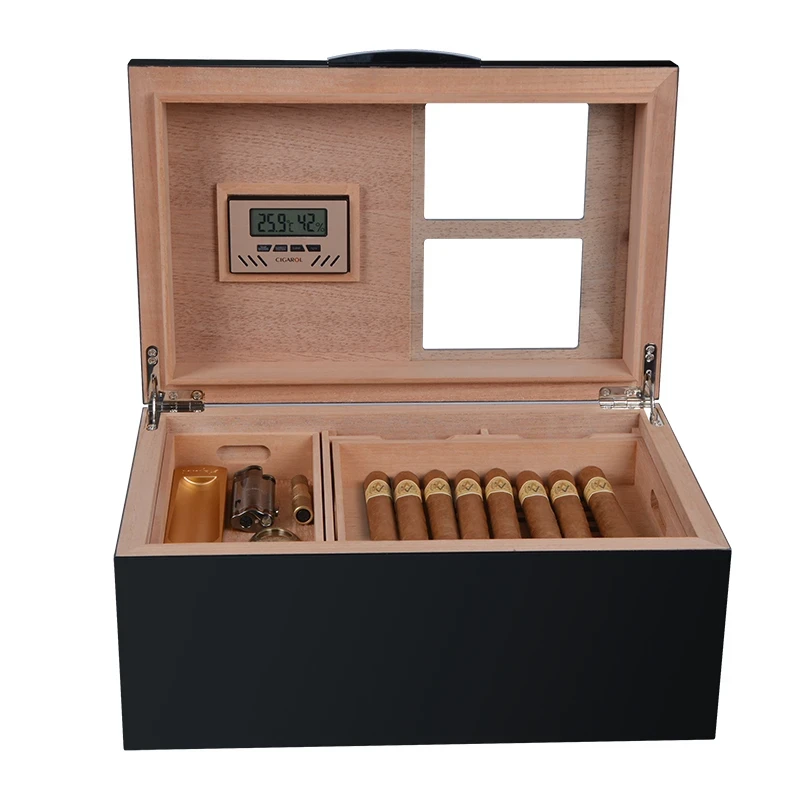
Floating panels are common in furniture. The panel sits inside a groove and can expand without pushing against the frame. Expansion gaps are another method: I design a small clearance around the lid edges. In normal humidity, the gap is barely visible, but when wood swells, the lid still moves. Beveled lips are also useful. Instead of square edges, the lid edge is cut at an angle. This reduces friction and helps guide the lid into place.
Structural Features That Prevent Sticking
| Feature | Advantage | Limitation |
|---|---|---|
| Floating panels | Absorbs wood movement | More complex joinery |
| Expansion gaps | Simple, effective | Visible if too large |
| Beveled lips | Smooth fit, guides closure | Needs precise cutting |
When I supply boxes for export to tropical climates, I often use beveled lips combined with thin expansion gaps. This keeps lids functional even in 80% RH conditions.
Should we use liners (Spanish cedar) and hard frames to stabilize the opening?
Combining materials can solve swelling problems. Cedar gives aroma, but frames give stability.
Yes, using Spanish cedar liners inside hard wood or MDF frames stabilizes the lid and rim while preserving cigar benefits.
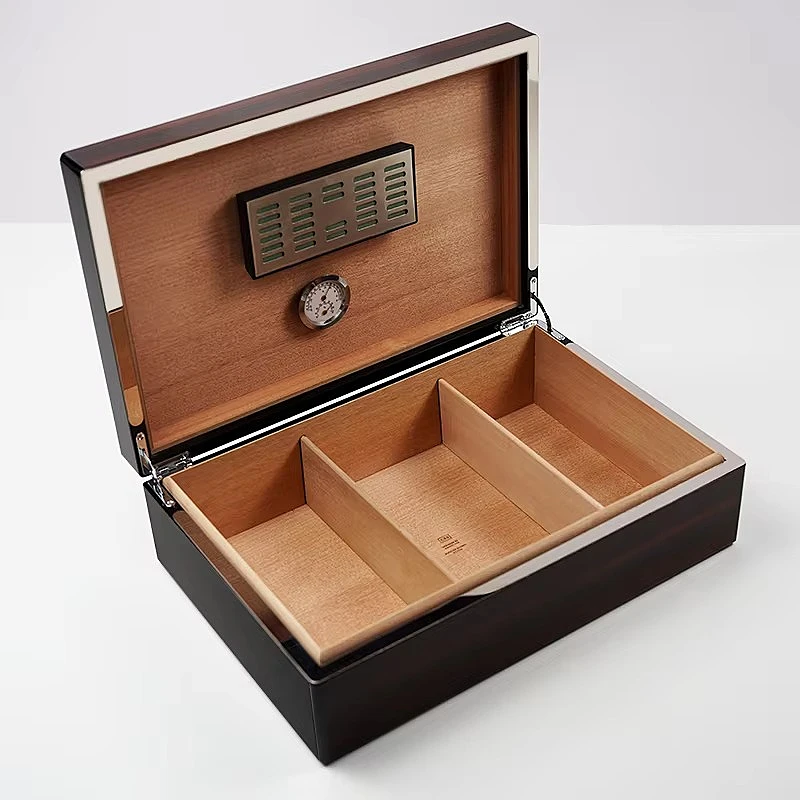
Spanish cedar is essential for aroma and humidity buffering. But if used as the main structural lid, it swells too much. That is why I glue thin cedar liners inside hard frames made of mahogany or MDF. The hard frame holds dimensions steady, while the cedar layer adds aroma. For the rim, I also reinforce with hardwood strips. This reduces distortion and keeps the opening smooth.
Hybrid Lid Structures
| Design | Stability | Aroma Benefit | Cost |
|---|---|---|---|
| Solid Spanish cedar lid | Low | High | Low |
| MDF + cedar veneer liner | Very High | Medium | Medium |
| Mahogany + cedar liner | High | High | High |
This layered approach balances performance. It is common in luxury humidors that must last decades without warping.
What hinge placement and latch design help maintain alignment under moisture change?
Even if wood moves, hinges and latches can keep the lid aligned. Placement and type matter.
Proper hinge placement and strong latches hold the lid in alignment, preventing binding even when wood swells slightly.
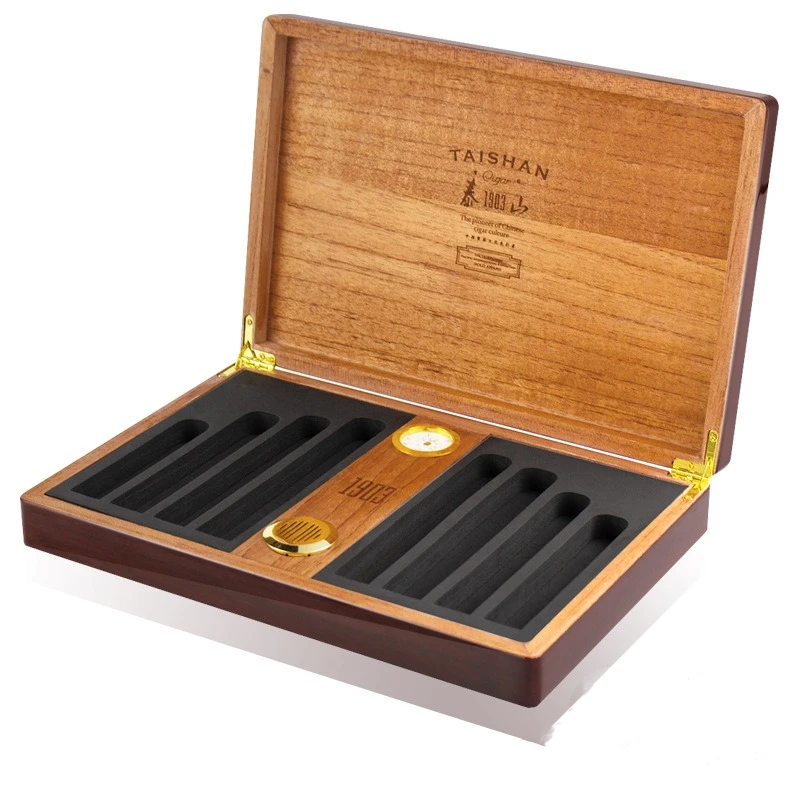
I always place hinges near the outer corners. This reduces twisting compared to center placement. Continuous piano hinges work even better, distributing stress along the full lid. For latches, multi-point systems apply pressure evenly. If the lid swells slightly, the latch helps guide it closed without jamming. Magnetic catches can help reduce stress on swollen lids, though they are weaker in sealing.
Hinge and Latch Choices
| Feature | Effect on Alignment |
|---|---|
| Corner hinges | Keeps edges square |
| Continuous hinge | Prevents twisting |
| Multi-point latch | Even lid pressure |
| Magnetic assist | Smooth closing |
I advise buyers to test hinge alignment under high humidity before approving mass production. Poor hinge placement shows defects quickly.
Does balanced sealing/finishing on both sides of each panel prevent uneven swelling?
Finishes are not only for beauty—they also control moisture movement.
Yes, balanced sealing on both sides of panels prevents uneven swelling. Without balance, one side absorbs more moisture and warps the lid.
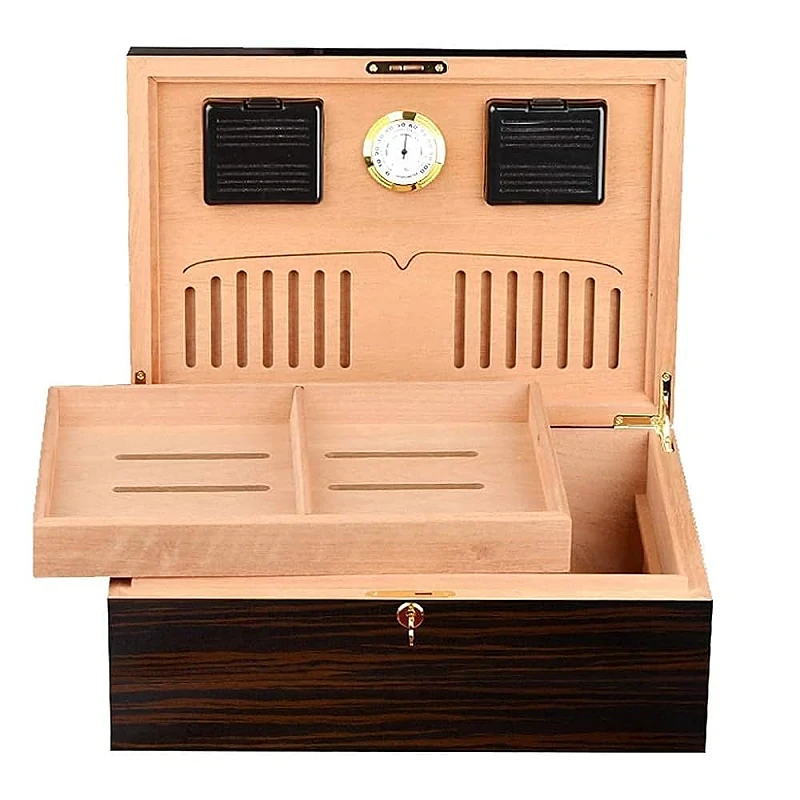
When only the outside of a panel is lacquered, the inside absorbs more humidity. This creates tension and bends the panel. I always apply finishes on both sides, even if the inside only gets a thin sealer. This balance prevents cupping or twisting. For very high-end boxes, I use UV coatings or multi-layer piano lacquer. These slow down vapor absorption dramatically, keeping lids stable.
Finish Balance Impact
| Finish Type | Balance Needed | Stability Result |
|---|---|---|
| Unfinished inside | None | High warp risk |
| Thin seal inside + lacquer outside | Partial | Moderate risk |
| Balanced lacquer both sides | Full | Very stable |
This small detail is often ignored by low-cost factories. But I consider it critical for long-term performance in humid climates.
Conclusion
Yes, lids can swell and stick, but smart design—wood selection, expansion gaps, liners, hinges, and balanced finishing—keeps cigar boxes smooth and functional.
Brand Name: WoodoBox
Slogan: Custom Wooden Boxes, Crafted to Perfection
Website: www.woodobox.com
WhatsApp: +86 18359265311

 English
  Español
  Português
  Deutsch
  Français
  Italiano
  العربية