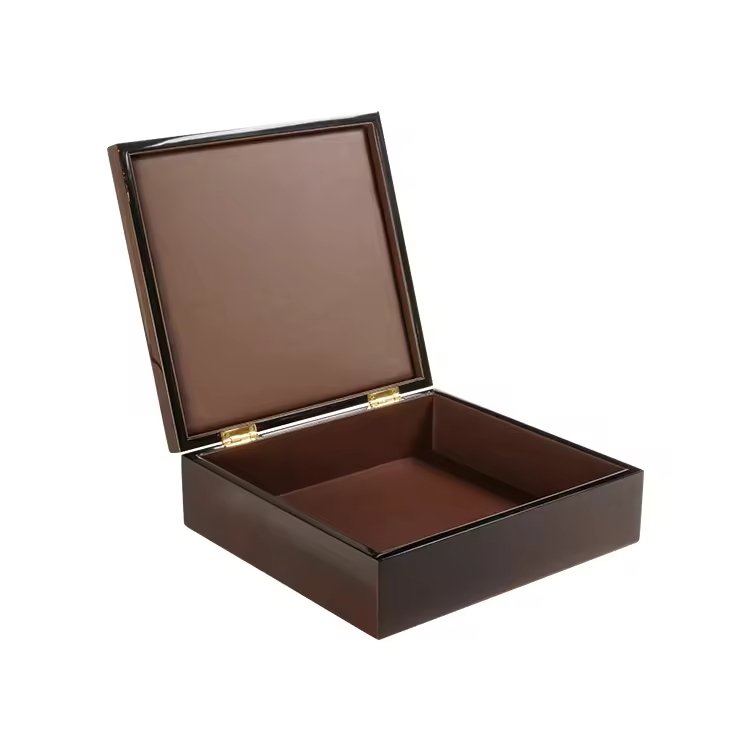
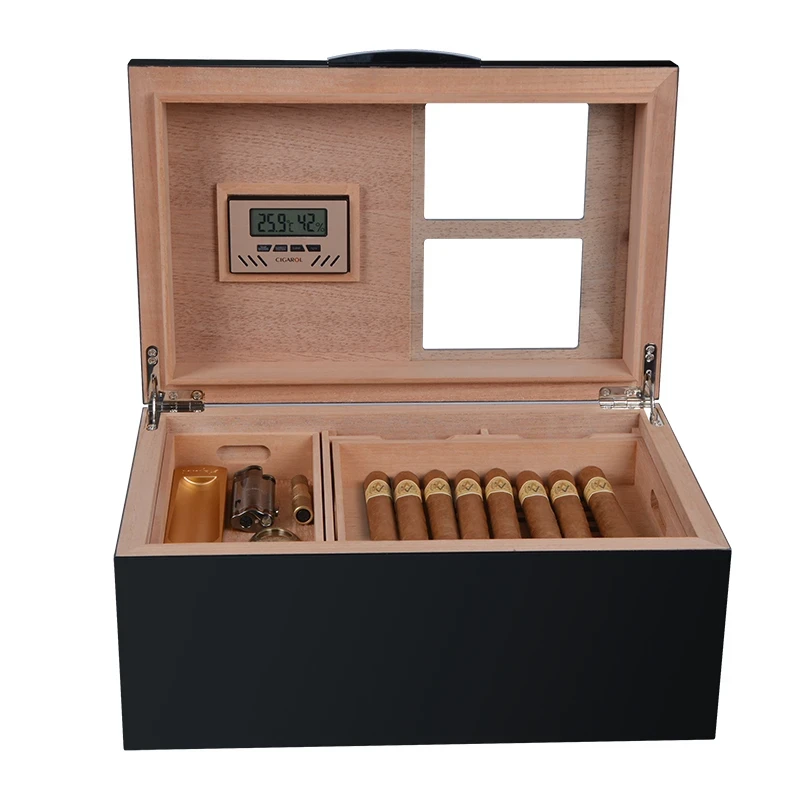
Frequent refilling of cigar humidifiers often causes accidental water leaks, which may harm the wood. Many buyers wonder if this threatens the life of their box.
Yes, excess water from humidifiers can damage a cigar box, but with proper structural protection such as isolation, liners, or waterproof compartments, the risk can be controlled.
A cigar box is not only for storage but also for presentation. Let’s see how structural design can prevent moisture damage while keeping elegance.
Why does excess water from humidifiers risk damaging the wooden structure of a cigar box?
Wood absorbs water easily. Too much exposure changes its shape and weakens joints.
Excess water from humidifiers risks swelling, warping, or cracking the wood structure of a cigar box, leading to long-term damage.
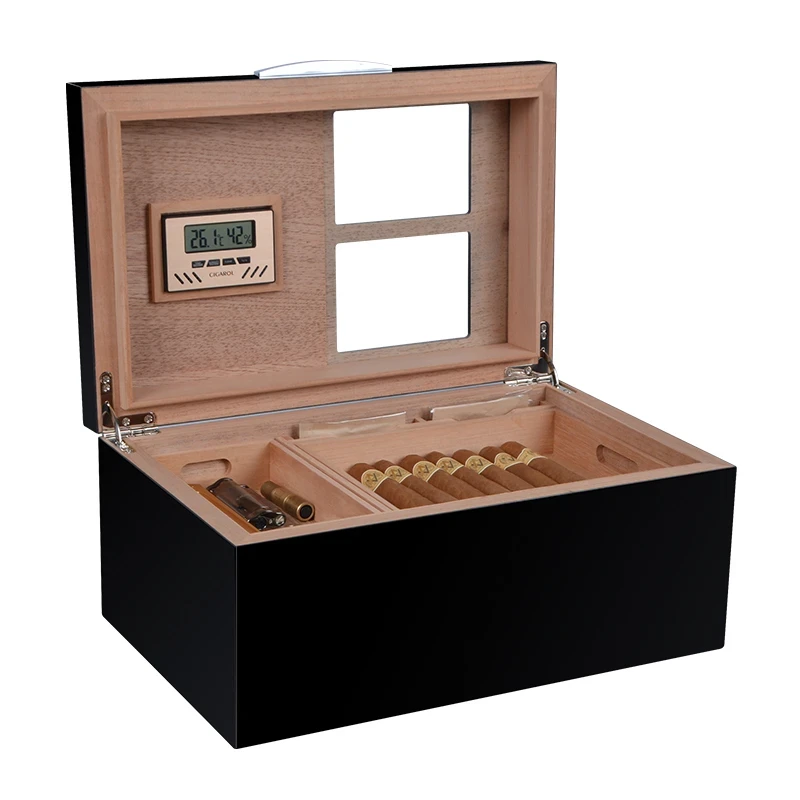
I often see buyers surprised when a premium cedar box develops swelling or cracks after a few months. The cause is not humidity in the air, but liquid water leaking from overfilled or poorly sealed humidifiers. When drops fall onto raw cedar, the pores absorb moisture fast. This weakens the wood fibers, making the box unstable.
How water harms cigar boxes
- Swelling of cedar lining: Trays no longer fit smoothly.
- Warping of the lid: Glossy piano finishes lose alignment.
- Mold growth: Water pools in corners, creating stains.
- Juntas soltas: Glue lines break down over time.
Wood is a living material. It loves balanced humidity but hates direct soaking. That is why smart humidifier placement and structural safeguards are essential in every premium design.
Should the humidifier compartment be isolated or waterproofed to prevent leakage?
Many cigar boxes place humidifiers directly on cedar, but this exposes wood to risk.
Yes, the humidifier compartment should be isolated or waterproofed to prevent water leakage from damaging the wood structure.
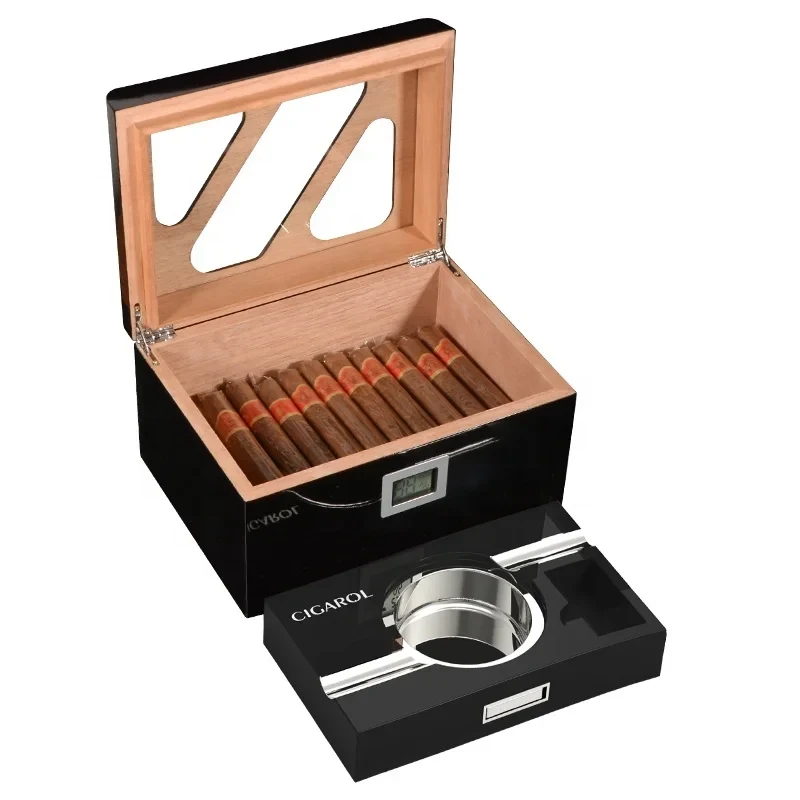
I always design humidifier compartments with extra care. Buyers often refill gel packs or sponges in a hurry, and drops fall naturally. Without isolation, water penetrates the wood. A simple structural barrier can save years of lifespan for the box.
Isolation strategies
- Waterproof inserts: Acrylic or plastic trays under the humidifier.
- Metal frames: Secure compartment housings that separate wood from liquid.
- Removable compartments: Allow cleaning and prevent water buildup.
Exemplo
I once built a 25-count box for a US retailer. In the first version, the humidifier sat directly on the cedar lid. After two months, stains appeared. In the second version, we added a thin acrylic plate as a waterproof base. The box stayed clean and elegant even after daily use.
Why isolation works
By separating wood from water contact, we maintain natural humidity control without risking damage. Buyers can refill freely, knowing the box structure stays safe.
Dripping water often runs to corners and base areas, the most vulnerable parts of a cigar box.
Drip trays, liners, and hidden reservoirs collect excess water and keep the base and corners dry, preventing stains and long-term structural weakness.
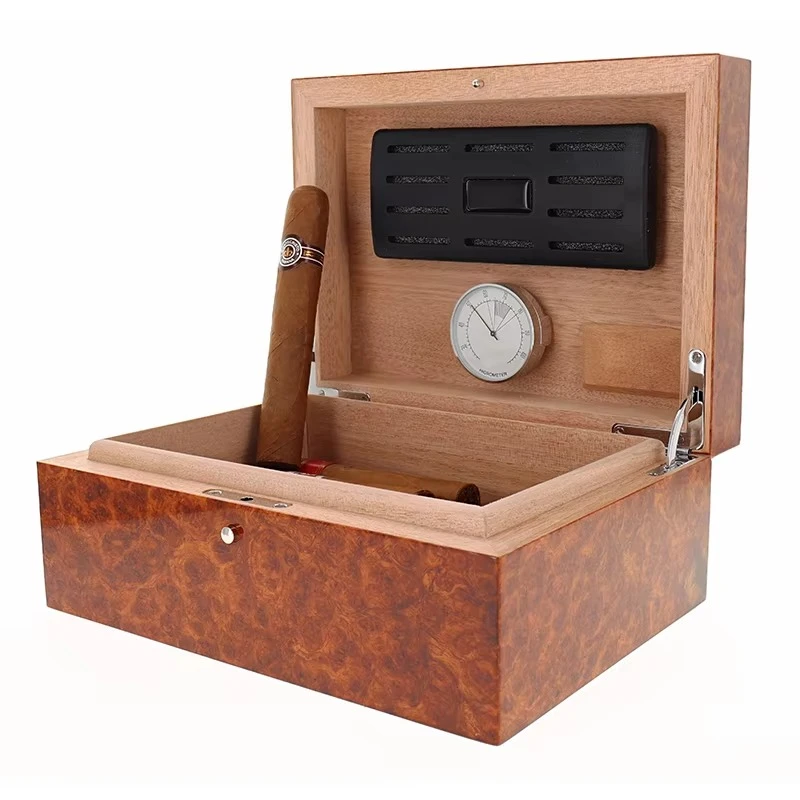
I know that when humidifiers are refilled too fast, small drops escape. These drops slide along the walls and collect in the corners. Over time, corners become black, swollen, or moldy. To avoid this, I design small, almost invisible safety layers.
Protective solutions
- Drip trays: Thin removable trays under humidifiers.
- Hidden liners: Plastic or PU leather sheets glued under the cedar.
- Reservoir channels: Small cavities that catch water before it spreads.
Caso real
A Middle Eastern client asked for a box that could handle frequent refills. Their staff was not careful when filling humidifiers. We added a hidden PU liner under the humidifier zone. This liner collected drops before they touched the cedar. After one year of use, the box still looked new.
Porque é que isto é importante
The corners and base are the first places to fail if water keeps soaking in. With drip trays or liners, the box becomes much more resistant, giving buyers long-term confidence.
Does using metal or acrylic housings for humidifiers reduce direct wood contact with water?
Yes, housing materials make a big difference in safety and durability.
Using metal or acrylic housings for humidifiers reduces direct contact between wood and water, offering stronger protection against leaks.
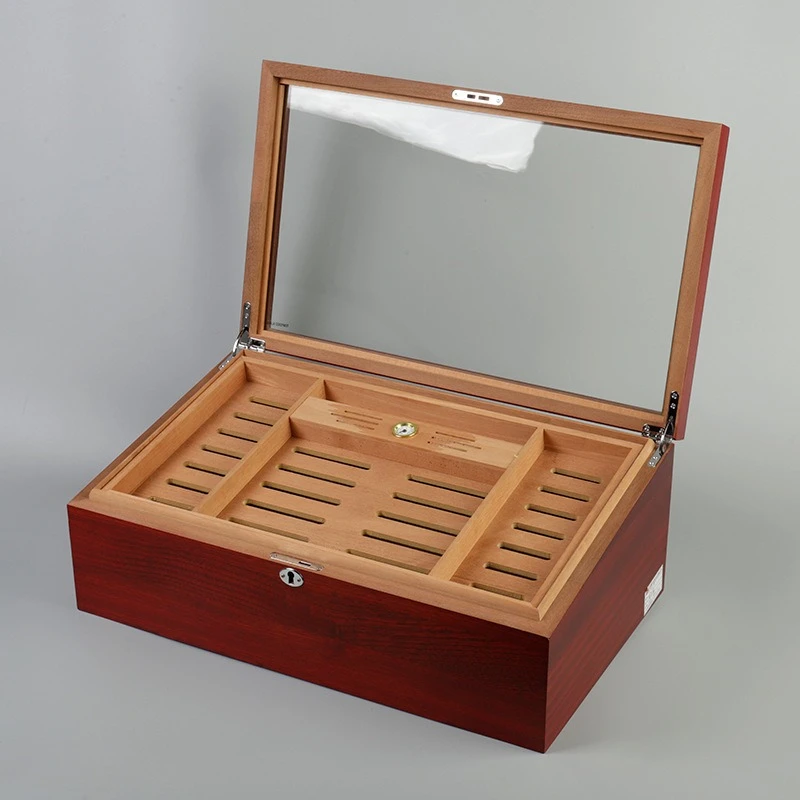
When I design cigar boxes for premium brands, I often choose to encase the humidifier in a secondary housing. This housing acts like armor, blocking liquid water from reaching the cedar or MDF surface. It also adds a modern luxury feel to the design.
Housing options
| Housing Material | Benefícios | Drawbacks |
|---|---|---|
| Metal (stainless, brass) | Durable, elegant look | Custo mais elevado |
| Acrílico | Transparent, waterproof, low cost | Less premium look |
| Plástico | Cheap, easy to mold | Less luxury appeal |
Story from production
I remember one project for a European client who wanted humidifiers hidden in the lid. At first, we mounted them directly on cedar. But refilling left visible water marks. After switching to acrylic housings, the issue disappeared, and the box looked cleaner with a more modern touch.
Why buyers appreciate this
Metal or acrylic housings are not only protective but also easy to clean. They prevent ugly stains, giving the box a longer premium life.
What role do finishes and sealants play in protecting interior cedar from over-moisture?
Wood finishes are not only for looks—they also act as protection.
Finishes and sealants protect cedar from absorbing too much moisture, keeping the interior safe even if minor spills happen.
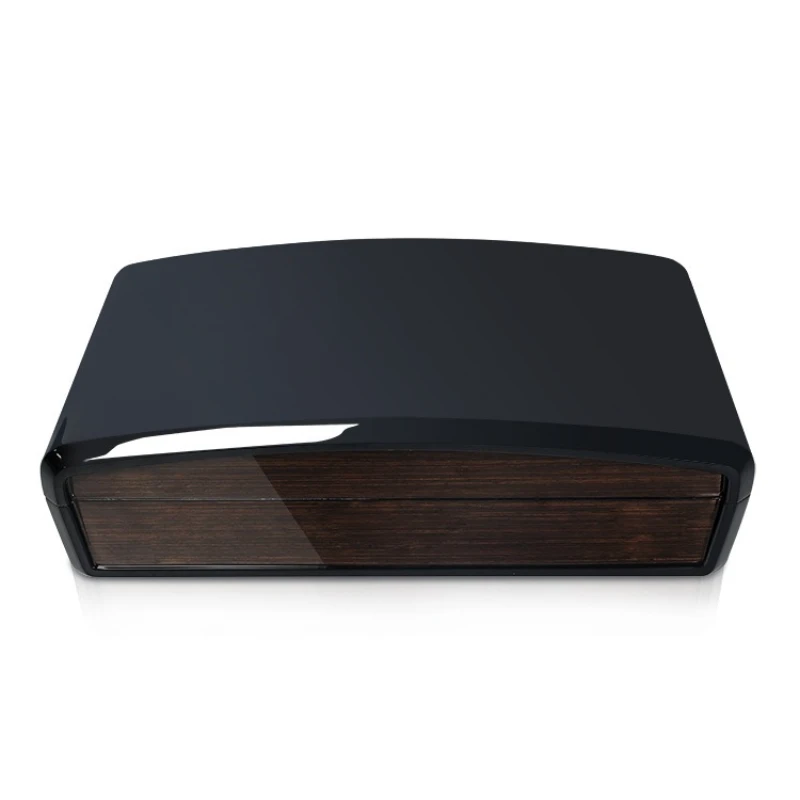
I often explain to buyers that raw cedar breathes well, but it also absorbs water quickly. A light protective coating can make cedar more resistant without killing its natural aroma. This is a delicate balance: too much coating, and cedar stops regulating humidity; too little, and water stains appear easily.
Protective finishes I use
- Laca transparente: Seals surfaces lightly while keeping wood breathing.
- Wax finishes: Natural protection with minimal visual change.
- Moisture-resistant sealants: Applied to corners and edges only.
Case study
One premium box for a collector in Germany had problems with corner mold. We applied a wax finish to interior edges in the redesign. The cedar still regulated humidity, but the corners resisted water drops much better. The client later told me that maintenance became much easier.
Porque é que isto é importante
Cedar is key to cigar aging, but without protection, it becomes vulnerable. With subtle finishes, we extend the life of both the cedar lining and the whole box.
How can modular or removable humidifier units make maintenance safer and easier?
Humidifiers fixed permanently inside the box are harder to maintain and risk leaks.
Modular or removable humidifier units allow safe refilling outside the box, avoiding spills and making long-term maintenance easier.
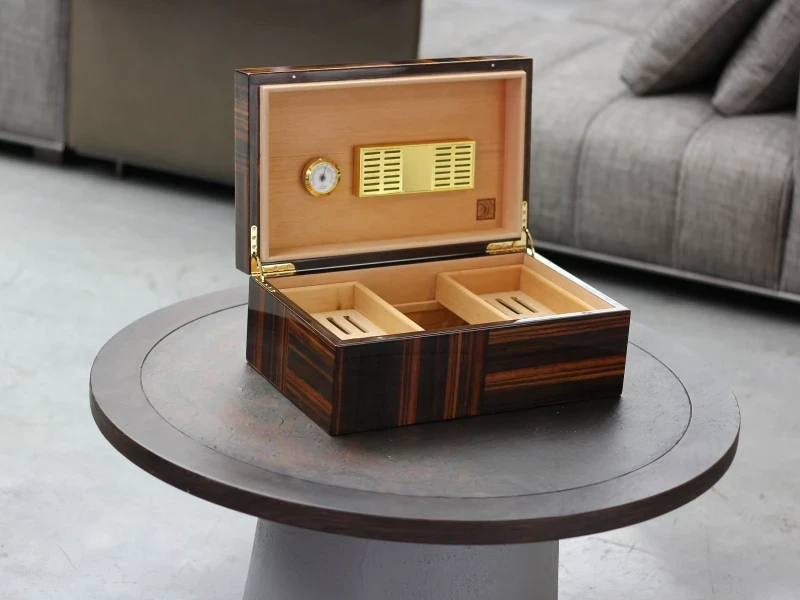
I strongly recommend modular humidifiers for premium buyers. Instead of pouring water directly into the box, users can take the unit out, refill it in the sink, and return it safely. This prevents water from ever touching the cedar.
Modular design benefits
- Easy refilling: No spills inside the box.
- Safe cleaning: Units can be washed separately.
- Longer box life: Less chance of water stains.
Exemplo
One luxury Cuban cigar distributor I worked with required modular humidifiers. Their customers refilled units weekly. With removable systems, even careless refills did not harm the wood. Boxes stayed pristine for years, which kept their luxury reputation intact.
Why buyers value this
Modular humidifiers reduce stress. Owners can refill quickly without worrying about stains or swelling. This makes the box not just a luxury item but also a practical tool for cigar care.
Conclusão
Proper structural safeguards protect boxes from humidifier leaks, ensuring beauty and durability.
Nome da marca: WoodoBox
Slogan: Caixas de madeira personalizadas, fabricadas na perfeição
Sítio Web: www.woodobox.com
WhatsApp: +86 18359265311



 Português
  English
  Español
  Deutsch
  Français
  Italiano
  العربية