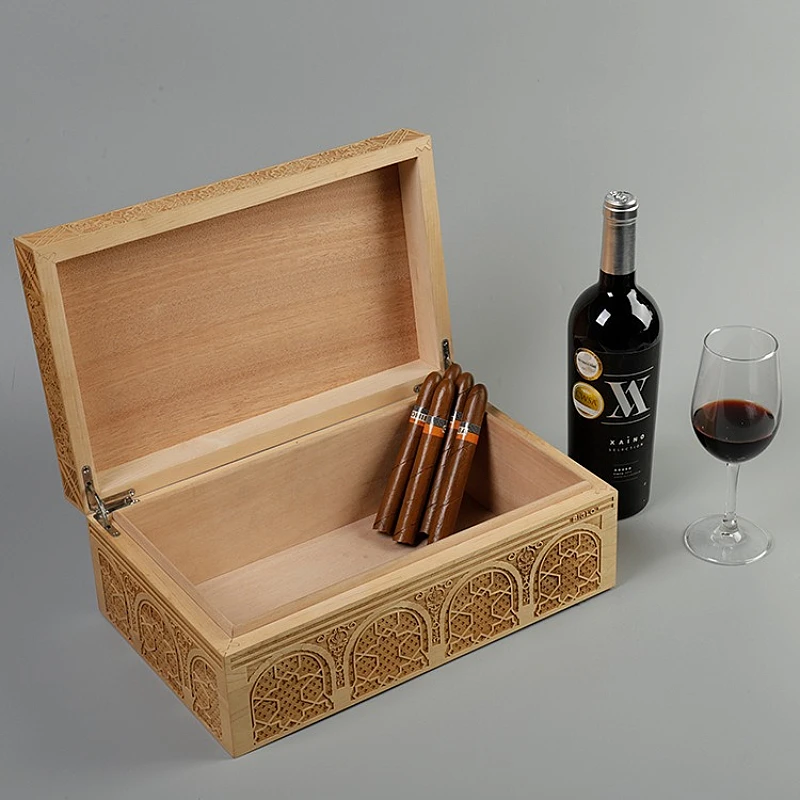
Cigar dryness or mold ruins its flavor and value. Poorly sealed wooden boxes are the main reason cigars lose their ideal humidity too quickly.
Cigar wooden boxes maintain humidity through tight structural sealing, precise joinery, quality hinges, and moisture-absorbing linings like Spanish cedar. Every detail prevents air from leaking in or out.
If you've ever opened a dried-out cigar box, you know how much product and money can be wasted. That's why a well-constructed box isn't just packaging—it's protection. Let’s break down what makes a wooden cigar box sealed and humidity-stable.
Why is stable humidity so important for preserving cigars?
Cigar tobacco is extremely sensitive to moisture loss or gain. Inconsistent humidity levels can cause cigars to dry out, crack, burn unevenly, or develop mold.
Cigars need to be stored at around 65-70% relative humidity to maintain aroma, texture, and smokability. Anything outside this range affects quality.
Maintaining this humidity range is not a luxury—it's a necessity. Cigars are like wine or cheese. If stored poorly, they degrade fast. When too dry, the tobacco becomes brittle and loses essential oils. When too wet, it grows mold and burns unevenly.
That’s why premium cigar boxes are not just about luxury design—they’re engineered to keep moisture stable. Even if the outside weather changes, the inside of the box needs to stay consistent. This is where the science of structural sealing comes into play.
What structural designs help a wooden box prevent air leakage?
Poor box joinery, loose-fitting lids, or gaps in the corners will allow moisture to escape and air to enter. Air leakage is the number one enemy of long-term cigar storage.
A cigar box with tight joints, tongue-and-groove assembly, and overlapping lids can significantly limit airflow, locking in stable humidity.
To create a good seal, the structure of the wooden cigar box must be engineered with precision. A good starting point is the way panels are joined:
Common Structural Techniques:
| Método de conceção | Sealing Performance | Notas |
|---|---|---|
| Butt Joints | Pobres | Easy to make, often leaks |
| Rabbet Joints | Justo | Better but still needs lining |
| Tongue and Groove | Excelente | Provides tight mechanical seal |
| Mitered with Lining | Bom | Aesthetic, works if tightly fitted |
Overlapping Lid Design
A box lid that overlaps the sidewalls by at least 5mm helps seal the interior without needing rubber gaskets. Many luxury boxes use this method because it combines function and elegance.
When I design cigar boxes for clients, I also ensure there are minimal seams and that corner joints are reinforced internally. These small structural details make a massive difference in real-world performance.
How do materials like Spanish cedar improve sealing and humidity control?
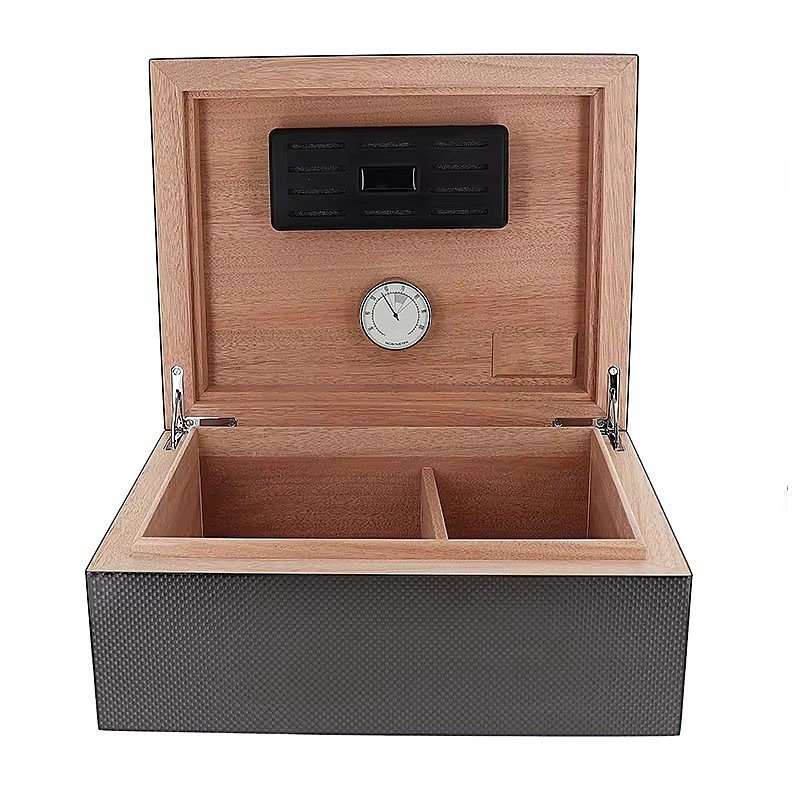
Material selection is as important as structure. Some woods absorb or repel moisture poorly, leading to unstable internal conditions.
Spanish cedar is the gold standard for cigar boxes. It balances moisture absorption and release, while offering natural antifungal protection.
Spanish cedar does three jobs at once: it regulates humidity, repels pests, and adds an aroma that enhances cigar flavor. No other wood can do all three so effectively.
Here’s how it contributes to sealing performance:
Key Benefits of Spanish Cedar:
| Caraterística | Benefício |
|---|---|
| Moisture Buffering | Absorbs and releases humidity as needed |
| Tight Grain | Reduces air leakage |
| Aroma Infusion | Melhora o envelhecimento do charuto |
| Óleos naturais | Repels tobacco beetles |
When I’m helping a client choose interior lining materials, I almost always recommend Spanish cedar. It's also available in different forms—solid panels, veneer lining, or even cedar trays. All of these help create a micro-environment inside the box that stays within the 65–70% RH range.
What role do hinges and closures play in keeping the box airtight?
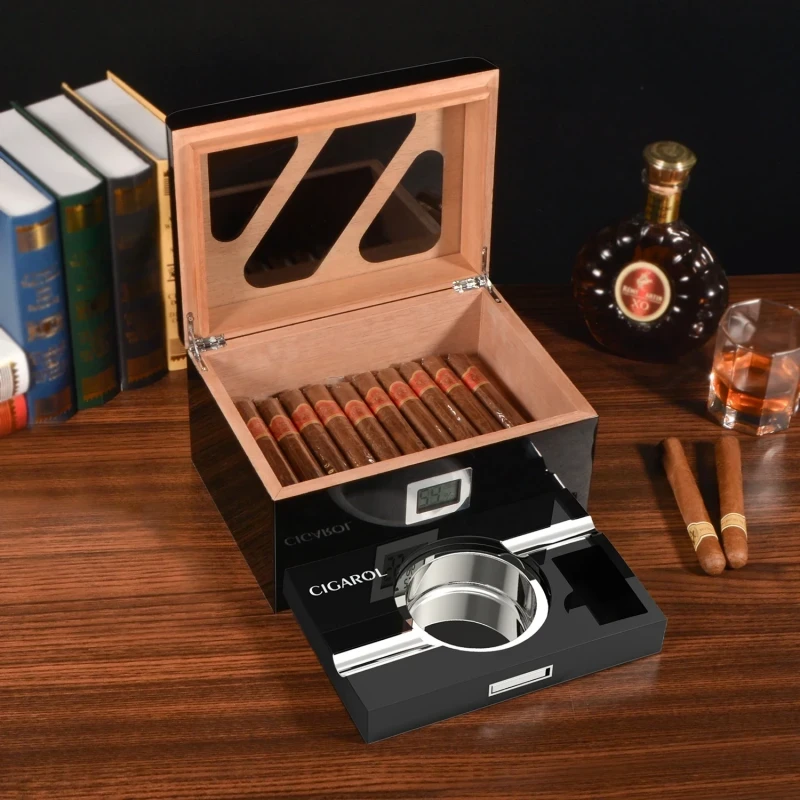
Even with perfect joints and materials, if the lid doesn’t close tightly, humidity will escape quickly.
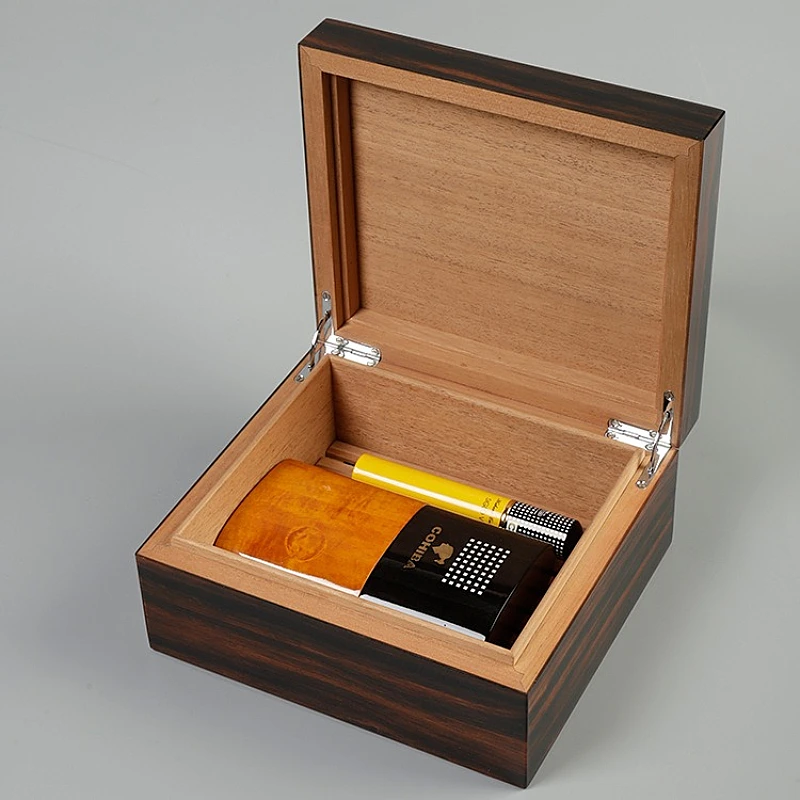
High-quality hinges and precision latches maintain uniform pressure between the lid and body, completing the airtight seal.
It’s common to overlook hardware, but hinges and closures play a vital role in how well the box holds moisture. A loose hinge or weak magnet can result in micro-gaps that allow air exchange.
Common Hardware Choices and Their Effects:
| Componente | Função | Performance Level |
|---|---|---|
| Brass Quadrant Hinge | Creates precise lid alignment | Elevado |
| Soft-close Hinges | Smooth closing, less impact shock | Médio |
| Fecho magnético | Invisible and functional | Médio-Alto |
| Metal Latch/Lock | Strong seal and tamper resistance | Elevado |
When I design cigar boxes for clients, I use quadrant hinges for luxury models. They are small but engineered to give a precise stop angle and strong seal. For mid-range products, magnetic closures are effective and elegant. The key is consistent closing pressure. The lid must press evenly against the body.
Can interior linings or seals enhance the overall moisture retention?
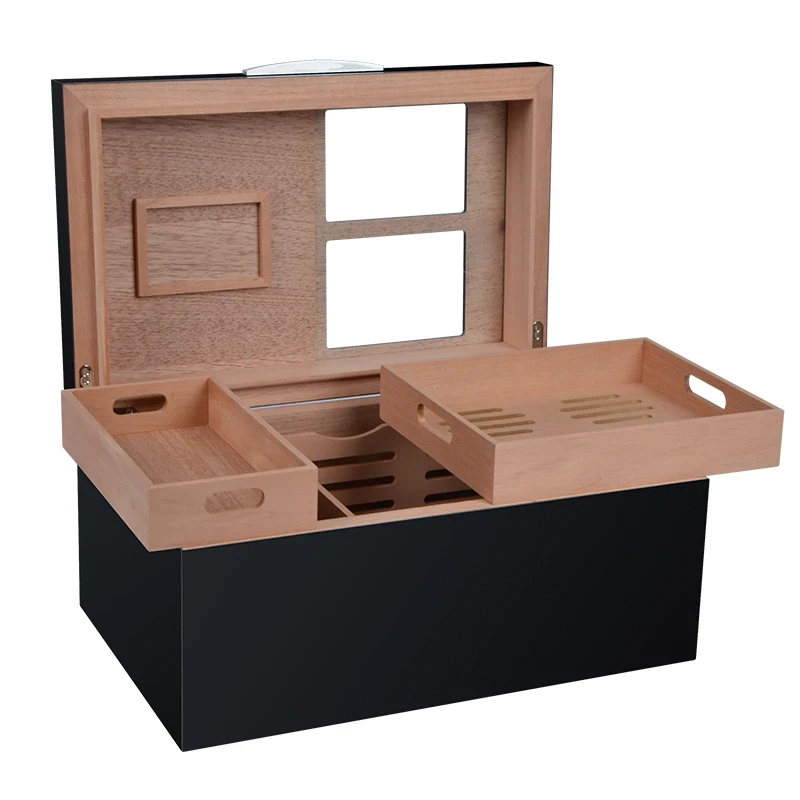
Even with good structure and materials, adding soft seals or inner linings gives extra protection against humidity loss.
Foam seals, velvet linings, or even soft rubber strips can close micro-gaps that cause slow moisture leakage.
Think of linings as the “gasket” for a wooden box. While wooden joints take care of the main sealing, linings help with micro-tuning. They smooth out the inconsistencies in lid contact and absorb tiny amounts of moisture.
Effective Lining Types:
| Lining Type | Função | Application Zone |
|---|---|---|
| Velvet/Felt | Aesthetic + Moisture Padding | Inner Lid + Bottom |
| Couro PU | Sealing + Premium Appearance | Lid & Base Panels |
| Foam Strips | Seal Gaps | Lid Perimeter |
| Rubber Gasket | Industrial-Grade Seal | Specialized Boxes |
In my factory, we often install a velvet edge on the lid contact area for luxury boxes. Not only does it help with sealing, but it adds that tactile “luxury feel” when the lid closes. For functional models or travel humidors, we might add thin rubber or foam strips for maximum sealing.
How do manufacturers test the sealing performance of a cigar wooden box?
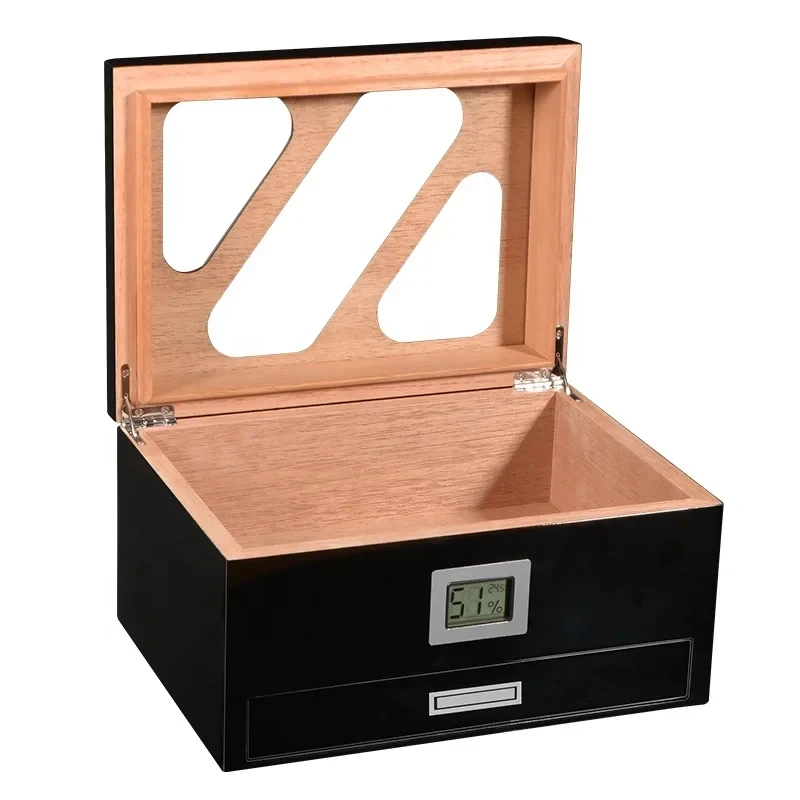
Creating a well-sealed box is one thing—proving it works is another. Quality control is key.
We test sealing by measuring internal humidity over time using calibrated hygrometers, often simulating transport or storage environments.
A good test method should replicate real-world use. We usually run a 7-day sealed humidity test in a controlled room with a 70% RH environment. Inside the box, we place a hygrometer and a 69% Boveda pack.
Here’s how we do it:
Testing Workflow:
- Place hygrometer and Boveda inside the box
- Seal the box completely
- Monitor internal RH levels every 24 hours
- Compare any deviation with environmental RH
- Re-check lid fit and joints if RH drops too fast
If the box maintains a ±3% range over a week, we consider it successful. For export orders, we sometimes simulate shipping by placing the box in a vibrating chamber and re-checking afterward.
Good sealing is not just about craftsmanship—it’s about measurable performance. That’s how we guarantee the box will serve its purpose, even after weeks in a warehouse or during international shipping.
Conclusão
Perfect humidity control starts with perfect sealing. Every part of a cigar box, from joints to hinges, plays a role in protecting your cigars.
Nome da marca: WoodoBox
Slogan: Caixas de madeira personalizadas, fabricadas na perfeição
Sítio Web: www.woodobox.com
WhatsApp: +86 18359265311




 Português
  English
  Español
  Deutsch
  Français
  Italiano
  العربية