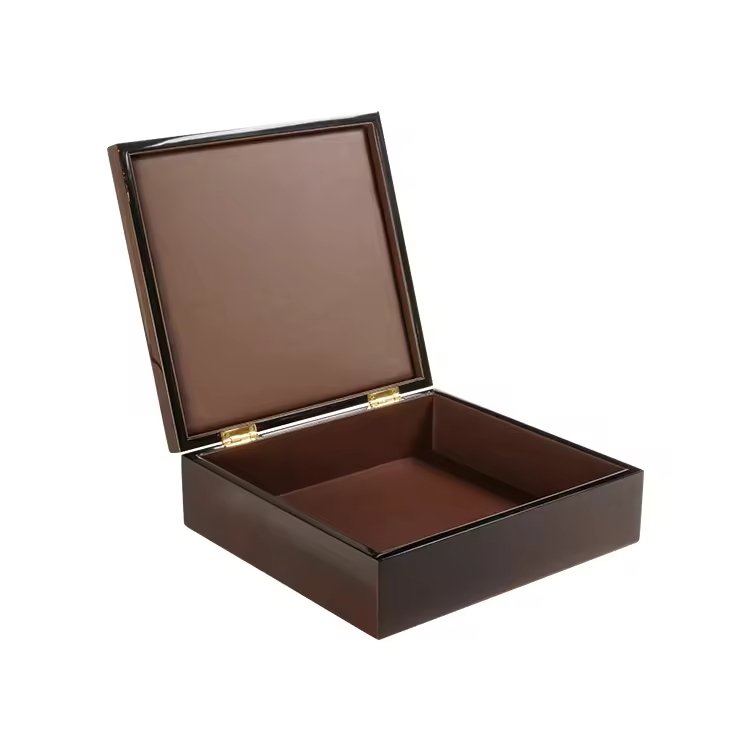
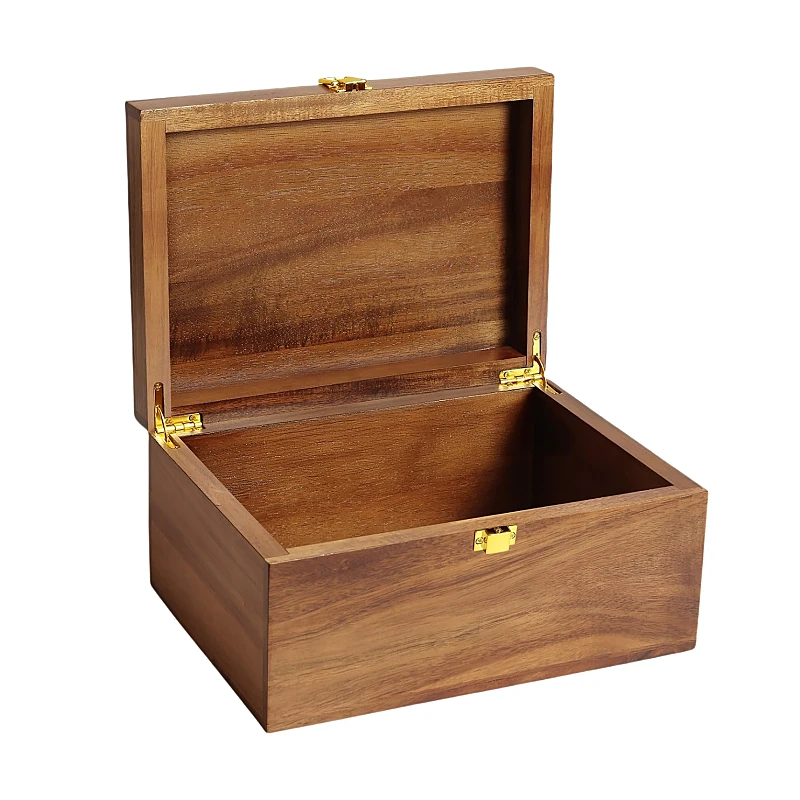
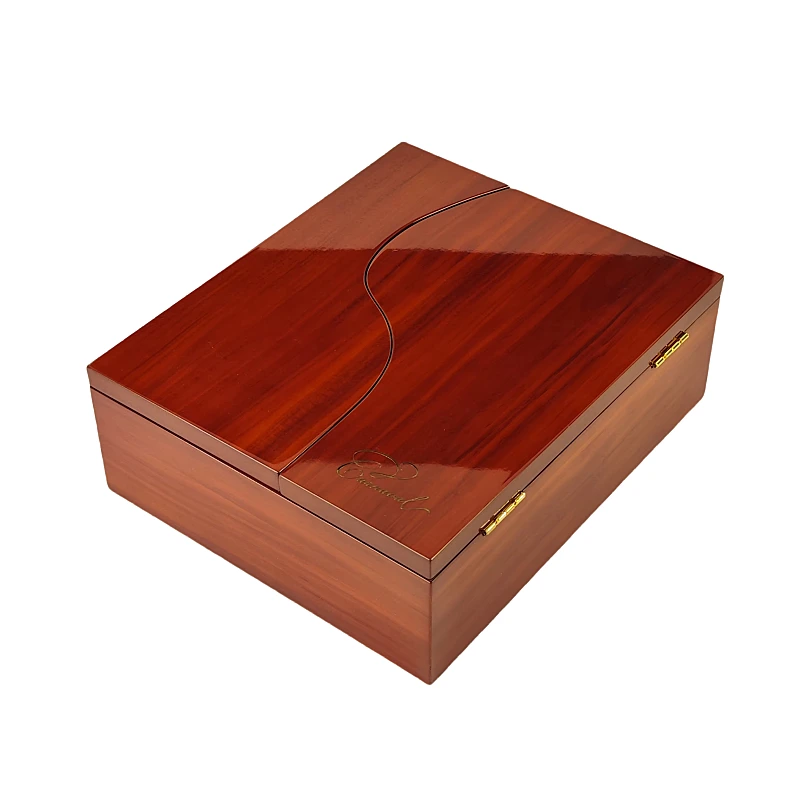
I often see buyers choose a hinged lid wooden box without much thought. The style feels familiar and safe. But a familiar choice can quietly hide risks that only appear after production starts.
A hinged lid wooden box is not always the right choice. It works best for products that are opened often, fixed tightly inside, and supported by a budget that allows extra labor and quality checks.
I want to slow things down here. Before you follow what feels “standard,” it helps to look at how this box actually behaves in real use, real factories, and real shipping conditions.
What Types of Products Truly Benefit from a Hinged Lid Structure
A hinged lid looks practical. It opens and closes smoothly. It stays attached to the base. But those benefits only matter for certain products. When the product use does not match the structure, the box becomes a liability instead of an asset.
A hinged lid structure benefits products that are removed and returned often, and that can be fully fixed by a custom insert without movement.
Frequent access is the first requirement
I always start with one simple question. How many times will the end user open this box? Hinged lids shine when repetition matters. Watches are a good example. A watch box is opened daily. A cigar box is opened every time someone takes one out. Premium gift sets may be opened during presentation, storage, and reuse.
If the box is opened once and then stored away, the hinge adds little value. In that case, a lift-off lid or magnetic lid often performs the same job with fewer risks.
Insert control matters more than the lid
A hinged lid cannot compensate for a weak insert. This is a point many buyers miss. When the lid is attached, any internal movement becomes more dangerous. The lid closes in the same path every time. If the product shifts even slightly, pressure points change.
I usually recommend hinged lids only when the insert can fully lock the product in place. This often means CNC-cut EVA foam, rigid wooden trays, or multi-layer inserts with tight tolerances.
Below is a simple comparison I often share with clients:
| Tipo de produto | Open Frequency | Insert Control Needed | Hinged Lid Fit |
|---|---|---|---|
| Watch | Muito elevado | Muito forte | Excelente |
| Charuto | Elevado | Médio a forte | Bom |
| Jewelry set | Médio | Forte | Conditional |
| Eletrónica | Baixa | Muito forte | Arriscado |
| One-time gift | Muito baixo | Médio | Pobres |
Weight and leverage are often ignored
Another factor is weight. Hinged lids handle light to medium products better. When the product is heavy, the box experiences more stress during opening. Over time, this stress transfers to the hinge screws and wood fibers.
I once worked on a project where the product was a solid metal award. The client loved the hinged lid idea. After shipping tests, we saw micro cracks around the hinge area. The box looked fine at first glance. But long-term durability was not there.
A hinged lid works best when weight, usage, and internal structure all support each other. If one element is weak, problems show up later.
Where Buyers Commonly Misjudge This Box Style
Most mistakes with hinged lid boxes are not technical. They are mental shortcuts. Buyers assume that “common” means “safe.” In reality, common choices often hide the most repeated mistakes.
Buyers misjudge hinged lid boxes by assuming familiarity equals low risk, and by overlooking alignment, tolerance, and long-term movement.
Habit-based decisions are the biggest trap
Many clients tell me, “We always used hinged boxes before.” That sentence is a warning sign for me. Markets change. Shipping routes change. Even wood sources change. A box style that worked five years ago may behave differently today.
Habit removes curiosity. When curiosity is gone, small details get skipped. Hinges are not forgiving components. A one-millimeter deviation can be visible to the naked eye.
Lid gap and alignment are underestimated
One of the most common complaints I hear after delivery is about lid gaps. The lid looks slightly higher on one side. Or the front edge is not perfectly flush.
This is not always a factory mistake. Wood reacts to humidity. During long-distance shipping, moisture levels change. If hinge placement or tolerance was too loose, the lid can shift just enough to become noticeable.
That is why I insist on checking lid gap consistency during sampling. Not just one sample. Multiple samples. Open and close them repeatedly. Look at them from eye level, not just from the top.
Hinge type decisions come too late
Another misjudgment is delaying hinge selection. Clients focus on box size, color, and logo. Hinges feel like a small detail. But hinge type affects everything.
Here is a simple overview:
| Hinge Type | Custo | Alignment Risk | Impacto visual |
|---|---|---|---|
| Standard metal | Baixa | Médio | Visível |
| Hidden hinge | Elevado | Baixa | Limpo |
| Soft-close hinge | Elevado | Muito baixo | Prémio |
Once mass production starts, changing hinge type is expensive. Screw holes are already drilled. Jigs are already set. This is why hinge decisions should happen early, not at the final confirmation stage.
“It looks simple” is often wrong
A hinged lid box looks simple from the outside. Internally, it is one of the most complex wooden box styles to execute well. That gap between appearance and reality causes many misunderstandings between buyers and manufacturers.
Cost Reality: Why Hinged Lids Are Not Always “Standard Price”
Price expectations around hinged lid boxes are often unrealistic. Buyers see a common style and expect a baseline cost. In practice, hinged lids usually demand more labor and more inspection.
Hinged lid wooden boxes often cost more than expected because of hardware, manual work, and added quality control steps.
Hardware is only the visible cost
Most people focus on the hinge price itself. A pair of hinges looks cheap. But the hinge is only one part of the cost chain. Each hinge requires positioning, drilling, screwing, and alignment checks.
This work is manual. Automation helps with cutting wood panels, but hinge installation still relies heavily on skilled hands. Skilled labor costs money.
Small orders suffer the most
For small order quantities, hinged lids are especially inefficient. When you produce 300 to 500 pieces, setup costs are spread over fewer units. Each box still needs the same manual steps.
In many cases, I show clients a comparison like this:
| Estilo da caixa | Labor Time | QC Time | Cost Stability |
|---|---|---|---|
| Lift-off lid | Baixa | Baixa | Elevado |
| Magnetic lid | Médio | Médio | Médio |
| Hinged lid | Elevado | Elevado | Baixa |
This is why hinged lids can end up more expensive than magnetic lid boxes, even if the size is similar on paper.
Quality control adds hidden layers
Hinged lid boxes demand more inspection. Workers must check opening smoothness, lid angle, and gap symmetry. One missed issue can affect dozens of boxes if the jig is slightly off.
Extra QC time is not optional. If skipped, the risk of returns increases. Returns are far more expensive than prevention.
Budget flexibility matters
When a client tells me their budget is fixed and tight, I hesitate to recommend hinged lids. A rigid budget leaves no room for adjustment if problems appear during sampling.
The real cost of a hinged lid box is not just the unit price. It is the cost of managing risk. If the budget cannot absorb that, the box style is wrong.
Production & Shipping Risks You Should Evaluate in Advance
Hinged lid boxes behave differently once they leave the factory. Production may look perfect. Shipping introduces new variables that many buyers do not consider early enough.
The main risks of hinged lid boxes appear after production, during humidity changes, vibration, and long-distance shipping.
Wood moisture is a silent factor
Wood is alive in a way plastic is not. Even after treatment, it reacts to the environment. When a box travels from a dry factory climate to a humid destination, expansion happens.
If the hinge tolerance is tight, expansion can cause resistance. If tolerance is loose, the lid can shift. Both outcomes hurt the user experience.
This is why moisture control during production matters. It is also why sampling should simulate real shipping timelines when possible.
Vibration tests reveal weak points
During shipping, boxes experience constant vibration. Hinges absorb part of that energy. Over time, screws can loosen slightly. A box that passed a visual check may fail after weeks in transit.
I often recommend vibration or drop tests for hinged lid boxes, especially for export markets. These tests reveal problems that static inspection cannot.
Packaging inside the carton matters
Even the outer carton affects hinge performance. If boxes are packed too tightly, pressure may push lids out of alignment. If packed too loosely, movement increases vibration impact.
This is why I see packaging as part of box design, not an afterthought. Inner padding, orientation, and carton strength all interact with the hinge system.
Fixing problems after mass production is costly
Once hundreds or thousands of boxes are produced, alignment issues are hard to fix. Reworking hinges is slow and risky. In some cases, the only solution is discounting or scrapping.
Evaluating these risks early is cheaper than reacting later. A good box style should reduce uncertainty, not amplify it.
Clear Decision Criteria: Should You Use a Hinged Lid or Not?
After all these details, the decision should feel clearer. I always guide clients back to simple questions. Complexity should serve clarity, not replace it.
You should choose a hinged lid wooden box only if usage frequency, insert control, and budget flexibility all align with the added risk and labor.
The three questions I always ask
I ask every client the same three questions:
- Will the box be opened many times by the end user?
- Can the insert fully fix the product without movement?
- Is the budget flexible enough for extra labor and QC?
If any answer is “no,” I recommend reconsidering the box style.
Matching structure to purpose
A box is a tool. Tools work best when matched to the task. Hinged lids are excellent tools in the right context. In the wrong context, they introduce friction.
Below is a simple decision guide:
| Criteria Met | Recomendação |
|---|---|
| All three yes | Hinged lid fits |
| Two yes | Evaluate deeper |
| One or none | Choose another |
Reducing risk is the real goal
The right box style does not just look good. It reduces uncertainty across production, shipping, and use. When a box style increases risk without clear benefit, it is not a smart choice.
I would rather help a client choose a simpler box that performs perfectly than a complex box that creates stress later.
Conclusão
A hinged lid wooden box is common, not universal. When fit, usage, and budget align, it works beautifully. When chosen by habit, it quietly creates risk.
WoodoBox – Premium Wooden Packaging Manufacturer in China
Caixas de madeira personalizadas, fabricadas na perfeição

 Português
  English
  Español
  Deutsch
  Français
  Italiano
  العربية