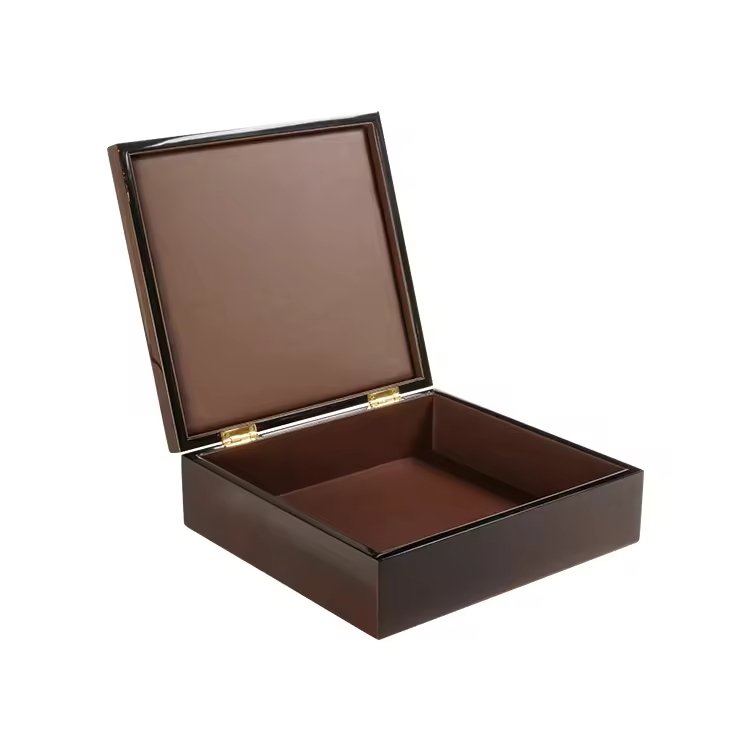

Cigar lovers often complain that some cigars in the same box taste fresh, while others grow moldy or dry. The reason often lies in poor airflow.
Proper internal spacing in a multi-cigar box prevents humidity dead zones and ensures all cigars age evenly with stable quality.
Good spacing design is not just about storage capacity. It is also about protecting flavor, aroma, and presentation. Let’s explore how smart spacing makes the difference.
Why do dead zones form inside a cigar box and how do they affect cigar quality?
Dead zones form when air and humidity do not circulate evenly around cigars. This leads to uneven aging and spoilage.
Dead zones in a cigar box trap excess moisture or dryness, which causes mold, cracking, or flavor imbalance in cigars stored in those areas.
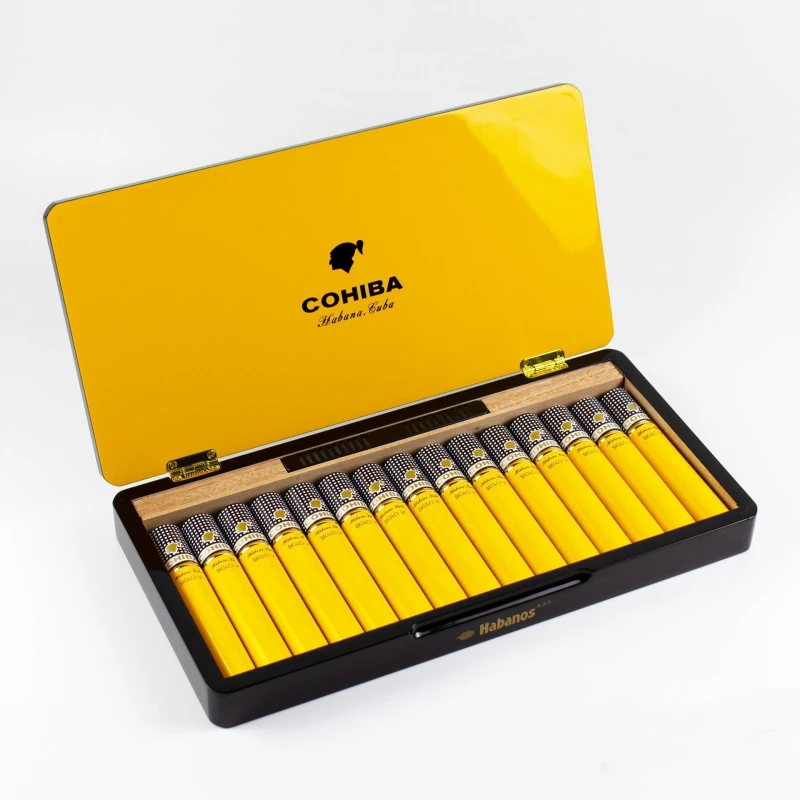
I often explain to buyers that humidity does not move evenly in a closed space. In a multi-cigar box, cigars are packed side by side, and air circulation slows down between them. If the humidifier is placed on one side, cigars near it may get too much moisture while those far away get too little. This creates "dead zones" where the humidity is stuck at extreme levels.
How dead zones harm cigars
- Excesso de humidade: Mold growth and swelling wrappers.
- Too little moisture: Dry cracks and loss of aroma.
- Uneven humidity: Some cigars smoke well, others taste harsh.
I once tested a box with 25 cigars in two rows. The ones in the corners stayed too moist while those in the middle became too dry. This inconsistency made the box less reliable for premium buyers. The lesson is clear: spacing and airflow matter as much as material quality.
Why buyers should care
Luxury buyers expect every cigar in the box to match the brand promise. A single bad cigar can damage trust. Proper spacing avoids this problem, making the box a real tool for preservation, not just a container for display.
What is the ideal spacing between cigars to allow even humidity circulation?
Many assume tighter packing looks more elegant, but it can block airflow and trap moisture.
The ideal spacing between cigars is about 2–3mm, which allows humidity to circulate evenly while keeping a neat, luxury presentation.
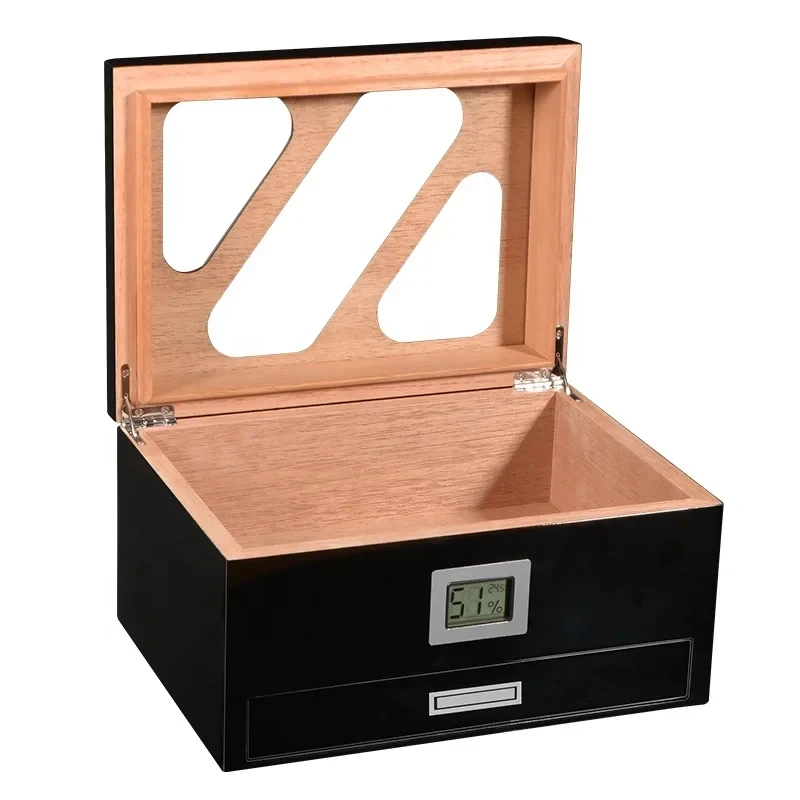
When I design boxes, I know buyers want a clean layout. Too much space looks wasteful. Too little space suffocates airflow. The sweet spot is a small but consistent gap around each cigar. This spacing allows air and humidity to pass naturally between them, preventing micro-climates inside the box.
Why 2–3mm works best
- Enough air passage: Prevents mold buildup between cigars.
- Neat display: Keeps cigars aligned like a luxury product.
- Efficient use of space: Balances capacity with preservation.
Spacing in different box sizes
| Tipo de caixa | Ideal Gap | Notas |
|---|---|---|
| 10-count box | 3mm | More space looks premium |
| 25-count box | 2mm | Compact but safe |
| 50-count cabinet | 2–3mm | Balance airflow across rows |
I remember working on a project for a European brand. They wanted a 50-count cigar cabinet. At first, we placed cigars tightly, and mold appeared after one month. After redesigning with 3mm spacing and adding cedar grooves, the cigars aged evenly and kept their aroma intact.
Should dividers or trays include ventilation holes or channels to guide airflow?
Dividers and trays help organize cigars, but if they block airflow, they create hidden dead zones.
Yes, dividers and trays should include ventilation holes or channels so air and humidity flow smoothly around all cigars.
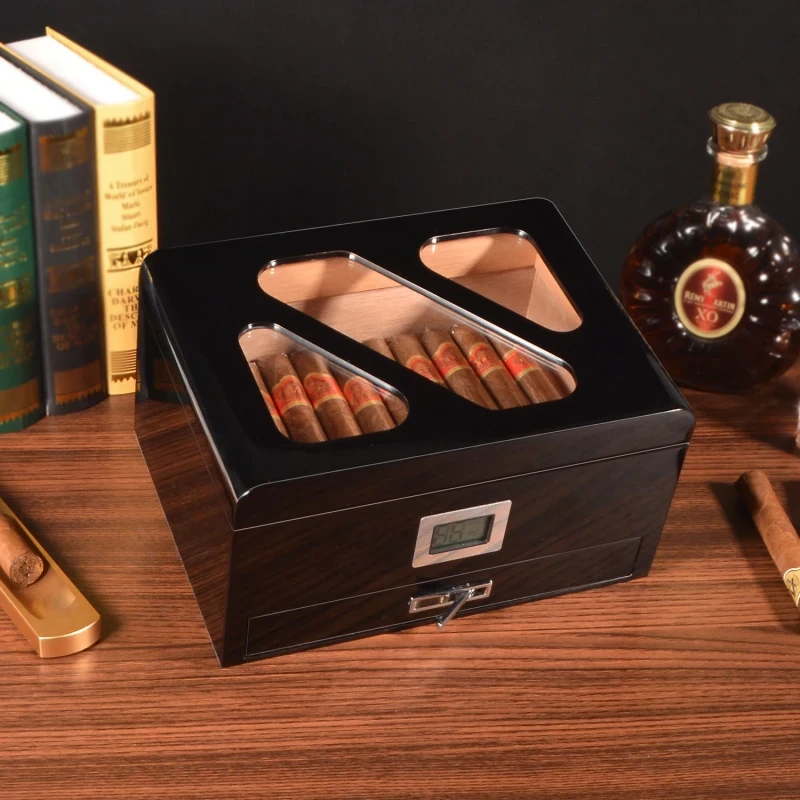
When I design multi-layer cigar boxes, I always pay attention to dividers and trays. A solid wooden divider looks strong, but it also blocks airflow. If humid air cannot pass through, one side of the divider becomes too wet while the other side dries out.
Solutions I use
- Ventilation holes: Small holes (4–6mm) placed along divider lines.
- Cedar channels: Thin grooves carved into tray bottoms to guide air.
- Raised trays: Leave small gaps under trays for airflow circulation.
Example from a real project
I built a 25-count box for a Latin American client. The first prototype had solid cedar dividers. Cigars near the humidifier aged well, but the ones on the far side dried out. We then drilled small vent holes into the dividers and added grooves under the tray. The airflow balanced out, and the problem disappeared. The client noticed the difference after one season of use.
Porque é que isto é importante
Trays and dividers are not only structural but also functional. They must guide airflow like invisible channels. When combined with proper spacing, they make the whole box act like a controlled aging chamber, not just a storage unit.
How can layered storage (upper trays vs. lower trays) be designed to avoid trapped moisture?
Layered trays increase capacity, but they often create moisture pockets if poorly designed.
Layered cigar trays should include raised bases, ventilation holes, and spacing gaps so moisture does not get trapped between levels.
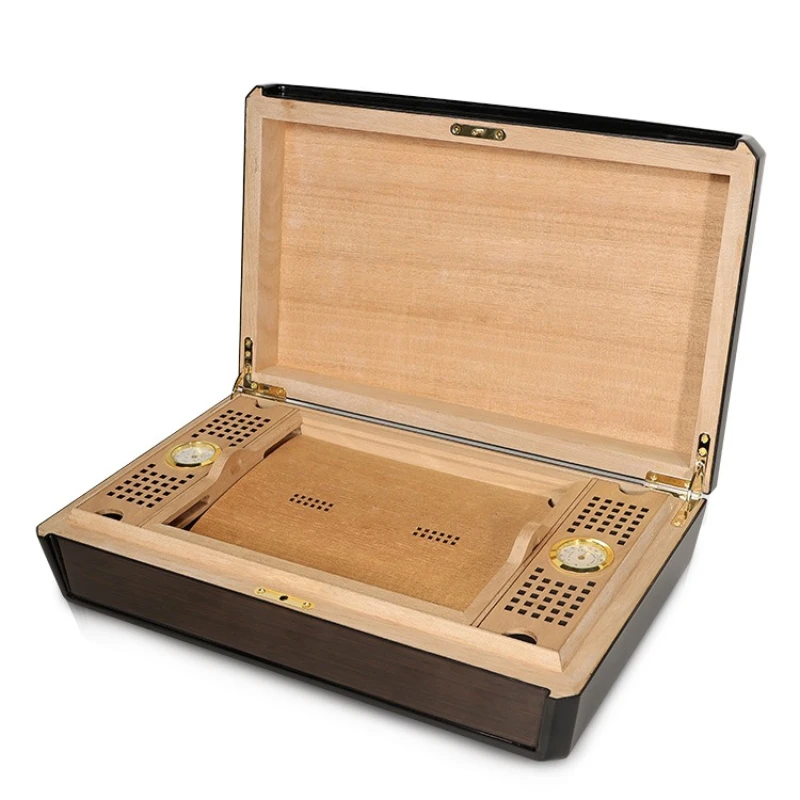
I know buyers want both capacity and elegance. That is why many cigar boxes use double or triple layers with trays. But stacking trays tightly can block airflow, especially in the lower layers. If humid air rises unevenly, cigars at the bottom may become damp while the top layer dries.
Design principles for layered trays
- Raised bases: Leave at least 3–5mm between tray bottom and box floor.
- Perforated tray bottoms: Small holes allow air to move vertically.
- Side cutouts: Small side notches help air circulate around trays.
Testing airflow in multi-layer designs
I once worked with a luxury watch and cigar brand collaboration. Their box had two layers of cigars and one watch tray. The lower cigars turned moldy in early tests. We redesigned the trays with cutout corners and perforations. After that, airflow improved, and all cigars aged evenly.
Why buyers appreciate this
A layered cigar box without airflow planning is a risk. But when airflow works well, the box becomes a perfect display and storage piece. The luxury feel increases because every cigar performs consistently, no matter the tray position.
Does the positioning of humidification devices influence spacing requirements?
Yes, the location of humidifiers or gel packs directly affects airflow, making spacing more or less critical.
The placement of humidification devices controls airflow direction, so spacing must be adjusted accordingly to avoid wet or dry spots.
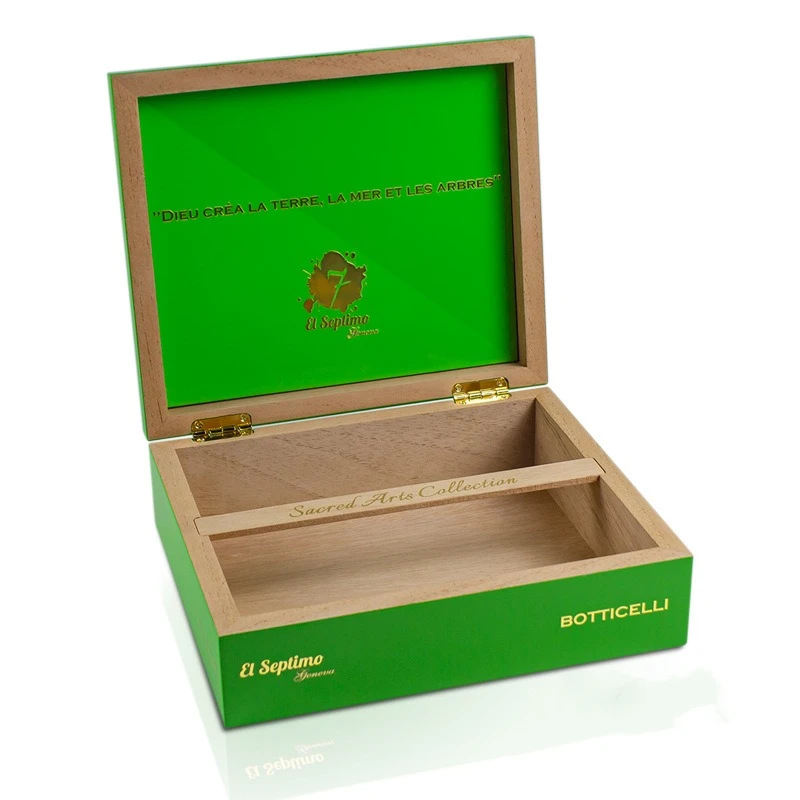
I often explain that spacing and humidifier placement are linked. If the humidifier sits on one side, air will be uneven unless spacing gaps guide it across the whole box. If the humidifier is central, spacing can be tighter, because distribution is more even.
Typical placement strategies
| Humidifier Position | Spacing Needed | Risco |
|---|---|---|
| Side wall | Wider spacing (3mm) | Fluxo de ar irregular |
| Center lid | Moderate spacing (2–3mm) | Fluxo de ar equilibrado |
| Bottom | Raised trays + 3mm gaps | Trapped moisture |
A real-world adjustment
I had a client in the US who preferred bottom-mounted humidifiers for aesthetic reasons. In our first design, cigars at the bottom layer absorbed too much moisture. By raising the tray and increasing gaps between cigars, airflow improved. This shows how spacing design depends heavily on humidifier location.
What structural layouts combine maximum capacity with smooth humidity distribution?
Buyers often ask if more capacity means sacrificing preservation. The answer is no—if layout is smart.
The best layouts balance capacity and airflow by combining neat rows, cedar channels, and ventilated trays for even humidity distribution.
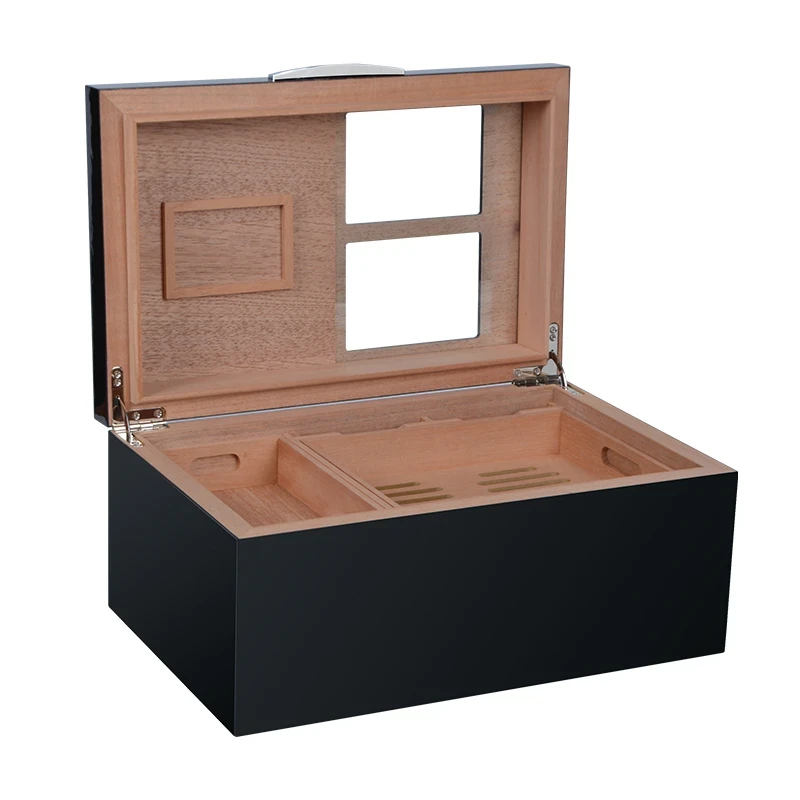
I know luxury buyers want both capacity and elegance. A large box should hold many cigars but still protect every stick. To achieve this, the internal structure must guide humidity like an invisible system.
Effective structural layouts
- Parallel rows with gaps: Creates natural channels for air.
- Cedar channel floors: Direct airflow across the base.
- Multi-layer trays with perforations: Allow vertical circulation.
- Central humidifier placement: Keeps balance in all directions.
Case study
I designed a 100-count cigar cabinet for a Middle Eastern distributor. The first version packed cigars tightly in solid trays. After one season, uneven aging appeared. We then introduced cedar grooves under the trays, 2–3mm spacing between cigars, and a central humidifier. The second version aged cigars evenly, and the client reported improved customer satisfaction.
Why layout matters
A luxury cigar box is both a functional preservation tool and a brand showcase. With the right layout, it offers maximum storage without risking quality. This balance makes the box not just a container, but a silent guardian of cigar flavor.
Conclusão
Even spacing and guided airflow prevent dead zones, keeping every cigar fresh and consistent.
Nome da marca: WoodoBox
Slogan: Caixas de madeira personalizadas, fabricadas na perfeição
Sítio Web: www.woodobox.com
WhatsApp: +86 18359265311

 Português
  English
  Español
  Deutsch
  Français
  Italiano
  العربية