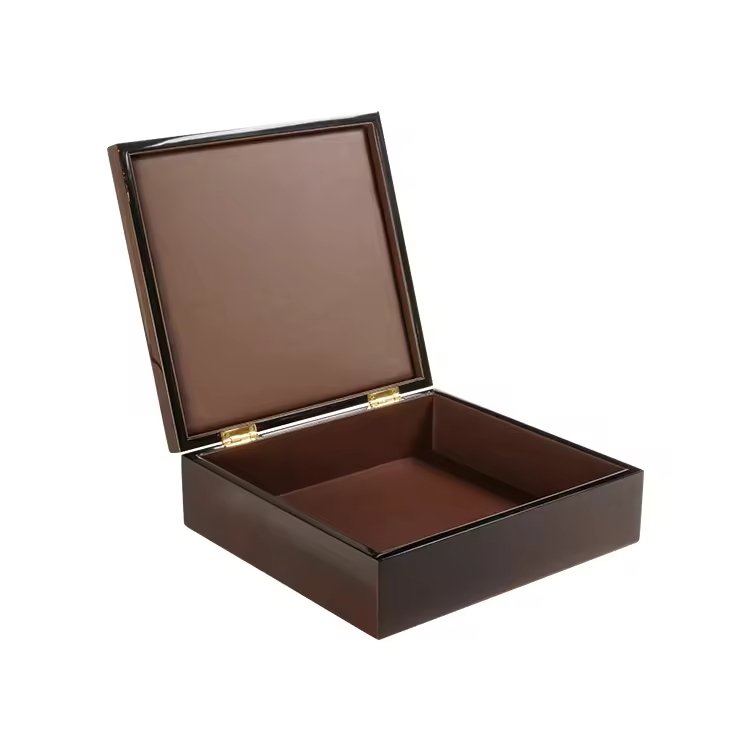
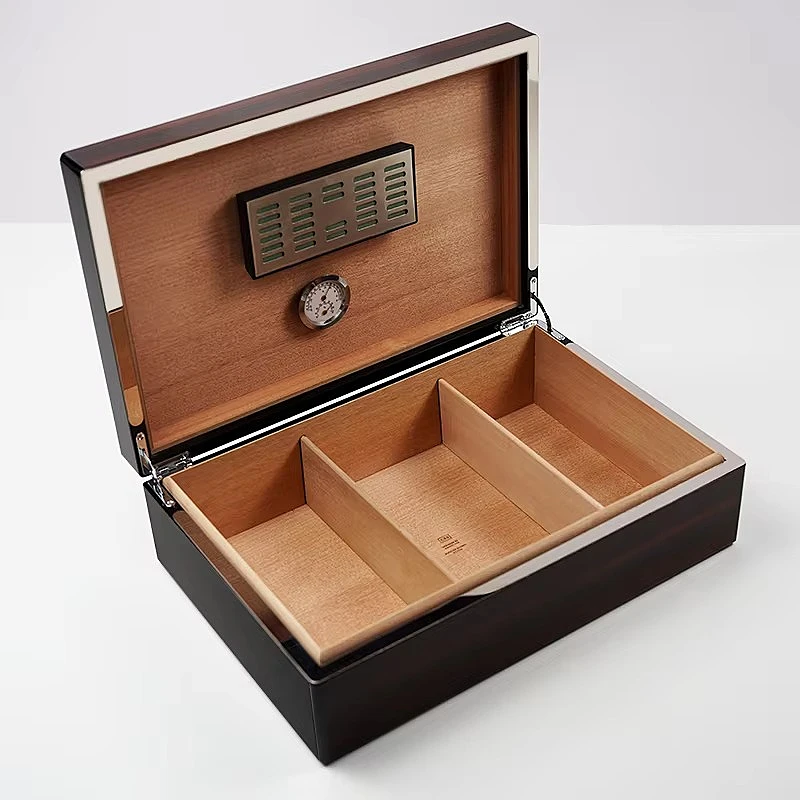
Many cigar brands fail to test veneers before production, only to face aroma contamination or humidity problems later.
The right veneer must pass tests for aroma neutrality, porosity, stability, and chemical safety before it can be used inside a cigar box.
Good testing methods save money, reduce risks, and keep cigars safe during long-term storage.
Which key properties matter most for veneers in cigar boxes (aroma, porosity, oils, stability)?
A veneer may look beautiful but can damage cigars if it has strong odor, unstable oils, or poor humidity control.
The most important properties are aroma neutrality, porosity, oil and resin content, and dimensional stability under humidity changes.
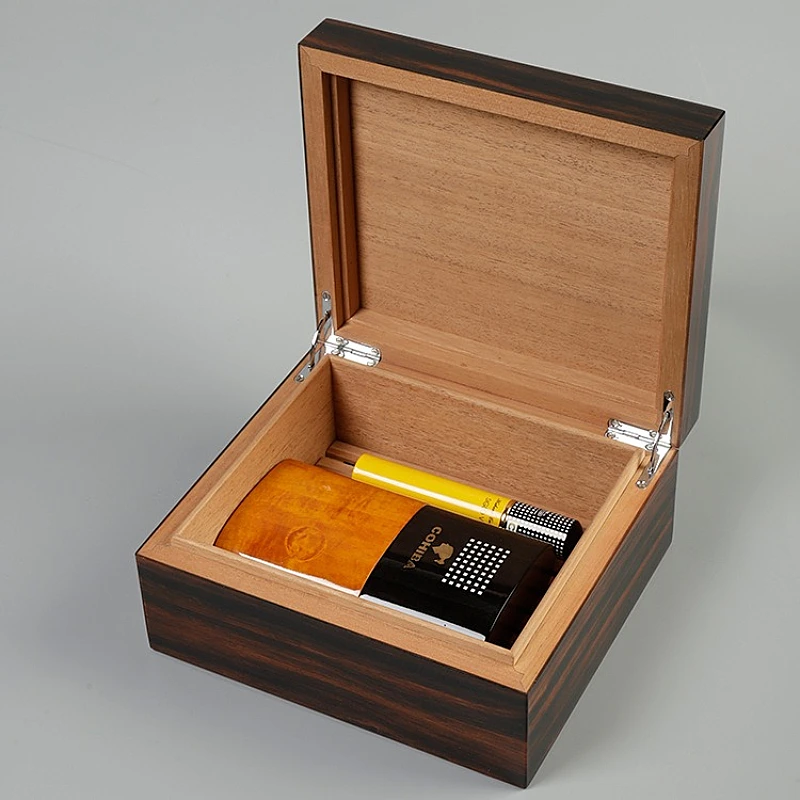
When judging veneers, I always start with four checks:
- Neutralità degli aromi – Cigars are delicate. If the veneer has a chemical smell or strong wood scent, it will dominate the cigar’s natural aroma.
- Porosità – A veneer must allow slow humidity exchange to stabilize RH inside the box. Too dense wood blocks this; too porous wood dries cigars.
- Oils and resins – Some tropical woods bleed oil or resin that stains cigars or gives off unwanted taste.
- Stabilità – Veneers expand and shrink with humidity. If movement is too high, boxes may warp or crack.
Example from production
I once tested a batch of exotic rosewood veneers. They looked amazing, but after 3 weeks in a 70% RH humidor, the resin bled onto the cigars, leaving stains. We replaced them with Spanish cedar veneer, which performed consistently.
| Proprietà | Perché è importante | Example Problem |
|---|---|---|
| Neutralità degli aromi | Protects cigar flavor | Chemical smell dominates cigar aroma |
| Porosità | Supports humidity balance | Veneer too dense → cigars dry out |
| Oil/Resin | Prevents stains and off-flavors | Resin bleed leaves spots on wrapper |
| Stabilità | Keeps box shape consistent | Veneer warps under humidity changes |
How to run a simple “scent transfer” test to see if the veneer overpowers cigar aroma?
If a veneer smells too strong, it can overpower cigars within days.
The scent transfer test involves sealing cigars with the veneer in a closed container for 7 days, then checking if the cigar aroma has changed.
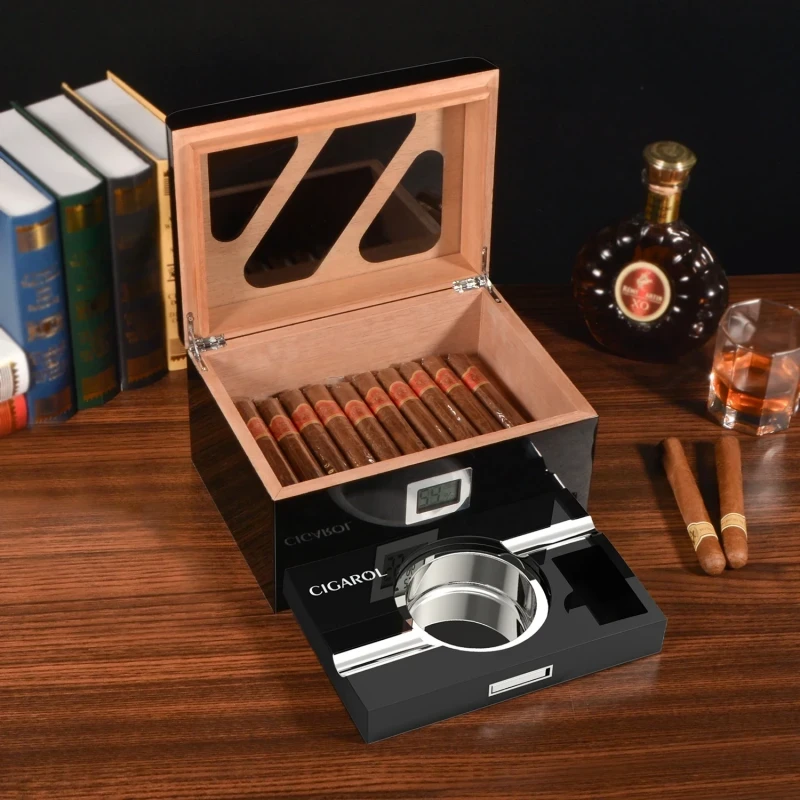
This test is simple but very effective. Cut small veneer samples, around 10x10 cm. Place them in a sealed glass jar or humidor with a few unwrapped cigars. After 7 days, open the container and smell both the cigars and veneer.
- If cigars smell the same as before, the veneer is neutral.
- If cigars pick up woody, resin, or chemical odors, the veneer is unsafe for interiors.
Note pratiche
- Always use the same cigar type when testing different veneers, to compare results fairly.
- Avoid plastic bags for testing because plastic may add its own odor.
- Run the test at 65–70% RH for realistic conditions.
I once ran this test on mahogany veneer. After a week, the cigars had a clear “sweet” smell that was not natural to them. That confirmed mahogany was not suitable for that client’s humidor interiors.
What humidity-buffer tests can show if the veneer supports stable 65–70% RH?
Even if a veneer has no odor, it may fail to regulate humidity.
A humidity-buffer test involves placing veneer samples in a sealed box with 65–70% RH and observing if they help stabilize fluctuations over 2–3 weeks.
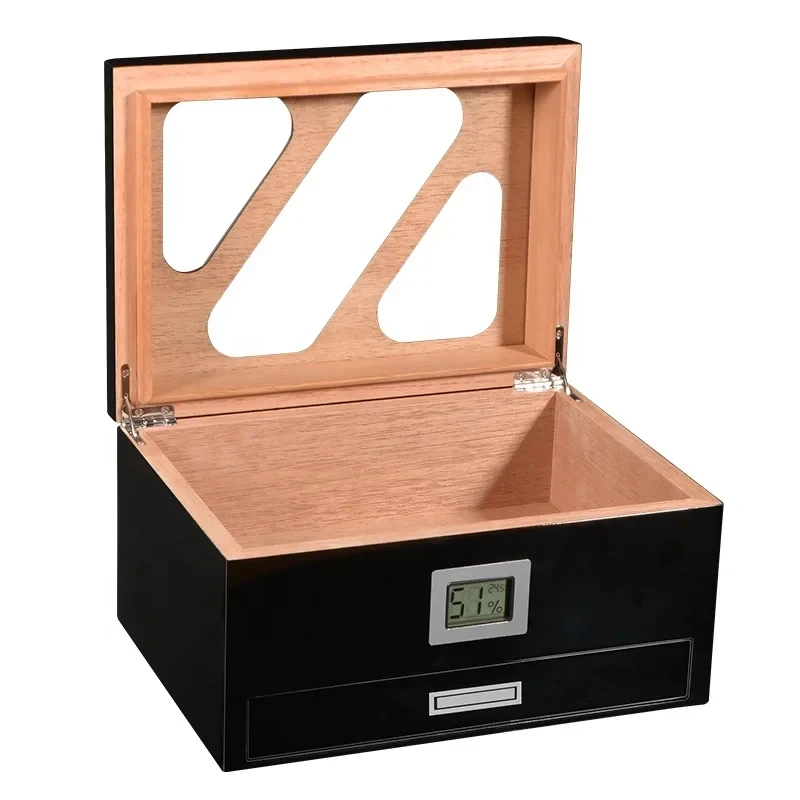
This test checks if veneer behaves like Spanish cedar, which absorbs and releases moisture slowly. Without this property, cigars face risk of drying or over-humidifying.
Step-by-Step Humidity Buffer Test
- Place veneer samples in a sealed box or small humidor.
- Put a digital hygrometer inside.
- Adjust RH to 70%.
- Over 2–3 weeks, open the box for 2 minutes every day.
- Record how fast the RH returns to 65–70%.
If the veneer helps stabilize RH quickly, it is good. If RH swings last too long, the veneer is weak.
La mia esperienza
I tested walnut veneer once for a client. It looked elegant, but during the buffer test, RH fluctuated for hours after each opening. Compared to Spanish cedar, which re-stabilized in 30 minutes, walnut was clearly weaker.
| Tipo di impiallacciatura | RH Recovery Speed | Idoneità |
|---|---|---|
| Cedro spagnolo | 20–30 minutes | Eccellente |
| Noce | 2–3 hours | Povero |
| Acero | 1-2 ore | Moderato |
How to check for resin/oil bleed, staining, or off-gassing that could taint cigars?
A veneer may pass aroma and RH tests but still fail due to oil or resin issues.
The best way is to run a blotting test and a heat test, which reveal oil bleed and chemical off-gassing.

Blotting Paper Test
- Place the veneer under weight with white blotting paper.
- Keep it at 70% RH for 2 weeks.
- If the paper shows stains, the veneer bleeds oil or resin.
Heat Test
- Place veneer in a sealed glass jar at 35°C for 48 hours.
- Open and smell.
- If strong odors appear, the veneer releases chemicals under heat.
I once tested ebony veneer this way. Within 24 hours, oil stains appeared on the paper, and the jar had a sharp resin smell. This showed that ebony was risky for cigar interiors, even though it looked premium.
These two tests prevent long-term damage to cigars from invisible veneer problems.
What accelerated aging setup (time, RH, temperature) helps predict long-term behavior?
Brands often ask how to predict long-term veneer behavior without waiting years.
Accelerated aging uses higher temperature and controlled RH for 30–60 days to simulate months of storage.
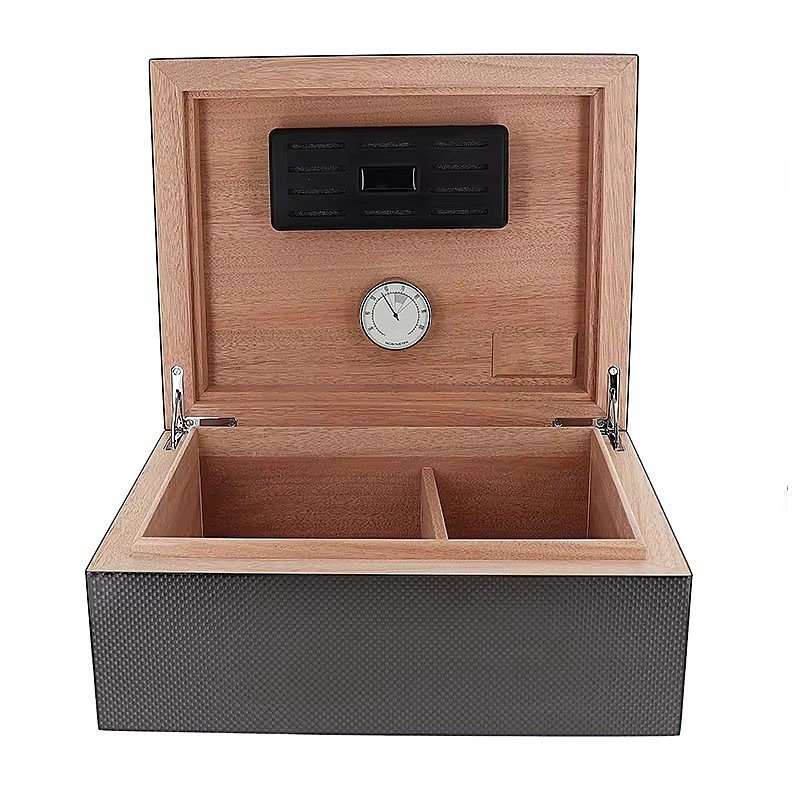
Suggested Setup
- Temperatura: 30–35°C
- Umidità relativa: 70%
- Durata: 30–60 days
- Contenitore: Sealed wooden or glass box with cigars and veneer samples
During this period, watch for:
- Odor transfer to cigars
- Warping or cracks in veneer
- Oil or resin bleed
- Mold formation
Real Example
In one project, we ran accelerated aging on maple veneer. After 45 days, no odor transfer or staining occurred, and cigars aged normally. The client chose maple for the final production. On another test with padauk veneer, cigars developed a peppery off-flavor after 3 weeks. That confirmed padauk was unsafe.
Accelerated aging is not perfect, but it gives strong clues about long-term risks.
How should brands compare multiple veneers with a standardized scoring sheet before production?
Without a clear system, brands may choose veneer based only on looks.
The best approach is to use a scoring sheet that rates veneers across aroma, porosity, oil content, stability, and test results.
Example Scoring Sheet
| Proprietà | Peso | Veneer A | Veneer B | Veneer C |
|---|---|---|---|---|
| Neutralità degli aromi | 30% | 8 | 9 | 6 |
| Humidity Buffer | 25% | 7 | 6 | 8 |
| Oil/Resin Behavior | 20% | 9 | 7 | 5 |
| Stabilità | 15% | 8 | 7 | 6 |
| Estetica | 10% | 7 | 8 | 9 |
| Final Score | 100% | 8.0 | 7.6 | 6.4 |
By giving weights to each factor, brands can make balanced choices. Aroma and humidity should always have higher weight than appearance because cigar safety matters more than looks.
I have used this method with clients who were unsure between three or four veneers. Once they saw scores on paper, the decision became clear.
Conclusione
Testing veneers protects cigars from odor, instability, and hidden risks. Brands should always test before production to ensure quality.
Nome del marchio: WoodoBox
Slogan: Scatole di legno personalizzate, realizzate alla perfezione
Sito web: www.woodobox.com
WhatsApp: +86 18359265311



 Italiano
  English
  Español
  Português
  Deutsch
  Français
  العربية