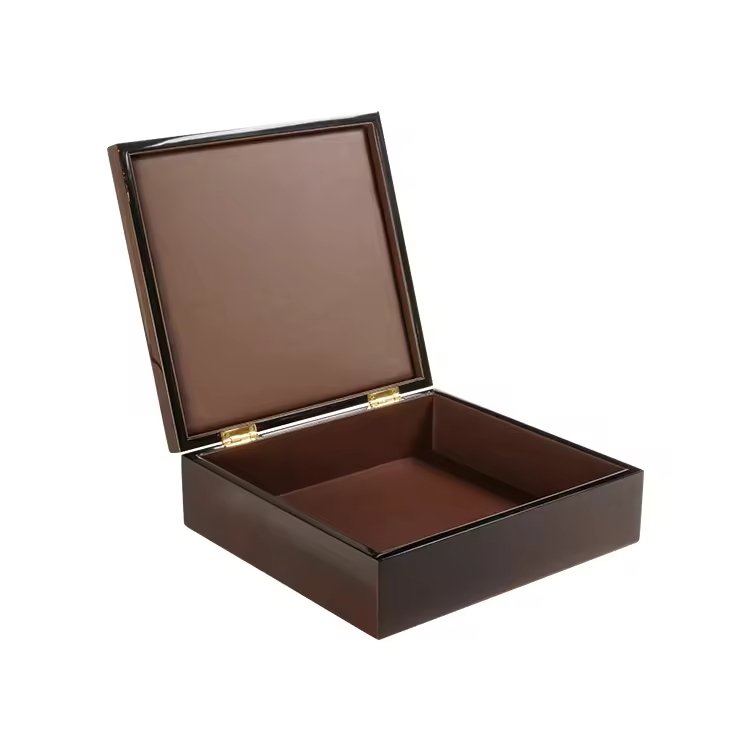
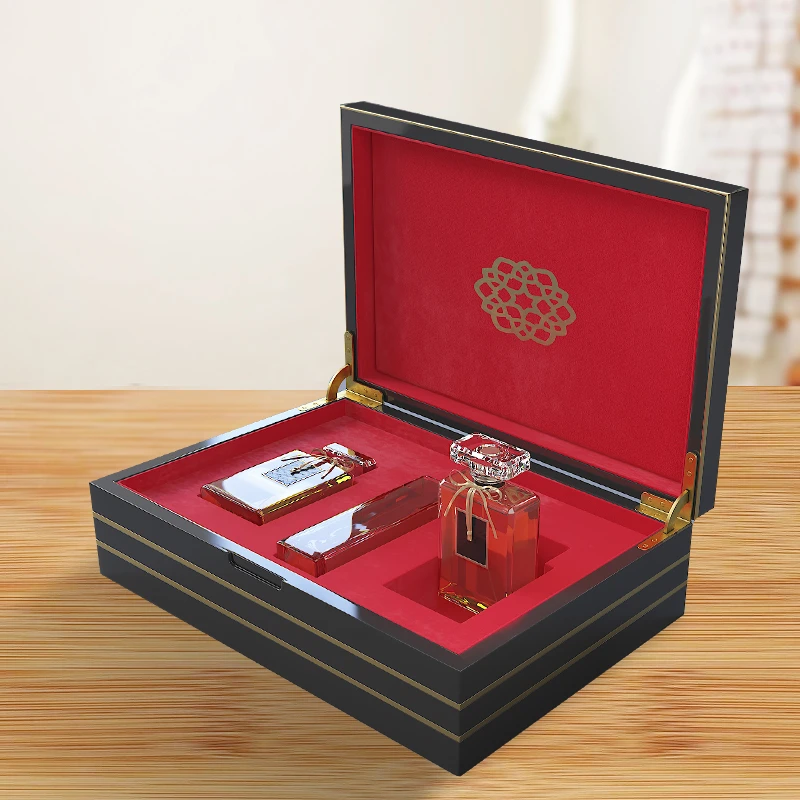
As a buyer, you may choose a wooden box that feels solid on day one. But months later, it warps, dents, or feels loose. This gap creates hidden risk and silent cost.
Wood density directly influences box durability by deciding how the structure handles pressure, impact, moisture, and time. A correct density allows the box to carry stress, keep shape, and age with dignity instead of failing quietly.
If you keep reading, I will explain how density works in real production, not theory. I will also share how I choose density for luxury perfume boxes after 15 years of manufacturing experience.
How does wood density determine resistance to impact and compression?
When boxes crack, dent, or collapse, the real cause is often hidden inside the wood structure. Many brands only test appearance, not resistance.
Wood density determines how much force the box can absorb before it deforms or transfers stress inward. Higher density means stronger resistance to compression and impact during shipping and handling.
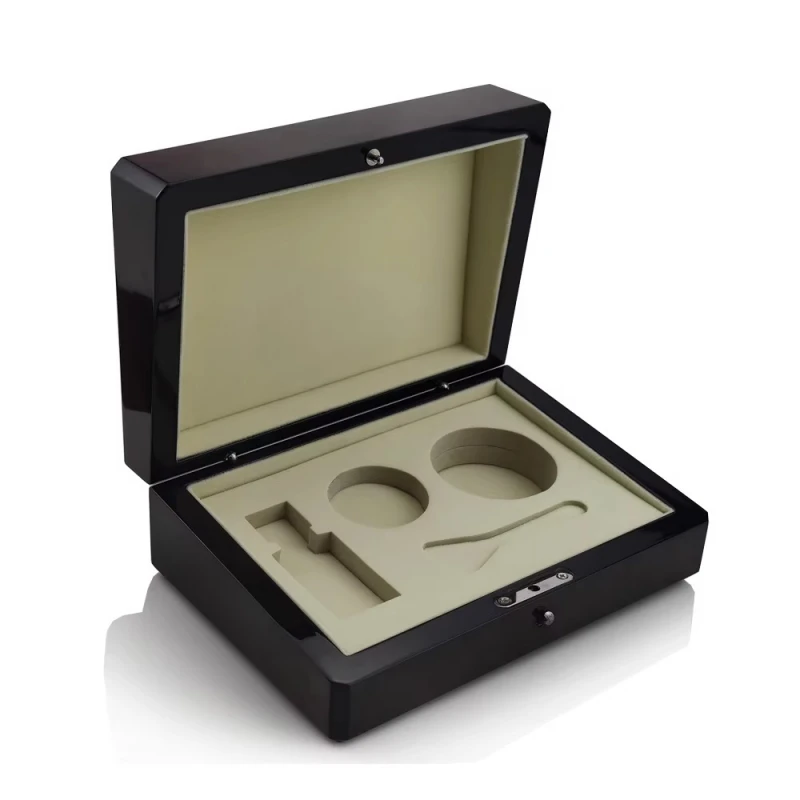
In my factory, I always explain impact resistance in simple terms. When a box is stacked, dropped, or squeezed, force travels through the panels. Dense wood spreads that force. Light wood concentrates it.
What density really means in physical terms
Density is not just weight. It describes how tightly packed the wood fibers are. Tighter fibers mean:
- Less empty space inside the wood
- More even load distribution
- Higher resistance to crushing
Here is a simplified comparison I often use with buyers:
| Tipo di legno | Approx. Density (kg/m³) | Resistenza agli urti | Uso tipico |
|---|---|---|---|
| Pino | 400–500 | Basso | Decorative boxes |
| Poplar | 420–480 | Basso-medio | Light gift boxes |
| MDF (High Grade) | 700–750 | Medio | Lacquered boxes |
| Noce | 610–650 | Alto | Luxury perfume boxes |
| Quercia | 680–750 | Molto alto | Heavy product boxes |
Compression during storage and shipping
In real export conditions, boxes are stacked in cartons. Cartons are stacked on pallets. Pallets are stacked in containers.
I have seen perfume boxes fail not because of drops, but because of vertical compression over weeks.
Low-density wood compresses slowly. At first, you see nothing. Later, lids stop closing cleanly. Corners sink. Joints open.
Dense wood resists this long-term pressure. It holds its geometry.
Impact during handling
Handling impact is different. Drops, knocks, and vibration create sudden force.
Dense wood performs better because:
- It does not dent easily
- It does not crack at edges
- It does not crush at corners
For heavy perfume bottles, this matters. If the box structure fails, the bottle absorbs shock instead.
From my experience, dense wood protects the product by carrying stress outward, not inward. This is the first foundation of durability.
Why do denser woods maintain shape better over long-term use?
Many luxury boxes look perfect at delivery. Problems appear after six months or one year. Shape stability is the reason.
Denser woods maintain shape better because their internal structure reacts slower and more evenly to environmental change.
Moisture movement and density
All wood moves. This cannot be avoided. The question is how much and how fast.
Low-density wood has:
- Larger pores
- Faster moisture absorption
- Faster moisture release
This causes sudden expansion and contraction.
Denser wood has:
- Smaller pores
- Slower moisture exchange
- More uniform movement
This creates stability.
Why shape matters in luxury boxes
Luxury boxes demand precision. Small changes create visible problems:
- Lids misalign
- Gaps appear at joints
- Le cerniere si allentano
- Magnet closures weaken
I often tell clients this: a box does not fail loudly; it fails quietly.
My real production observation
In my early years, I tested light wood with heavy lacquer. On day one, the box looked perfect. Piano finish was flawless.
After one rainy season:
- Panels warped slightly
- Lacquer cracked at corners
- Lids lost alignment
The problem was not the lacquer. It was the wood density under it.
Density and internal stress balance
Denser woods distribute internal stress better. When temperature or humidity changes, the movement stays balanced across the panel.
This protects:
- Mitre joints
- Articolazioni delle dita
- Veneer layers
- Lacquer surfaces
Ecco un semplice confronto:
| Proprietà | Low Density Wood | High Density Wood |
|---|---|---|
| Moisture reaction | Veloce | Lento |
| Shape memory | Debole | Forte |
| Joint stability | Povero | Buono |
| Long-term alignment | Instabile | Stabile |
From my experience, shape stability is the most underestimated part of durability. Density is the main reason why some boxes still look precise after ten years.
How does density affect wear, scratches, and edge damage?
Durability is also visual. A box that survives structurally but looks worn still damages brand value.
Wood density directly controls how surfaces and edges respond to repeated contact.
Surface wear in daily use
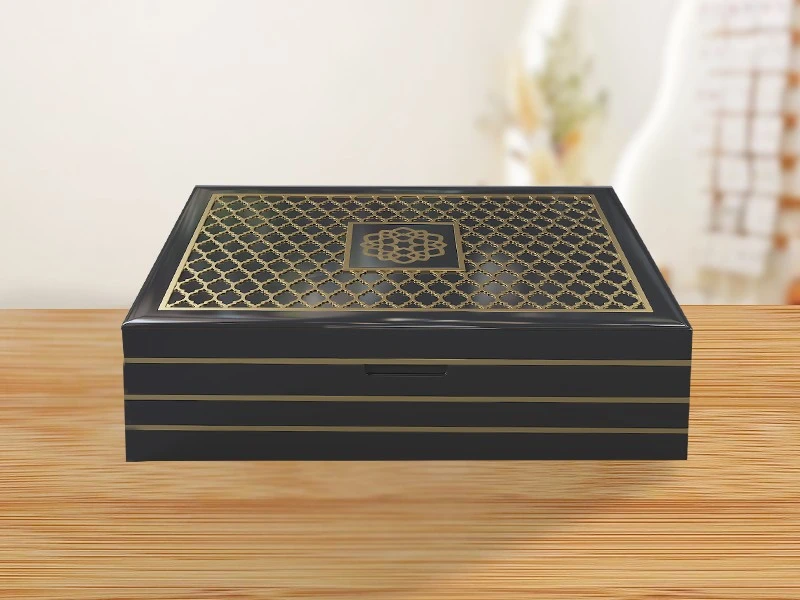
Every time a lid opens or closes, surfaces touch. Fingernails, rings, dust, and friction leave marks.
Low-density wood:
- Compresses under pressure
- Shows dents easily
- Loses surface sharpness
High-density wood:
- Resists compression
- Keeps surface flat
- Maintains finish integrity
This is why dense wood feels “tight” even after years.
Edge damage and corner rounding
Edges tell the real story of durability.
On low-density wood:
- Corners round quickly
- Veneer chips
- Lacquer breaks at edges
On dense wood:
- Edges stay sharp
- Veneer holds firmly
- Lacquer adheres better
This is critical for luxury packaging. Sharp edges communicate precision.
Density and coating performance
Coatings depend on the substrate.
Denser wood provides:
- Better adhesion
- Less micro-movement
- Lower crack risk
I have tested the same piano lacquer on different woods. The coating always lasts longer on dense wood.
Wear resistance comparison
| Caratteristica | Light Wood | Dense Wood |
|---|---|---|
| Resistenza ai graffi | Basso | Alto |
| Durata dei bordi | Debole | Forte |
| Veneer bonding | Rischioso | Stabile |
| Long-term appearance | Degrades | Ages well |
In collector-grade perfume boxes, appearance after five years matters more than appearance on day one. Density decides that outcome.
Why is balance more important than maximum density in luxury boxes?
Many buyers believe higher density always means better durability. This is not fully true.
Luxury boxes require balanced density, not extreme density.
The problem with extreme density
Very dense woods can create new issues:
- Too rigid
- Poor shock absorption
- High weight
- High material cost
When a box is too rigid, impact force passes directly to the bottle.
Shock absorption versus rigidity
A good luxury box must do two things:
- Stay strong
- Absorb vibration
Extreme density gives strength but removes elasticity.
This is why I rarely recommend ultra-dense woods unless the product is fixed with advanced internal inserts.
Cost and user experience
High density also affects:
- Shipping cost
- Handling comfort
- Consumer perception
A box that feels too heavy can feel inconvenient. Luxury should feel solid, not exhausting.
My preferred density range
After years of testing, I prefer woods that sit in the middle-high range:
| Legno | Density Range | Motivo |
|---|---|---|
| Noce | 610–650 | Forza equilibrata |
| Quercia | 680–730 | Strong and stable |
| High-grade MDF + veneer | 700+ | Controlled consistency |
These materials offer:
- La forza
- Stabilità
- Manageable weight
- Predictable behavior
Balance allows the box to protect, not punish, the product inside.
How should brands choose wood density based on product weight and use case?
Choosing density without context leads to overdesign or failure.
The correct density depends on product weight, usage frequency, and lifespan expectation.
Step one: define product weight
Heavier products require higher density to carry load.
| Tipo di prodotto | Peso della bottiglia | Recommended Density |
|---|---|---|
| Light perfume | <300g | Medio |
| Luxury perfume | 300–800g | Medio-alto |
| Collectors edition | >800g | Alto |
Step two: define use frequency
Boxes that open often need better wear resistance.
- Display boxes
- Collector boxes
- Refill systems
These require denser wood for surface durability.
Step three: define lifespan expectation
Ask one question: how long should this box look good?
- 1–2 years → Medium density acceptable
- 5–10 years → Medium–high density required
Step four: match inserts and structure
Density alone is not enough. It must match:
- Internal inserts
- Joint structure
- Spessore del pannello
A well-designed medium-density box can outperform a poorly designed high-density box.
My practical advice
I always advise brands to think like this:
The box should carry stress so the product does not.
Density is the foundation that allows this principle to work.
Conclusione
Wood density decides whether a box survives pressure, time, and use with dignity. In luxury packaging, durability comes from balance, not brute strength.
Nome del marchio: WoodoBox
Slogan: Scatole di legno personalizzate, realizzate alla perfezione

 Italiano
  English
  Español
  Português
  Deutsch
  Français
  العربية