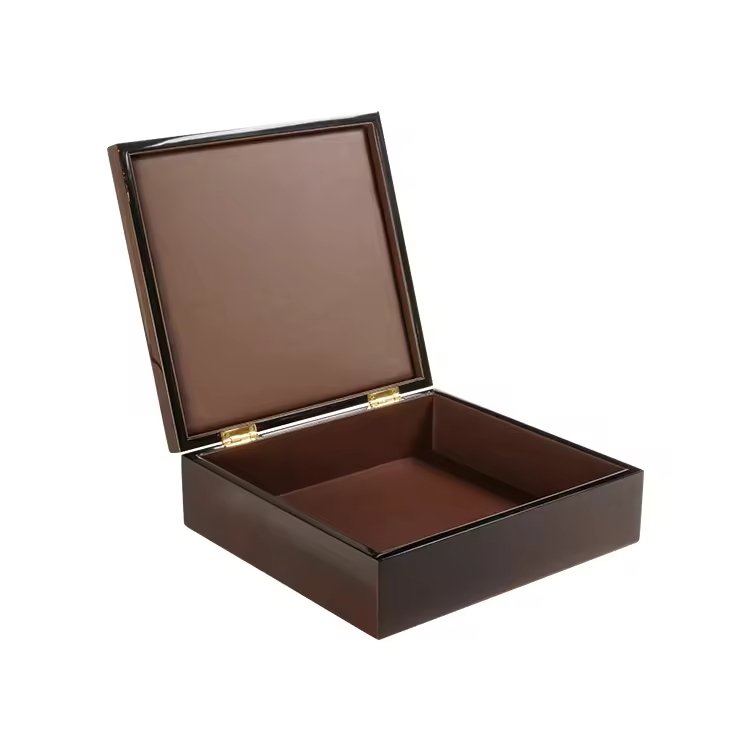
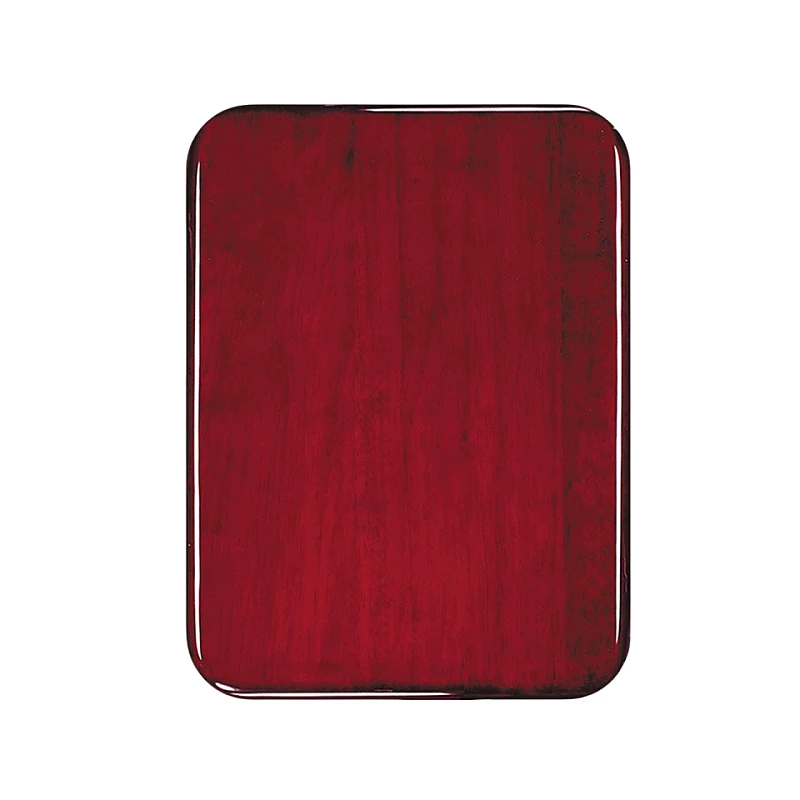
Many buyers believe piano finish is just a shinier high gloss. They see the mirror effect and think it is only about extra polish. Later, production reality surprises them.
A true piano finish is not simply high gloss. It requires multiple leveling primer layers, precise sanding, and multi-stage polishing to create a deep, mirror-like surface. It offers stronger structural durability but demands higher cost, longer lead time, and stricter quality control.
I have produced custom wooden boxes for over 16 years. I respect piano finish. It is beautiful. It is demanding. And it is not for every project.
What Truly Defines a Standard Piano Finish Process?
Some suppliers use “piano finish” as a marketing word. In real production, it has strict technical meaning.
A standard piano finish process involves heavy primer buildup for full surface leveling, repeated fine sanding between layers, thick topcoat application, and multi-stage polishing to achieve deep mirror reflection without visible surface waves.
Piano finish is about surface perfection.
Surface Leveling Is the Foundation
Before topcoat, the base must be perfectly flat.
If the MDF base has even a 0.2mm wave:
- Matte coating may hide it.
- Regular high gloss may soften it.
- Piano finish will expose it clearly.
We apply multiple primer layers to level the surface completely. Each layer must dry fully before sanding.
Fine Sanding Between Every Stage
The process includes:
- Primer application
- Séchage
- Fine sanding
- Additional primer layers
- Repeated sanding
- High-solid topcoat spraying
- Curing
- Multi-step polishing
Sanding must be controlled. Pressure must be even. Edges must not burn through.
Multi-Stage Polishing
After curing, polishing creates the mirror depth.
We use:
- Coarse compound
- Medium compound
- Fine compound
- Final gloss enhancement
This process increases labor time significantly.
Thicker and Harder Coating Film
The final coating is:
- Thicker
- Denser
- Structurally harder
Physically, it improves surface durability. But appearance sensitivity increases.
Piano finish is not just shine. It is precision.
The Core Differences Between Piano Finish and Regular High Gloss?
Many buyers ask me, “Isn’t it the same as high gloss?” The answer is no.
The key difference lies in surface leveling depth, coating thickness, polishing intensity, and visual reflection clarity. Piano finish is deeper, flatter, thicker, and more mirror-like than regular high gloss.
Both finishes are glossy. But performance differs.
Surface Flatness
Regular high gloss:
- Good smoothness
- Minor surface tolerance allowed
Piano finish:
- Extreme leveling
- Almost zero wave tolerance
Reflection under side lighting is the easiest way to see the difference.
Coating Structure Comparison
| Fonctionnalité | Brillant | Piano Finish |
|---|---|---|
| Primer Layers | Standard | Multiple leveling layers |
| Épaisseur du film | Moyen | Épais |
| Polissage | Basic polishing | Multi-stage precision polishing |
| Reflection Depth | Fort | Deep mirror clarity |
Visual Depth
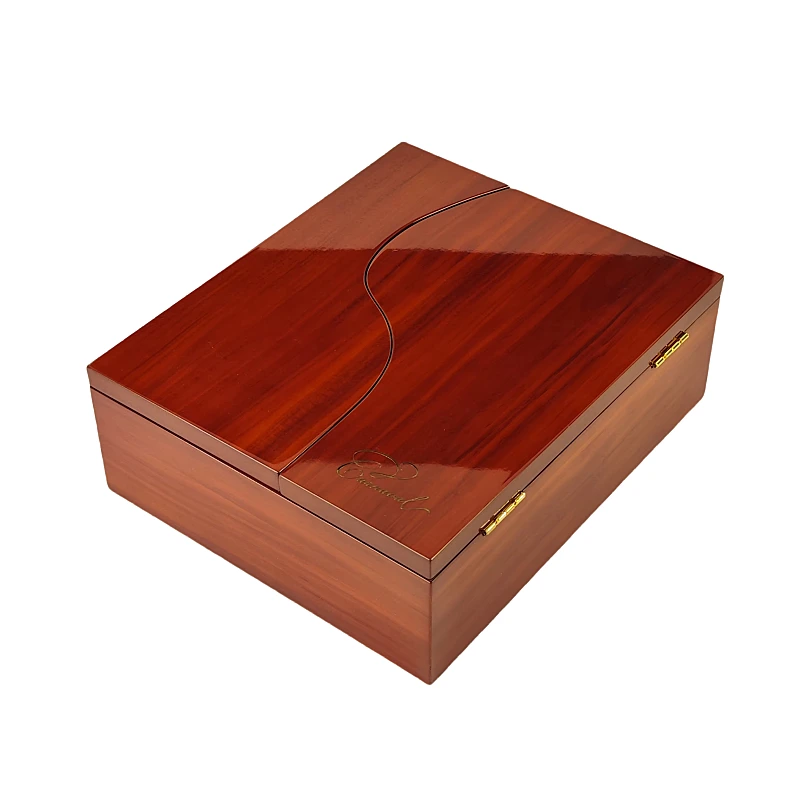
Piano finish reflection feels deeper. It almost looks wet or liquid.
Under showroom lighting, it creates dramatic mirror effect. It is similar to a grand piano surface.
That is why the name exists.
But higher precision also means higher pressure.
Why the Cost Increases: Time, Labor, and Yield Pressure?
Cost is not only about material. It is about control.
Piano finish increases cost because it requires more primer layers, extended drying time, additional sanding and polishing labor, and faces higher rejection rates due to strict visual standards.
In my factory, piano finish projects always receive special scheduling.
Time Factor
Normal matte project:
- 45–50 days including sampling
Piano finish project:
- 50–560 days
- Longer if design includes curves or complex edges
Extra time comes from:
- Additional coating cycles
- Full curing before sanding
- Multi-stage polishing
Rushing is not possible.
Intensité du travail
Polishing alone can double labor hours compared to regular gloss.
Workers must:
- Control edge pressure
- Avoid burn-through
- Maintain even gloss level
Edge burn-through during polishing can ruin the entire panel.
Yield Pressure
Because visual standard is high:
- Dust contamination causes rejection
- Minor waves become unacceptable
- Hairline polishing marks may fail inspection
Rejection rate is higher than matte or standard gloss.
Cost Justification Question
Je demande toujours à mes clients :
Does your retail price justify 10–20% higher surface finishing cost?
If yes, piano finish makes sense.
If no, the added investment may not bring proportional return.
Scratch-Resistant Does Not Mean Scratch-Invisible?
This is one of the biggest misunderstandings.
Piano finish is structurally more resistant to light scratches due to its thicker and harder coating film. However, visually it is less forgiving because mirror reflection makes even fine hairline marks noticeable under strong lighting.
Durability and appearance are different concepts.
Structural Durability
Because of thicker coating:
- Light surface abrasion resistance improves
- Film hardness increases
- Surface feels solid and dense
In physical testing, piano finish performs better than many standard gloss coatings.
Visual Sensitivity
However, under showroom lighting:
- Fine hairline marks reflect strongly
- Micro scratches catch light
- Cleaning cloth marks may appear
Customers may think it scratches easily. In reality, it reflects more.
Shipping Protection Is Critical
We often upgrade packaging:
- Protective film
- Individual wrapping
- Thicker foam protection
Even careful transport can create tiny friction marks if protection is insufficient.
Many buyers only understand this after mass production. That is why expectation management is important.
Structurally durable. Visually demanding.
Which Brands Should Choose Piano Finish — and Which Should Not?
Piano finish creates ceremony. But ceremony is not always required.
Piano finish is ideal for ultra-luxury watches, premium liquor, and limited collector editions where prestige and price positioning justify higher cost and longer lead time. It is not suitable for cost-sensitive or time-critical projects.
I always guide clients through practical evaluation.
Brands That Benefit Most
Piano finish works best for:
- Ultra-luxury watch brands
- Premium liquor packaging
- Limited edition collectibles
- Anniversary or ceremonial gift sets
These products rely on prestige. Packaging must create emotional impact.
Brands That Should Reconsider
Avoid piano finish if:
- Budget is tight
- Timeline is strict
- Distribution involves heavy handling
- Target price is mid-range
In such cases, high gloss or semi-matte may deliver better balance.
My Honest Recommendation
If your goal is to truly elevate brand ceremony and your retail price supports it, piano finish is powerful.
If your goal is only to “look slightly more expensive,” the added complexity may not deliver strong return.
Finish choice must align with brand strategy, cost structure, and operational capacity.
Conclusion
Piano finish wooden boxes offer unmatched mirror depth and prestige. But they demand higher cost, longer lead time, and strict quality control. Choose it only when your brand truly requires that level of shine.
WoodoBox
Boîtes en bois sur mesure, fabriquées à la perfection

 Français
  English
  Español
  Português
  Deutsch
  Italiano
  العربية