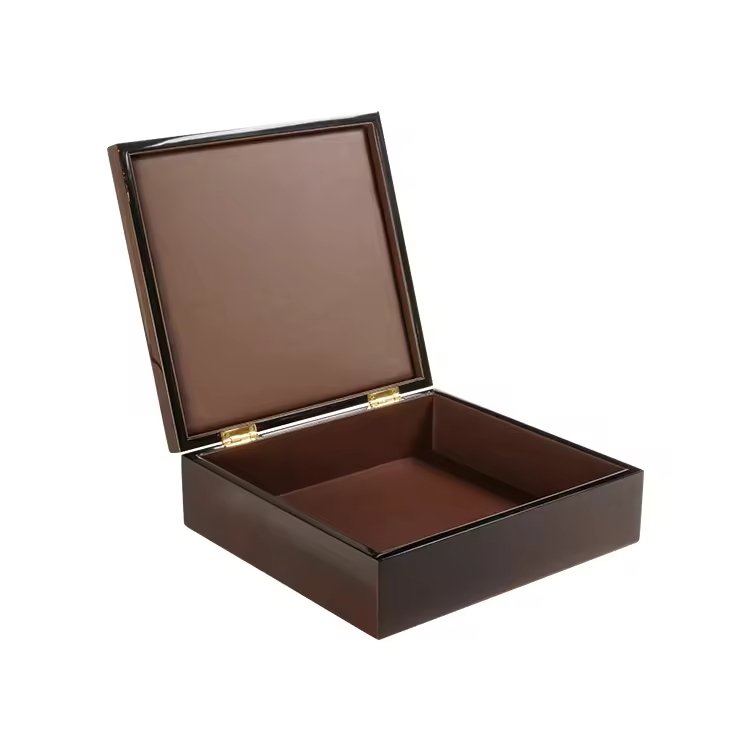
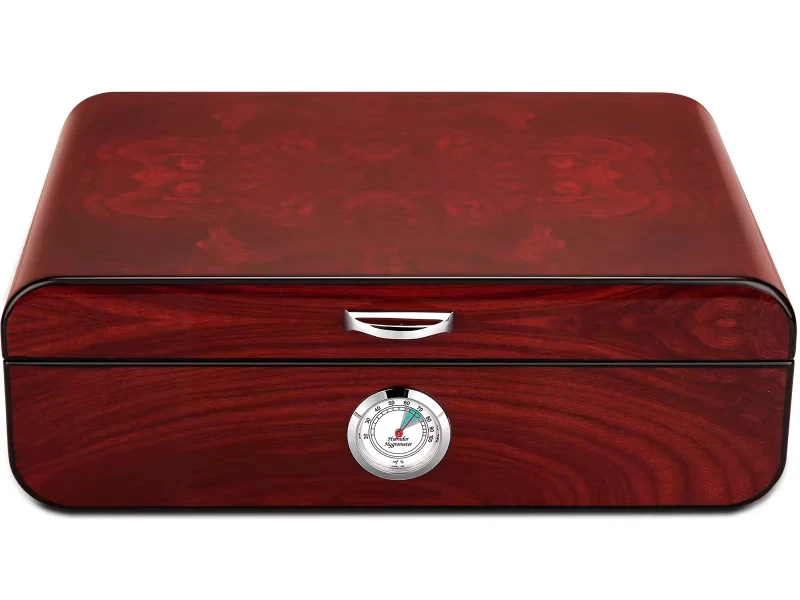
A poorly sealed cigar box can ruin premium cigars fast, leading to dryness, mold, or loss of aroma. Buyers cannot risk weak sealing.
The sealing ability of a cigar box can be evaluated by combining simple at-home leak checks, humidity retention tests, inspection of structural features, and adapted packaging standards. Each method reveals unique insights.
Most buyers overlook sealing performance until damage appears. In this article, I will explain practical methods, technical standards, and material science details that help measure cigar box sealing ability with accuracy.
What simple at-home checks (paper-strip, flashlight, weigh-in) can reveal air leaks?
A small leak can undo months of aging and ruin premium cigars. Quick at-home checks can give early warnings.
At-home methods like paper-strip tests, flashlight inspections, and weigh-in tracking can reveal air leaks without special equipment. These checks highlight weak spots in the lid or joints.

When I test a cigar box, I start with the most basic tools. I cut a thin paper strip and move it slowly along the closed lid. If the strip flutters, there is airflow. This tells me the lid or hinge is not sealing properly. I also use a small flashlight inside the box in a dark room. If I see light escaping through joints or the lid seam, that means leaks. Another method is the weigh-in test. I place a humidified box with cigars on a scale, record the weight, and check again after a few days. If weight drops too fast, moisture is escaping.
Comparing At-Home Methods
| Méthode | Outils nécessaires | Detection Type | Sensitivity | Limitation |
|---|---|---|---|---|
| Paper-strip | Papier | Airflow leaks | Moyen | Needs steady hand, subjective |
| Flashlight | Small flashlight | Visible gaps | Haut | Works best in dark room |
| Weigh-in | Scale | Moisture loss | Moyen | Needs several days to detect |
These methods are not laboratory accurate, but they are quick, cheap, and effective for daily checks. I often recommend them to clients who want to identify problems before sending boxes for formal tests.
How can a humidity retention test (set RH, time decay, data logging) quantify sealing performance?
Cigars need consistent humidity, but not every box maintains it equally. A proper humidity retention test can measure sealing strength.
A humidity retention test measures how well a cigar box keeps a set relative humidity over time. By logging humidity decay, we can quantify the sealing ability of the structure.
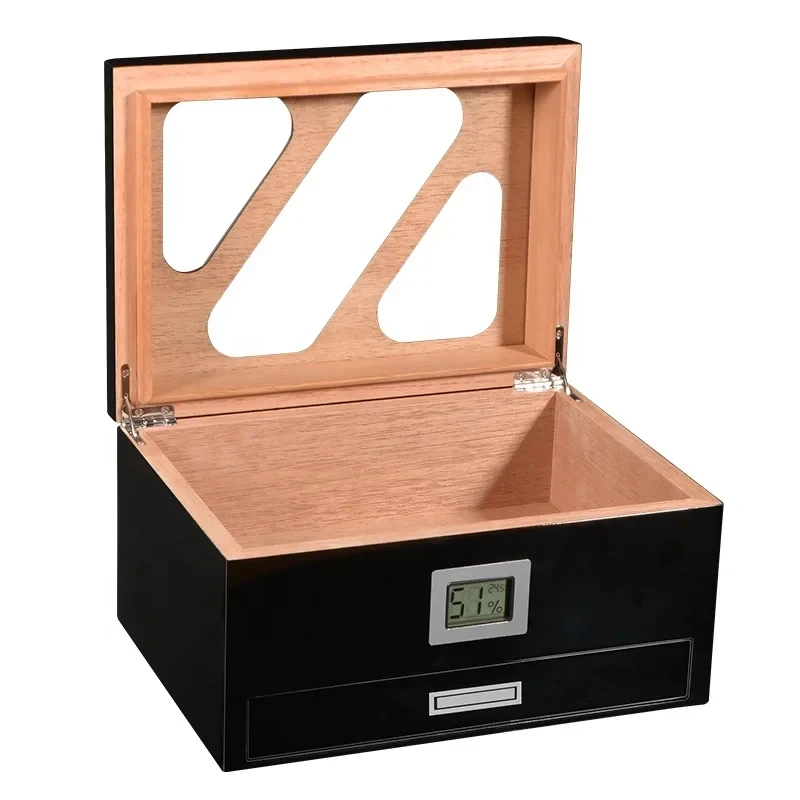
I run humidity tests with a digital hygrometer and salt packs. First, I stabilize the box at 70% RH. Then I close it with a data logger inside. I track how RH changes every 24 hours. A good box will hold steady with only small drops. A weak box shows faster decay. For higher accuracy, I compare decay curves between different boxes.
Steps in Humidity Retention Test
- Prepare box at stable humidity (65–70% RH).
- Place data logger or hygrometer inside.
- Close lid and seal box for 7–14 days.
- Record humidity changes daily.
- Compare against target values.
When I test luxury piano-lacquer boxes, the RH often drops less than 1% per day. In lower-cost MDF boxes with poor finishing, I see 3–4% per day. This shows how sealing makes a big difference in performance.
The advantage of this method is clear numbers. Buyers and manufacturers can agree on pass/fail criteria based on humidity retention. This makes sourcing more transparent and fair.
Which structural features (gaskets, hinges, latches, lid flatness) most strongly affect airtightness?
A cigar box looks simple, but small details in construction decide if it seals tightly or leaks easily.
Key structural features that affect airtightness are lid flatness, hinge quality, latch strength, and use of gaskets. These elements define how well the lid presses against the body.
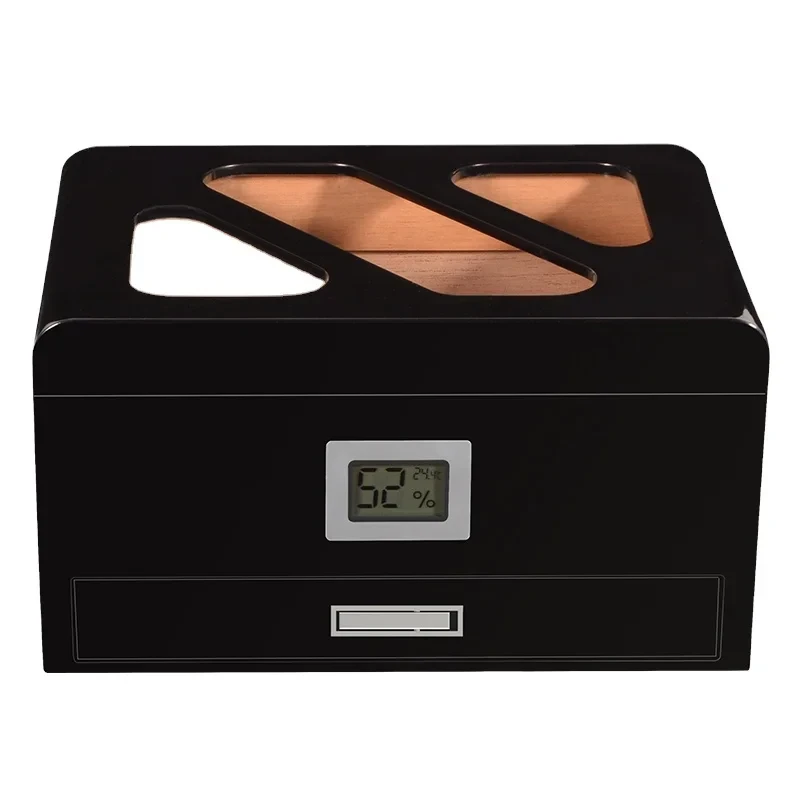
When I design boxes, I pay close attention to lid flatness. Even a 0.5 mm warp can leave gaps that let air flow. Hinges also matter. If they are loose or misaligned, the lid shifts and leaks appear. Latches add pressure to the lid, improving the seal. In some high-end jewelry or cigar boxes, I use thin silicone gaskets hidden under the lip. This makes a huge improvement in airtightness without changing the look.
Structural Feature Impact
| Fonctionnalité | Impact on Sealing | Typical Problem |
|---|---|---|
| Lid flatness | Très élevé | Warping, uneven sanding |
| Charnières | Haut | Misalignment, loose screws |
| Latches | Moyen | Weak tension, decorative only |
| Gaskets | Très élevé | Rare in cheap boxes |
Flatness and gasket use are the strongest factors. Many brands ignore them to save cost, but then struggle with customer complaints. I often advise buyers to inspect hinge alignment and test latch pressure before placing bulk orders.
Are there reference methods from packaging standards (e.g., leak rate, pressure/vacuum tests) we can adapt for cigar boxes?
Other industries test sealing strength with strict standards. We can borrow their methods to evaluate cigar boxes more scientifically.
Packaging standards use leak rate, pressure, and vacuum tests to measure sealing performance. These methods can be adapted for cigar boxes to provide consistent benchmarks.
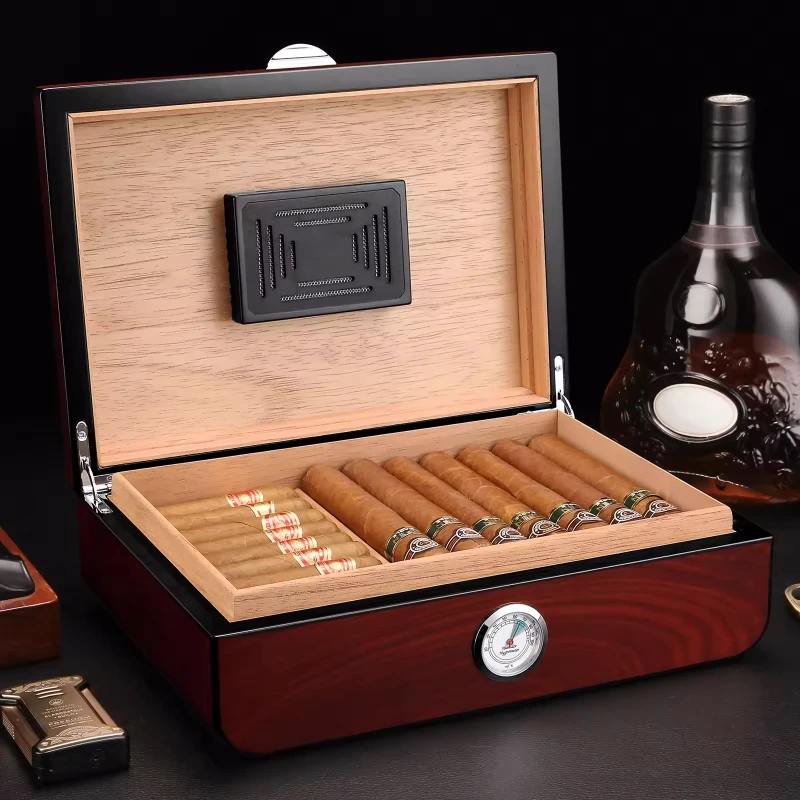
In medical packaging, sealing is tested with vacuum chambers. A box is placed under low pressure and leaks are measured by bubble or pressure decay. Food packaging uses gas leak detectors to find weak seams. These methods are more advanced than at-home checks, but they need equipment.
For cigar boxes, we can adapt two approaches. The first is pressure decay. We place a box inside a sealed chamber, apply pressure, and measure how fast it drops. A slow drop means good sealing. The second is water submersion with vacuum. We pull a slight vacuum and watch for bubbles escaping from joints. This works best for prototypes or small samples.
Adaptable Standards
- ASTM F2096 (bubble leak test)
- ASTM F2338 (non-destructive leak test)
- ISO 11607 (packaging for terminally sterilized devices)
These standards are not written for cigar boxes, but the science is transferable. When clients request strict validation, I recommend adapting ASTM F2338, which uses pressure decay. It is precise, repeatable, and non-destructive.
How do material choices and surface finishes change water vapor transmission over time?
Even if a lid seals well, materials themselves can allow moisture to escape slowly. Choice of wood, MDF, and finish makes a big difference.
Different woods, veneers, and surface finishes affect the water vapor transmission rate (WVTR). Dense hardwoods and lacquer finishes slow down vapor loss, while porous woods and thin coatings allow more.
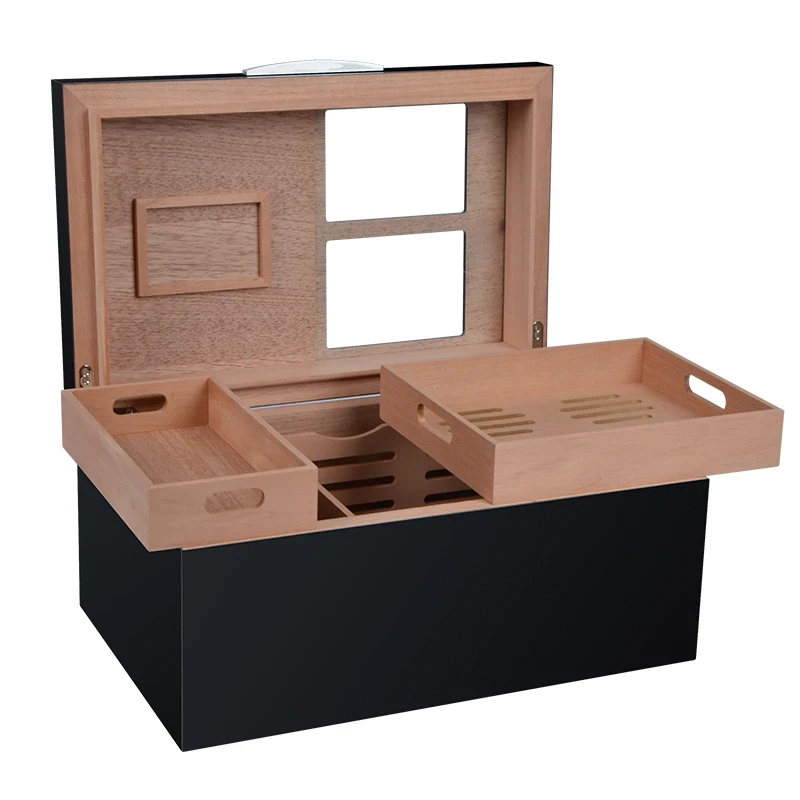
I have tested boxes made from solid Spanish cedar, MDF with veneer, and plywood. Spanish cedar is aromatic, but it is porous. It breathes more, which can speed up humidity changes. MDF with a piano lacquer finish resists vapor very well. Over weeks, I see much lower RH loss compared to unfinished cedar.
Material and Finish Impact on Sealing
| Material + Finish | Vapor Transmission | Utilisation typique |
|---|---|---|
| Solid Spanish cedar | Moyenne-élevée | Traditional cigar boxes |
| MDF + veneer + lacquer | Faible | Emballage de luxe |
| Plywood + paint | Moyen | Budget boxes |
| Hardwood + PU coating | Faible | High-end jewelry/wine |
Surface finish acts as a barrier. High-gloss lacquer, polyurethane, or UV coatings all lower vapor transmission. I often explain to buyers that sealing is not only about lid fit, but also about how the walls resist moisture exchange with air.
This is why high-end brands spend more on finishes. They know cigars will age better when the box resists both air leaks and vapor diffusion.
What pass/fail criteria make sense for daily use (acceptable RH drop per 24h, recovery time, repeatability)?
Even the best test is useless without clear benchmarks. Buyers need simple pass/fail rules for daily evaluation.
Practical pass/fail criteria include less than 1% RH drop per 24 hours, fast recovery to target humidity within 12 hours, and consistent repeatability across multiple cycles.
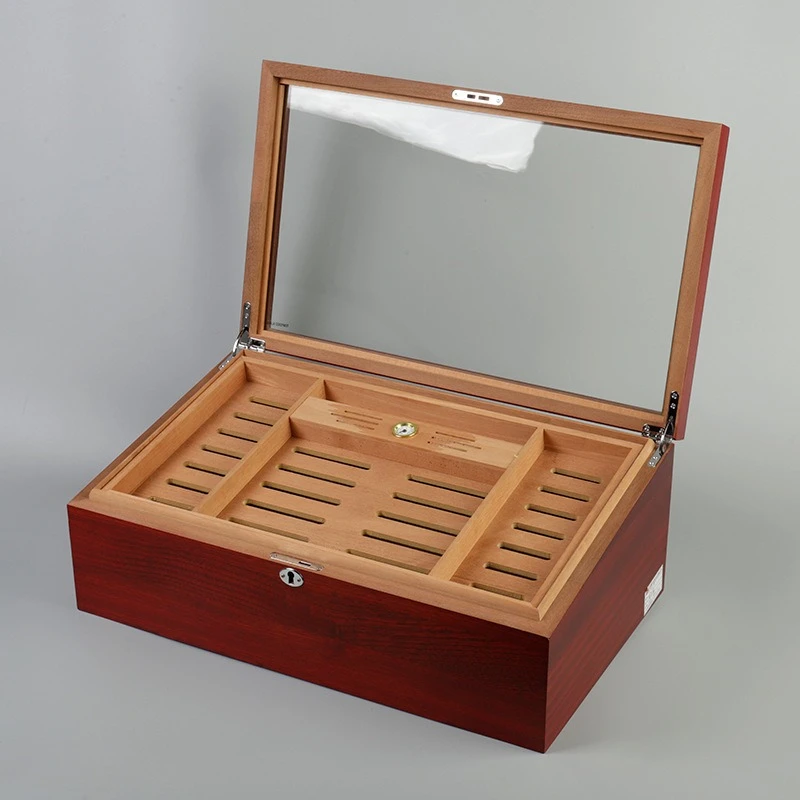
When I work with international buyers, I suggest easy metrics. If a box loses more than 2% RH in 24 hours, it will likely fail to store cigars long-term. For recovery, I look at how fast the box returns to 70% after opening. A strong box recovers within half a day, a weak one takes days. Repeatability is also important. I open and close the lid five times, then re-test. A well-made box performs consistently.
Practical Pass/Fail Guidelines
| Type de test | Acceptable Result |
|---|---|
| RH drop in 24h | ≤ 1% (ideal), ≤ 2% pass |
| Recovery time to 70% RH | ≤ 12 hours |
| Repeatability (5 cycles) | Stable, <0.5% variation |
These criteria are simple enough for daily checks, yet strict enough to ensure quality. They help buyers make confident sourcing decisions without expensive lab equipment.
Conclusion
Sealing ability decides cigar freshness. Testing it with simple checks, humidity tracking, and structural inspection ensures long-lasting performance.
Nom de marque : WoodoBox
Slogan : Boîtes en bois sur mesure, fabriquées à la perfection
Site web : www.woodobox.com
WhatsApp : +86 18359265311



 Français
  English
  Español
  Português
  Deutsch
  Italiano
  العربية