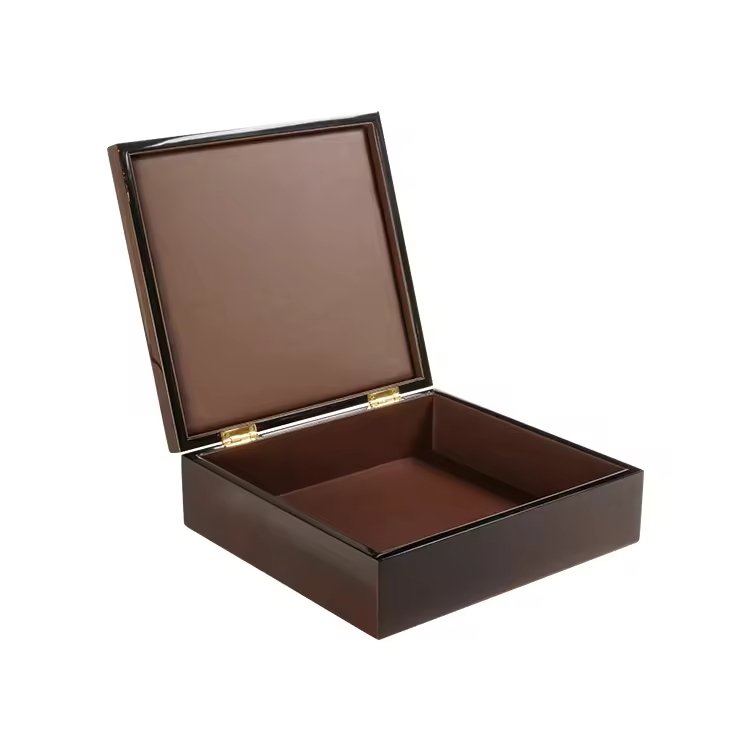

Many cigar brands lose money not because their cigars are bad, but because their boxes fail. I have seen warped lids, broken hinges, and delayed shipments ruin launch plans.
From a buyer’s point of view, choosing the wrong wooden cigar box manufacturer creates hidden costs that appear months later. This article is written for brand owners who want fewer risks, fewer surprises, and better control.
I write this from direct experience working with cigar brands that source wooden boxes every year. Everything below focuses on what you should check, ask, and verify before placing an order.

From the customer side, suitability is about risk reduction, not marketing promises.
A suitable manufacturer helps you avoid problems you do not yet see.
They understand how cigar boxes are actually used
As a buyer, you should never assume the factory understands cigars.
Ask direct questions:
- How long are cigars stored in the box?
- How does the box handle humidity changes?
- What problems have previous cigar clients faced?
If the answers sound generic, the factory is likely treating your box as a normal wooden case.
A suitable manufacturer understands:
- Boxes are opened repeatedly
- Boxes are stored long-term
- Boxes face climate changes
- Boxes influence cigar aging
This knowledge affects every design decision.
They explain decisions instead of just accepting drawings
From a customer view, the most dangerous supplier is one that says “yes” to everything.
A reliable manufacturer:
- Questions weak structures
- Explains why changes are needed
- Warns you about long-term risks
Here is how I judge suppliers early:
| Supplier Behavior | Buyer Risk Level |
|---|---|
| Agrees instantly | Risque élevé |
| Asks no questions | Risque élevé |
| Explains trade-offs | Risque faible |
| Pushes back politely | Risque faible |
You want a factory that protects you from mistakes, even if those mistakes come from your own design.
How do materials, structure, and craftsmanship affect cigar preservation and brand value?
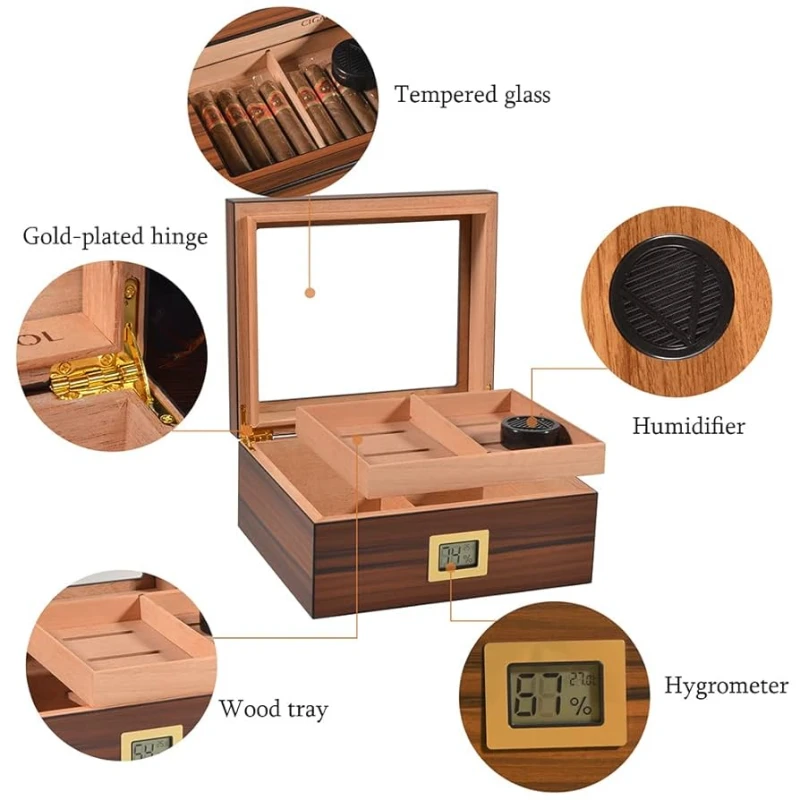
From a buyer’s perspective, materials and structure are about after-sales problems.
Customers never complain on day one. They complain months later.
Material choices affect customer complaints
Poor wood selection leads to:
- Warping lids
- Cracking corners
- Strong unwanted odors
As a buyer, you should ask:
- What wood species are used for each part?
- How long is the wood aged?
- How is moisture content controlled?
If a factory cannot answer clearly, future complaints are almost guaranteed.
Structure determines long-term stability
Many boxes look perfect during inspection.
Problems appear after shipping, storage, or seasonal changes.
Key structural points buyers should confirm:
- Joint type at corners
- Lid thickness balance
- Bottom panel strength
- Tray support design
Below is a simple buyer-focused risk table:
| Structural Area | If Done Poorly | Customer Result |
|---|---|---|
| Lid | Warps | Box won’t close |
| Corners | Crack | Box looks cheap |
| Charnières | Loosen | Broken experience |
| Trays | Shift | Damaged cigars |
Craftsmanship affects perceived value
Customers touch the box before they smoke.
They notice:
- Rough edges
- Uneven finishes
- Noisy lids
- Loose components
From a buyer view, poor craftsmanship increases returns and damages brand trust.
High craftsmanship reduces customer service costs.
Why should customization ability be evaluated beyond logos and finishes?

Many buyers focus too much on how the box looks and not enough on how it works.
Customization that ignores use creates future problems.
Functional customization matters more than decoration
As a buyer, you should evaluate:
- How the lid opens
- How much resistance it has
- How cigars are removed
- How trays are lifted
These are daily user actions.
A factory that only talks about logos and colors is missing the real issues.
Customization must be repeatable
From a sourcing view, consistency is everything.
Demandez :
- Can this finish be matched in future orders?
- Can this opening feel be repeated?
- Can this color stay stable over time?
Here is a buyer comparison:
| Customization Area | Weak Supplier | Strong Supplier |
|---|---|---|
| Logo | Printed only | Intégré |
| Finition | Looks good once | Stable long-term |
| Structure | Fixed design | Adjustable |
| Intérieur | Décoratif | Practical |
Design guidance saves buyer time
Experienced manufacturers help buyers:
- Simplify designs
- Avoid risky structures
- Control costs logically
This guidance reduces revisions, delays, and rework.
How can communication, sampling, and process control reduce sourcing risks?
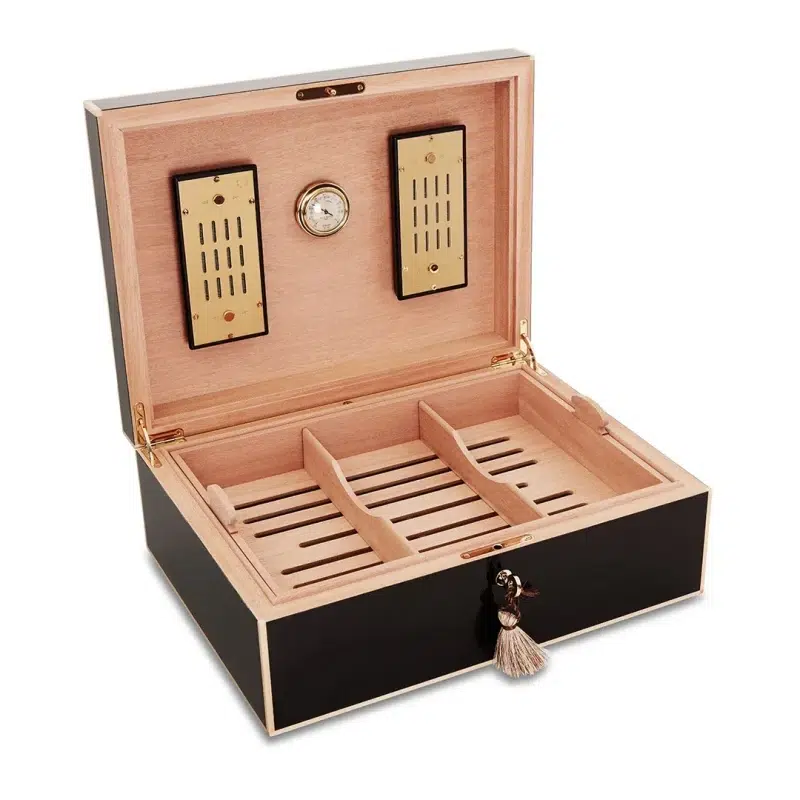
From the buyer side, most losses come from misunderstandings.
Good process protects your budget and timeline.
Clear communication prevents assumptions
Buyers should expect:
- Written confirmations
- Technical drawings
- Change records
Verbal agreements create disputes later.
If a factory avoids documentation, risk increases.
Sampling should test risks, not beauty
As a buyer, treat samples as stress tests.
Ask for:
- Structure samples
- Finish durability tests
- Hinge life tests
Never rush samples to meet marketing deadlines. That decision almost always backfires.
Process transparency builds confidence
A reliable supplier shares:
- Production stages
- Quality checkpoints
- Potential delays early
Buyer checklist:
| Stade | What You Should Receive |
|---|---|
| Conception | Drawings |
| Échantillonnage | Feedback |
| Production | Updates |
| Expédition | Final inspection |
Transparency reduces surprises.
What signs indicate a manufacturer is a long-term partner, not just a short-term supplier?
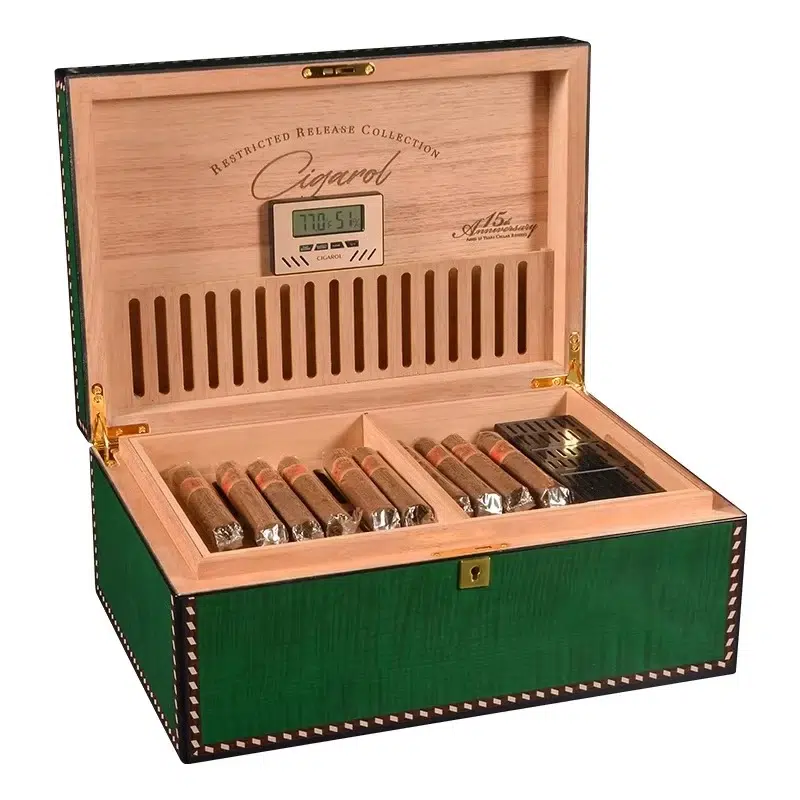
From a buyer’s view, long-term partners reduce workload over time.
Short-term suppliers increase workload every order.
Long-term partners protect consistency
They:
- Maintain material standards
- Train workers
- Improve tooling
- Document processes
This protects your brand as volume grows.
They communicate problems early
Buyers should watch for:
- Early warnings
- Honest timelines
- Solution-focused talk
Late surprises damage launches and cash flow.
They think beyond the current order
A real partner:
- Plans future capacity
- Supports new designs
- Helps reduce long-term cost
Most buyers who switch suppliers repeatedly share one regret.
They waited too long to choose stability.
Conclusion
From a customer perspective, a reliable wooden cigar box manufacturer reduces risk, protects your brand, and saves time long-term. Smart sourcing decisions always pay back later.
WoodoBox
Boîtes en bois sur mesure, fabriquées à la perfection

 Français
  English
  Español
  Português
  Deutsch
  Italiano
  العربية