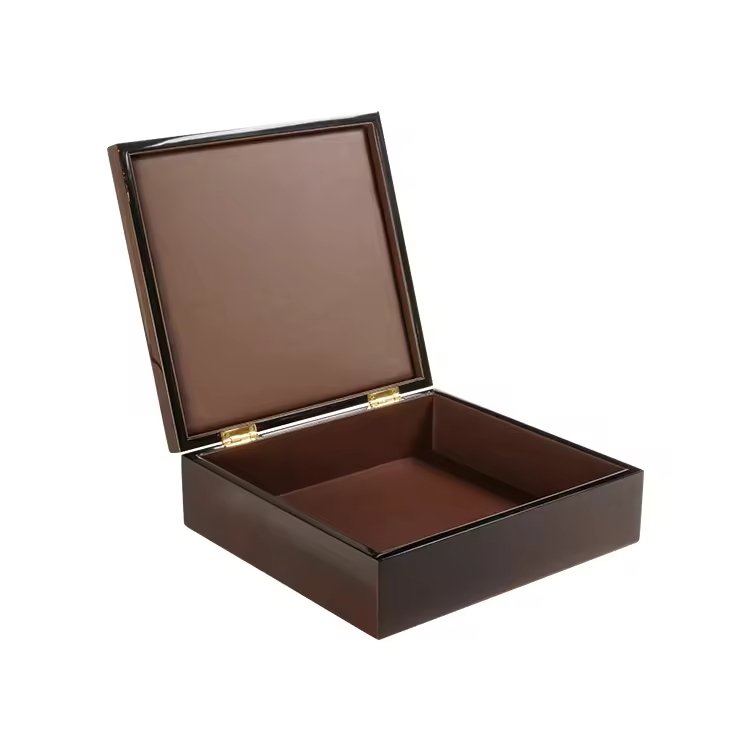

Shipping complaints about loose perfume caps keep happening. Leaks appear. Customers blame quality. In reality, the box design often creates the problem.
Perfume cap loosening happens because packaging allows movement during shipping, not because the cap was poorly tightened. When the bottle is fixed correctly inside a rigid box, caps stay tight through long-distance transport.
If you have ever faced returns, leakage claims, or damaged brand trust due to perfume packaging failure, this article will help you understand where the real problem comes from and how to solve it at the box design level.
Why does cap loosening happen so often during transportation?
Perfume caps loosen during shipping because bottles are allowed to move, rotate, and bounce inside their packaging for long periods.
Cap loosening is a movement problem, not a closure problem.
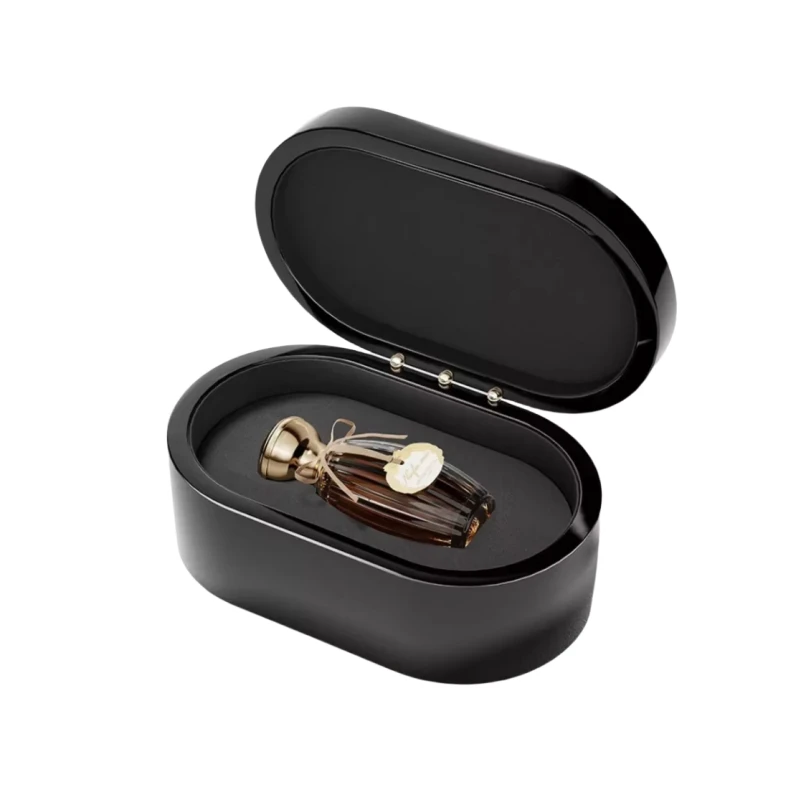
From my experience working with perfume brands for over 15 years, most clients first suspect poor assembly. They ask suppliers to tighten caps harder. They add glue. They increase torque. None of this solves the root cause.
The real issue starts once the bottle leaves the factory.
Continuous micro-movement during logistics
Shipping is not one single impact. It is a long chain of small forces:
- Truck vibration for hours or days
- Conveyor belt oscillation
- Sudden stops and turns
- Air freight turbulence
- Repeated handling by couriers
Each small movement may seem harmless. But combined, they create repeated rotational force on the cap.
If the bottle can rotate even slightly inside the box, the mass of the glass body acts like a lever. That lever transfers twisting force directly to the cap threads or friction-fit interface.
Clearance is the hidden enemy
Many brands believe leaving space inside the box adds safety. In reality, that clearance becomes the cause of failure.
Here is what often happens:
| Choix de la conception | Result During Shipping |
|---|---|
| Loose insert tolerance | Bottle rotates slowly |
| Soft foam only | Bottle oscillates |
| No vertical restraint | Bottle bounces |
| Focus on cap protection | Body moves freely |
Once the bottle moves, the cap pays the price.
Why tightening the cap more does not work
Tightening the cap harder does not stop physics. Vibration will still work against the closure. In some cases, overtightening even damages spray systems or creates stress cracks.
From a packaging engineering view, the cap is not the right place to fight movement. The bottle body is.
This is why box design plays a more important role than many brands realize.
How can internal fixation stop rotational and vertical movement of the bottle?
Internal fixation works by locking the bottle body in place so that no rotation or vertical travel can occur during transport.
A fixed bottle cannot loosen its cap.
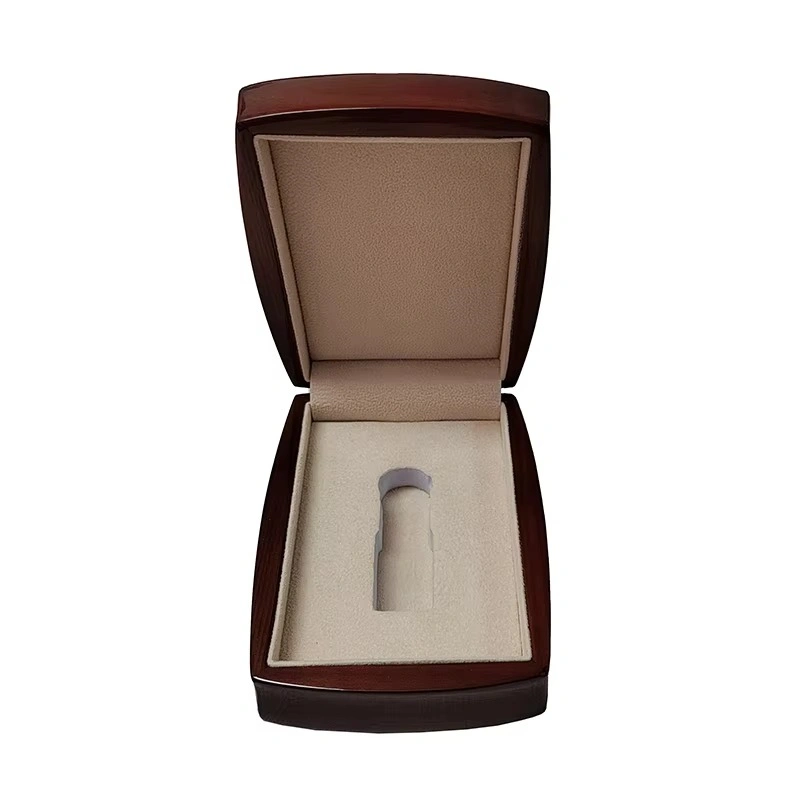
In my projects, internal fixation has solved more cap-loosening issues than any cap modification ever did.
The goal of internal fixation
The goal is simple:
- Hold the bottle body firmly
- Prevent rotation
- Prevent vertical movement
- Avoid pressure on the cap
This means the insert must grip the strongest part of the bottle, not the weakest.
Correct fixation points
The best fixation area is always the bottle body, never the cap or spray head.
Common fixation strategies I use:
EVA foam inserts
- High density EVA
- Precision cut
- Tight tolerance around bottle shoulders
- Minimal rebound
Inserts en pâte moulée
- Custom-shaped cavities
- Firm wall thickness
- Eco-friendly option
- Better than loose paper padding
Wooden trays
- CNC cut cavities
- Zero rotation when sized correctly
- Ideal for luxury perfume boxes
What fixation should avoid
Many failed designs share the same mistakes:
| Erreur | Why It Fails |
|---|---|
| Gripping the cap | Transfers force directly to closure |
| Soft sponge foam | Allows oscillation |
| Oversized cavities | Creates rotational play |
| Single-point support | Causes rocking motion |
Clearance should be intentional, not accidental
Good fixation uses controlled tolerance, not loose space. In several redesigns I handled, reducing internal clearance by just 1–2 mm stopped all cap complaints.
This level of precision requires coordination between bottle supplier, box manufacturer, and insert designer. When these teams work separately, problems appear.
Internal fixation is not about cushioning. It is about control.
Why does controlling vibration matter more than tightening the cap itself?
Vibration causes more cap loosening than drops or impacts, especially in long-distance shipping.
Most perfume shipments fail quietly, not violently.

In real logistics, packages rarely experience dramatic drops. What they do experience is constant vibration for many hours.
How vibration affects perfume bottles
Vibration creates three dangerous behaviors:
- Micro-rotation of the bottle
- Repeated upward and downward motion
- Continuous stress at the neck interface
Each vibration cycle adds tiny force. Over thousands of cycles, the cap slowly works loose.
Why soft packaging often makes it worse
Soft foam absorbs impact but allows motion. This is a critical misunderstanding.
| Type d'emballage | Impact Protection | Vibration Control |
|---|---|---|
| Soft PU foam | Bon | Pauvre |
| Loose sponge | Juste | Very poor |
| EVA high density | Bon | Bon |
| Rigid wood box | Excellent | Excellent |
When foam is too soft, it becomes a spring. The bottle keeps moving long after the vibration starts.
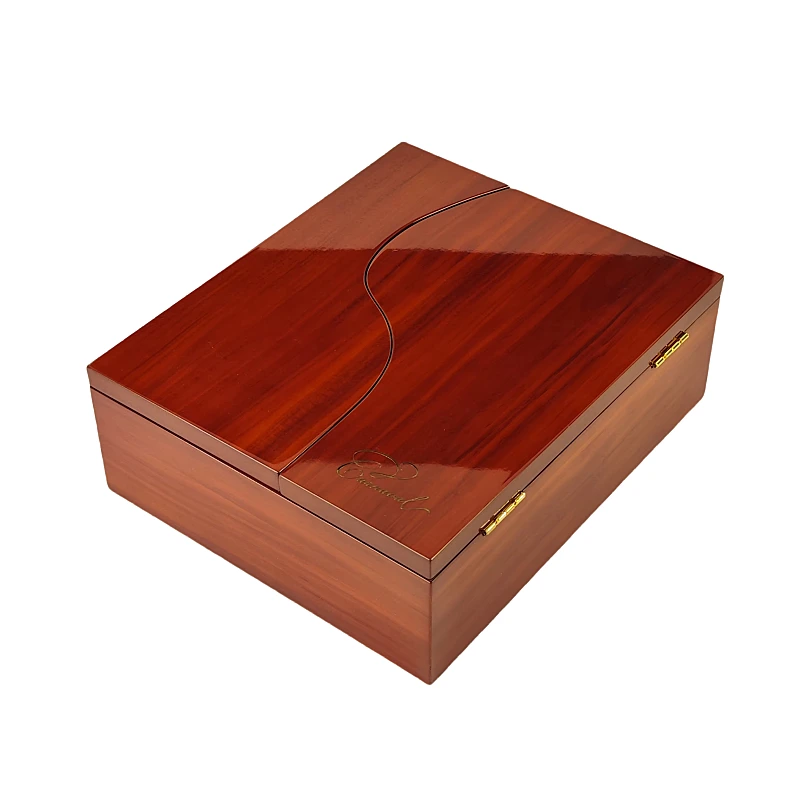
The advantage of rigid wooden boxes
As a wooden box manufacturer, I see this clearly. Wood behaves differently from cardboard or plastic.
Wood:
- Disperses vibration energy
- Reduces oscillation
- Adds mass and stability
- Limits resonance
This is why luxury perfume brands often see fewer transport issues after switching to rigid wooden packaging, even without changing the bottle or cap design.
Cap tightening vs vibration control
Tightening the cap treats the symptom. Vibration control treats the cause.
In several cases, we kept the same cap, same torque, same bottle, and only changed:
- Insert density
- Internal fixation
- Outer box rigidity
The complaints stopped.
That is not coincidence. It is physics.
How do rigid box structures protect the bottle neck and cap interface?
Rigid box structures protect the most fragile point of the perfume bottle: the neck and cap connection.
The neck area is the weakest mechanical zone of the entire bottle.
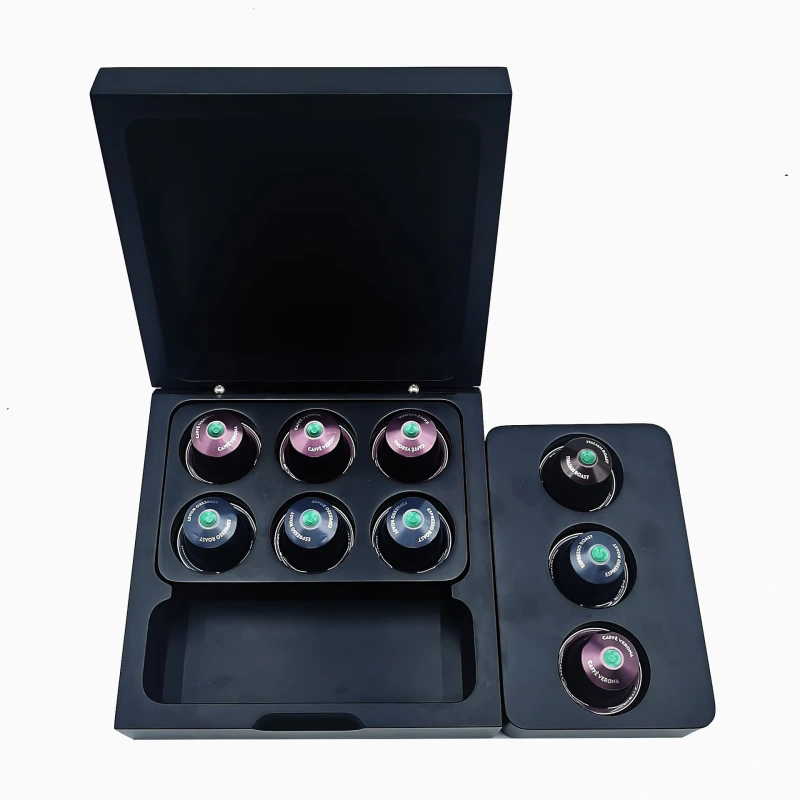
Many brands focus on protecting the glass body from breakage. But cap loosening happens at a different stress point.
Vertical movement creates neck stress
When a box allows vertical travel:
- The bottle bounces
- The neck absorbs repeated load
- The cap interface takes the stress
Even small vertical movement causes repeated impact between the bottle base and insert. That energy travels upward to the neck.
How rigid boxes change force paths
A rigid structure changes how forces move through the package.
Instead of:
Shock → Bottle → Neck → Cap
A good rigid box creates:
Shock → Box → Insert → Bottle body
The neck is bypassed.
Structural advantages of rigid wooden boxes
From production experience, rigid wooden boxes provide:
- Strong side walls
- Stable base support
- Reduced deformation
- Long-term shape retention
Cardboard boxes can deform under load or humidity. Once the shape changes, internal clearance changes too.
Supporting the bottle, not suspending it incorrectly
A good design either:
- Fully supports the bottle base and body
- Or suspends the bottle body evenly
What it should never do is leave the bottle partially floating with free travel.
| Support Method | Effect on Cap |
|---|---|
| Firm base support | Stable |
| Body clamping | Stable |
| Cap contact | Risqué |
| Free vertical travel | Dangerous |
Rigid structure gives designers the ability to control these forces precisely.
How can box geometry and insert design work together to secure the cap long-term?
Box geometry and insert design must be developed together to eliminate torque and leverage at the cap.
Bad proportions create good leverage for failure.

In many redesign projects, we solved cap loosening without changing materials. We changed geometry.
Why tall, narrow boxes are risky
Tall boxes increase leverage. When a tall box tilts or vibrates, the top of the bottle moves more than the base.
That movement translates into torque at the neck.
Balanced proportions reduce torque
Good geometry focuses on:
- Lower center of gravity
- Tight internal height control
- Balanced width-to-height ratio
Even small adjustments matter.
In one case, reducing internal height by 3 mm eliminated a recurring issue that had lasted for years.
Insert design must match box geometry
Insert and box should never be designed separately.
Key alignment points include:
Vertical tolerance
- No free travel
- Slight preload is acceptable
- Compression must hit bottle body, not cap
Horizontal tolerance
- No rotational play
- Even pressure distribution
- Symmetrical cavity shape
Example tolerance control table
| Zone | Recommended Tolerance |
|---|---|
| Bottle body width | ±0.5 mm |
| Internal height | ±1,0 mm |
| Neck clearance | No contact |
| Cap clearance | Free space |
Long-term stability matters
Perfume boxes are stored, stacked, and shipped multiple times. Insert materials must retain shape.
Low-quality foam compresses over time. Wood and high-density EVA remain stable.
This is why luxury brands focus on long-term geometry stability, not just first-shipment testing.
When geometry and insert design work as one system, the bottle stays still. And when the bottle stays still, the cap stays tight.
Conclusion
Perfume caps loosen because bottles move. Secure the bottle with rigid structure, precise fixation, and balanced geometry, and the cap will protect itself.
WoodoBox
Boîtes en bois sur mesure, fabriquées à la perfection



 Français
  English
  Español
  Português
  Deutsch
  Italiano
  العربية