Aller au contenu
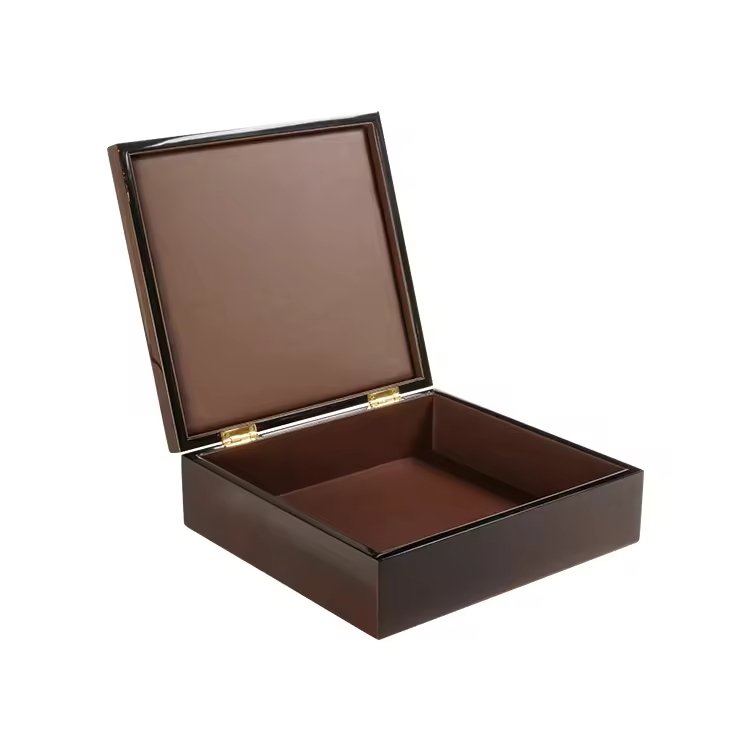
Moisture often destroys cigar boxes silently, and the bottom panel is the most ignored yet risky area.
Yes, the bottom panel of a cigar box needs moisture-proof treatment, because it is often in direct contact with surfaces and most exposed to rising damp.
When buyers only focus on exterior finishes, they overlook the bottom structure. This is a mistake because untreated bases may cause structural failure and damage stored cigars.
Why is the bottom panel more vulnerable to rising damp or surface contact moisture?
Moisture always travels from the ground upward, and flat surfaces easily hold condensation.
The bottom panel faces higher risk because it touches tables, shelves, or humid floors directly, where water exposure is frequent.
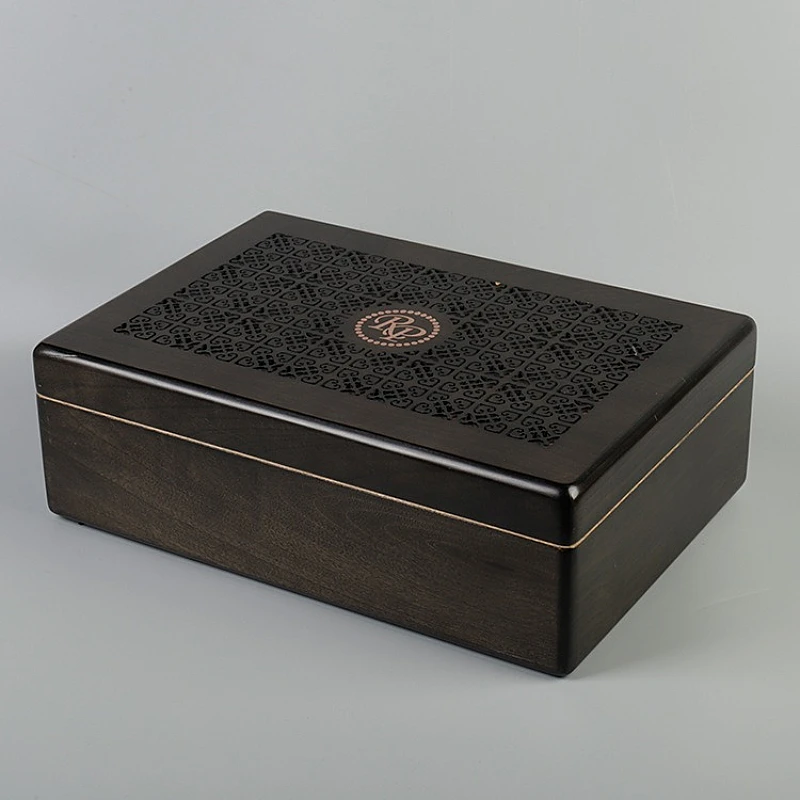
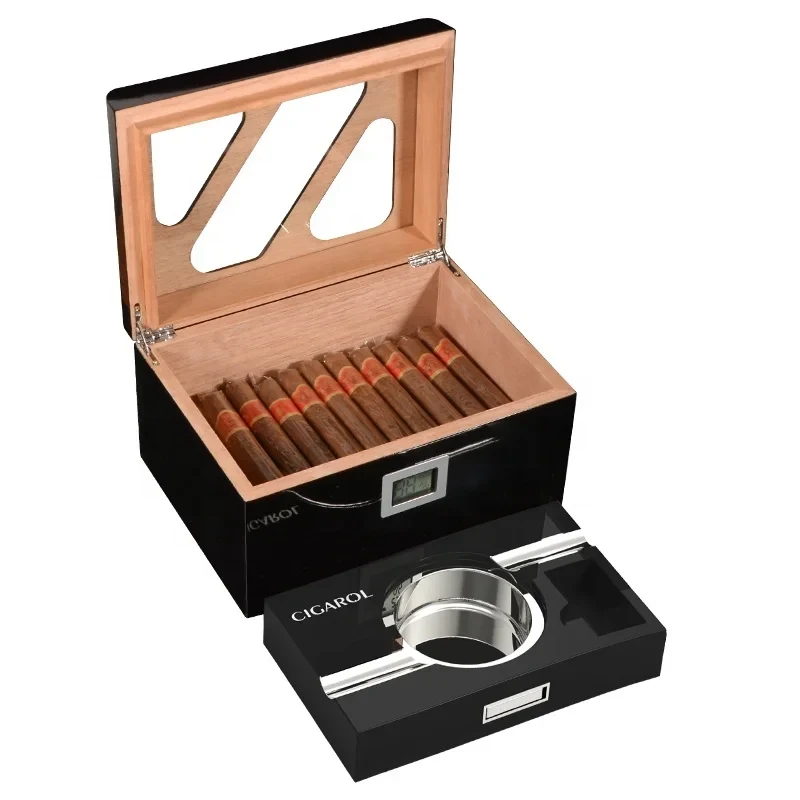
When I design and manufacture wooden boxes, I often see that clients care about the glossy lid but forget the hidden bottom. In reality, the bottom surface often absorbs water first. Rising damp, accidental spills, or humid storage cabinets all start from the base. Unlike side panels, which have airflow, the base sits pressed against a surface with little ventilation. This trapped contact encourages water absorption.
Everyday Situations Where Risk Appears
- A box placed on a marble countertop collects condensation under the base.
- A wooden shelf absorbs humidity, then transfers it directly to the box bottom.
- Even air-conditioned rooms can cause temperature differences, forming droplets under the box.
Comparison Table: Bottom vs Other Panels
| Panel Area | Moisture Source | Niveau de risque |
|---|---|---|
| Lid / Top | Air humidity | Moyen |
| Side Panels | Air humidity + occasional handling | Moyen |
| Bottom Panel | Rising damp + surface condensation | Haut |
Because of these realities, I always remind clients: a luxury cigar box is only as safe as its most vulnerable surface, and that is the bottom.
What structural risks (warping, cracking, swelling) occur if the base is untreated?
Wood always reacts to moisture. It swells, shrinks, or bends under stress.
An untreated bottom panel may warp, crack, or swell, leading to imbalance, joint stress, and cigar spoilage.
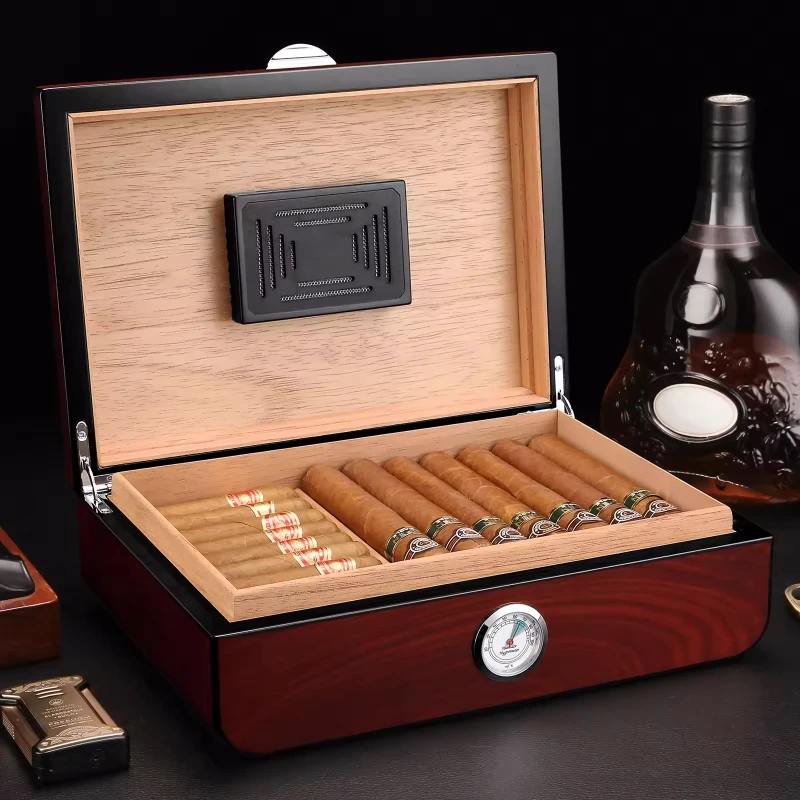
When water seeps into the bottom, it does not stay in one spot. It spreads through fibers. If the base absorbs more moisture than the sides, uneven expansion occurs. This imbalance creates warping, like a table bending from one side. Once the base is no longer flat, the box cannot sit stable, and pressure shifts onto joinery corners.
Key Structural Risks
- Warping: The base curves upward or downward, changing how the box stands.
- Cracking: Internal stress tears the wood, especially if grain direction resists expansion.
- Swelling: Bottom thickness grows, pushing against edge joints and lifting veneers.
- Joint Gaps: Because the base pulls away from glued or dovetailed edges.
Exemple pratique
I once handled a repair case where a piano-lacquered cigar box was returned by a customer. The glossy sides looked perfect, but the base bulged like a drumhead. Moisture had entered from below, forcing the inner Spanish cedar lining to detach. The client lost both cigars and packaging value.
This case taught me: neglecting the bottom is not just about aesthetics, it destroys the structural harmony of the whole box.
Many cigar lovers worry about breathability. A sealed box may trap stale air.
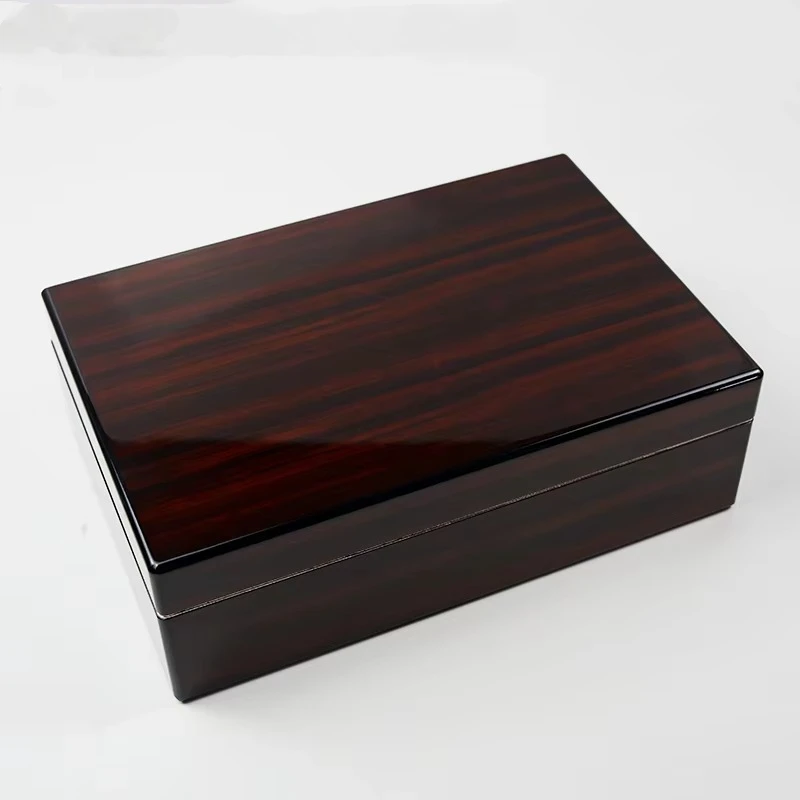
Moisture-proof protection is possible with thin coatings, hidden laminates, or layered veneers, all without blocking the natural humidity exchange of Spanish cedar inside.
Techniques I Use
- Clear Hidden Coating: I apply a transparent sealer only on the outer bottom, leaving inner cedar uncoated. This blocks rising damp but keeps internal humidity exchange.
- Veneer + Laminate Sandwich: A thin veneer bonded over a waterproof laminate makes the bottom resistant to moisture yet visually natural.
- Raised Feet or Pads: Sometimes small design details like rubber feet lift the base away from direct contact.
Breathability vs. Protection
Breathability happens mainly inside through Spanish cedar panels. As long as I do not coat the cedar interior, the cigars still breathe. The bottom exterior layer works as a shield, not a seal.
Table: Balance Between Function and Aesthetics
| Type de traitement | Moisture Proof | Breathability Impact | Aesthetic Effect |
|---|---|---|---|
| Clear coating (outside) | Haut | Aucun | Invisible |
| Laminate + veneer | Très élevé | Aucun | Matches wood look |
| Full sealing (inside) | Très élevé | Negative | Harmful to cigars |
From my experience, the key is applying treatment only where exposure exists. That means outside of the base, not inside where cigars live.
Should the bottom use reinforced multi-layer boards instead of a single wood panel?
Single solid wood looks natural, but it moves with climate. Multi-layer boards resist movement.
Yes, multi-layer engineered boards offer better stability for cigar box bottoms, because they reduce warping and handle humidity shifts better.
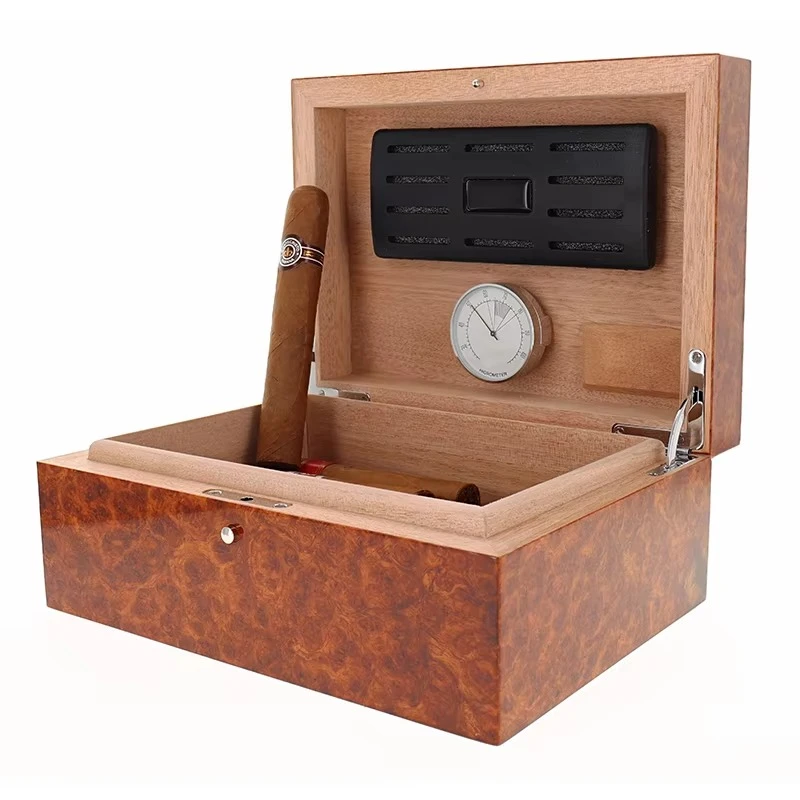
When I compare solid Spanish cedar bottoms with MDF-core veneered bottoms, I notice big differences after one season. Solid cedar swells and shrinks, showing cracks along the grain. MDF-core veneered bottoms stay flat because the core has balanced fibers.
Advantages of Multi-Layer Boards
- Dimensional Stability: Layers cancel out opposing stress.
- Cost Efficiency: Veneered MDF or plywood uses less expensive core with premium surface.
- Surface Versatility: Accepts lacquer, veneer, or PU leather easily.
Practical Use Case
For high-end cigar boxes, I often suggest a plywood core with real cedar veneer inside. This keeps the aroma while protecting against warping. Clients accept this when I explain the long-term benefit: cigars stay safe and the box remains flat.
Table: Solid vs Multi-Layer Panels
| Propriété | Bois massif | Multi-Layer Board |
|---|---|---|
| Stabilité | Faible | Haut |
| Coût | Haut | Modéré |
| Résistance à l'humidité | Faible | Fort |
| Apparence de luxe | Naturel | Veneer needed |
In my work, the balance between authenticity and stability often leans toward engineered solutions for the base.
How do joinery and edge sealing influence the long-term stability of the base?
Even a perfect panel fails if edges are weak. Moisture always attacks through joints first.
Strong joinery and sealed edges keep the bottom panel tight, prevent gaps, and protect against moisture creeping inside.
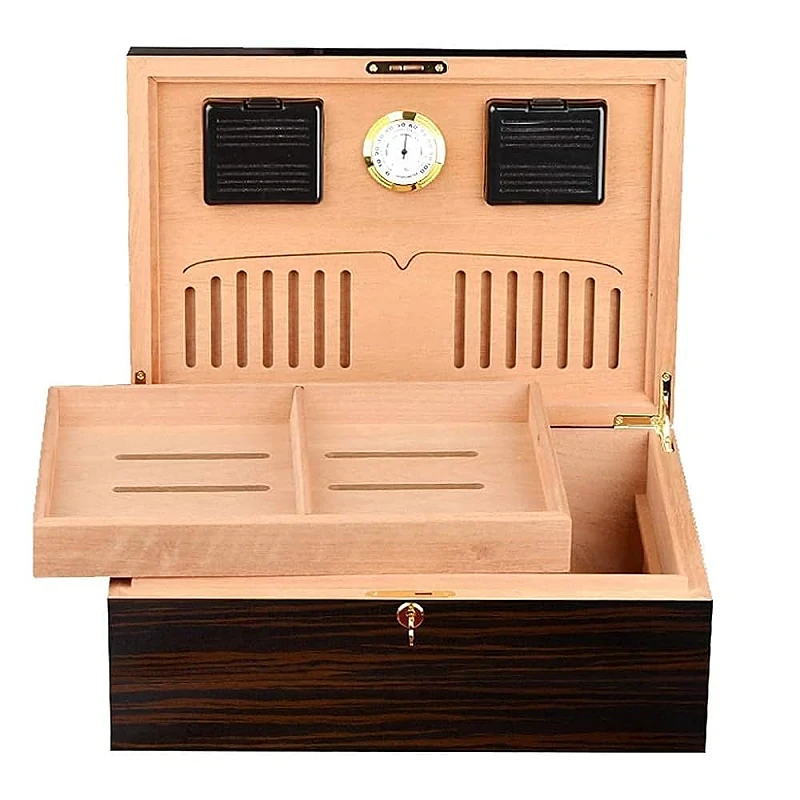
Joinery Types I Use
- Rabbet or Groove Fit: The base slides into side grooves, reducing open edges.
- Dovetail Frames: Strong but rare in boxes, often used in drawers.
- Butt Joints + Glue: Common but most vulnerable.
Edge Sealing
Edges are the weakest entry point for moisture. A thin coat of sealer, or pressing veneer wrap over edges, makes a huge difference. In luxury models, I sometimes use metal frames or trims to hide and protect the joint.
Practical Lesson
I once made a batch of wine boxes where the base edges were only glued. After one year in a humid warehouse, customers reported bottom gaps. Since then, I never leave edges raw.
Comparison Table: Joinery and Protection
| Joinery Type | La force | Moisture Defense | Cas d'utilisation |
|---|---|---|---|
| Groove Fit | Haut | Bon | Most cigar boxes |
| Butt Joint + Glue | Moyen | Faible | Emballage économique |
| Veneer Wrapped Edge | Haut | Très bon | Luxury presentation |
Strong joinery combined with hidden sealing is a silent guardian for box longevity.
Luxury buyers do not want to see coatings or plastic films. They expect wood purity.
The solution is hidden moisture-proof treatment: transparent coatings, layered veneers, reinforced bases, and small design tricks like raised pads, all invisible to the user.
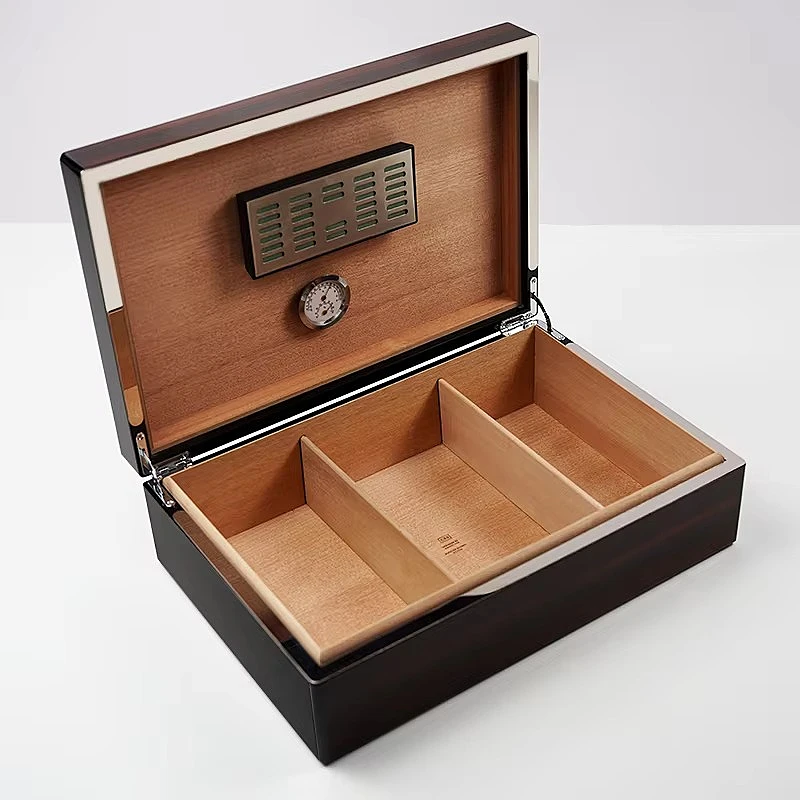
Invisible Techniques I Apply
- Clear Piano Lacquer: Although glossy, it works as a protective shield. I apply more layers at the bottom, but visually, it looks the same as sides.
- PU-Coated Veneer: Thin, smooth, and nearly invisible. Protects while keeping a wood feel.
- Hidden Laminate Under Veneer: A moisture barrier sandwiched under the final decorative veneer.
- Raised Feet or Velvet Pads: Adds elegance while lifting the base away from damp surfaces.
Example from My Workshop
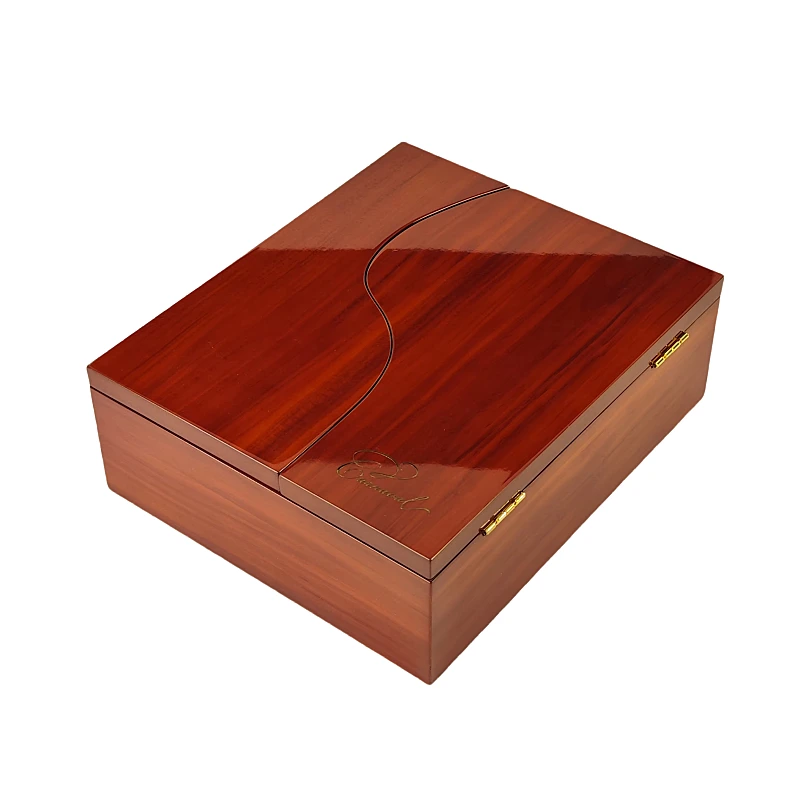
One client requested a premium humidor with no visible protective layer. I suggested a three-layer bottom: plywood core, cedar veneer inside, piano-lacquered veneer outside. The result looked pure and natural, yet lasted years without swelling.
Balancing Aesthetics and Function
| Méthode | Visible Effect | Niveau de protection | Client Acceptance |
|---|---|---|---|
| Clear lacquer bottom | Aucun | Haut | Très élevé |
| PU veneer wrap | Minime | Haut | Haut |
| Hidden laminate layer | Invisible | Très élevé | Excellent |
| Raised velvet pads | Décoratif | Moyen | Excellent |
Luxury design does not mean ignoring protection. It means hiding it inside the craft. That is why moisture-proof treatment is not a downgrade, it is a silent proof of true craftsmanship.
Conclusion
Moisture-proofing the bottom is essential. Invisible design protects structure and cigars without sacrificing luxury aesthetics.
Nom de marque : WoodoBox
Slogan : Boîtes en bois sur mesure, fabriquées à la perfection
Site web : www.woodobox.com
WhatsApp : +86 18359265311

 Français
  English
  Español
  Português
  Deutsch
  Italiano
  العربية