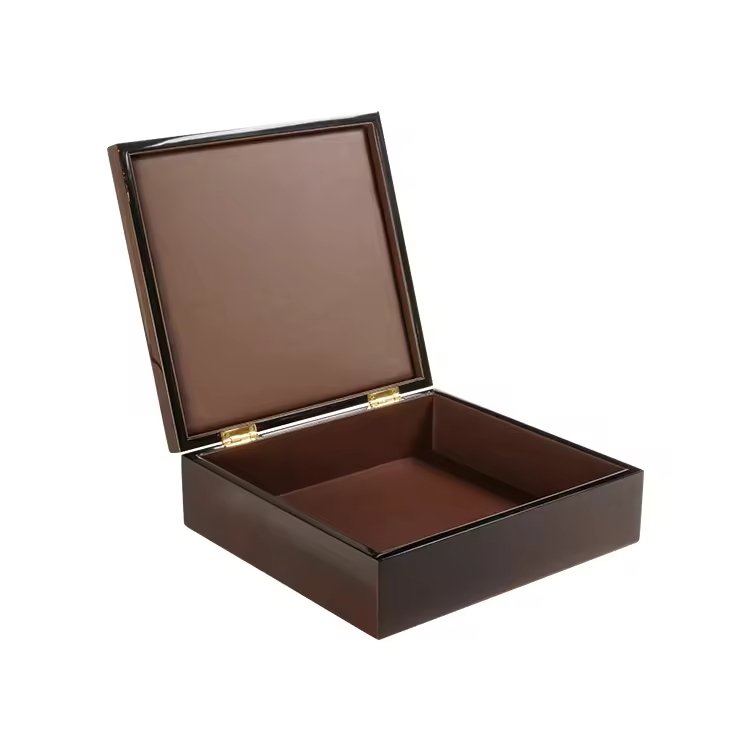
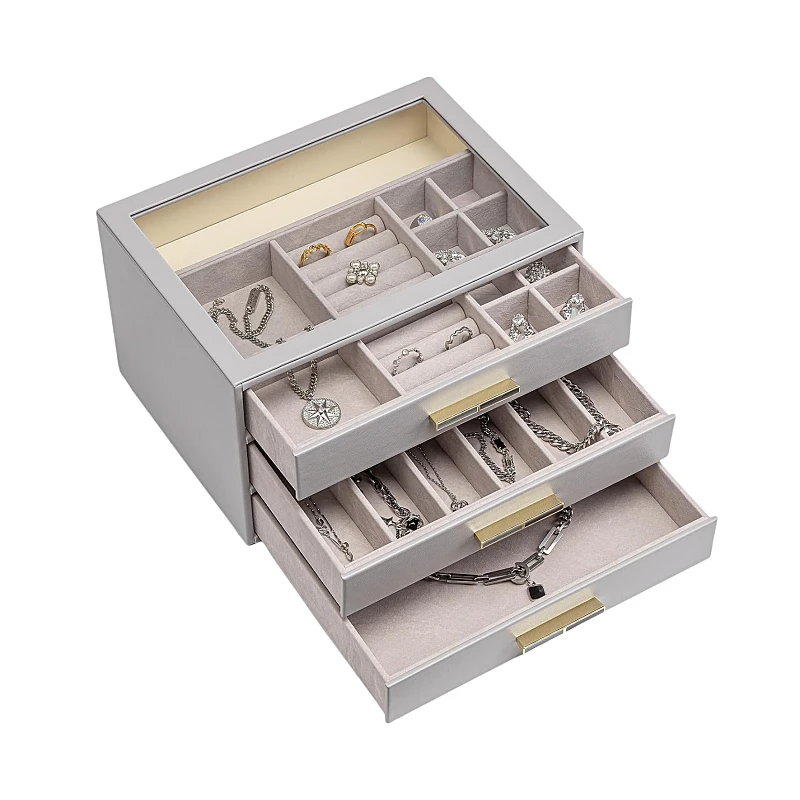
Many buyers think drawer-style wooden boxes are simple. They look clean and modern. But many projects fail because small details get ignored.
A drawer-style wooden box is not just “one box inside another.” It requires high fitting accuracy, moisture control, and careful testing. Without proper tolerance and climate planning, drawers can jam, feel loose, or cause delays in production.
I have worked on many custom packaging projects over the years. I have seen beautiful designs turn into complaints because the sliding feeling was wrong. In this article, I will share what most suppliers do not explain clearly.
Why Many Brands Like the Drawer-Style Design
Many brands want packaging that feels premium. They want customers to enjoy opening the box. A normal lid box feels common. A drawer box feels different.
Brands like drawer-style wooden boxes because the sliding motion creates a luxury unboxing experience, improves product protection, and allows creative design options like ribbons, magnets, or hidden compartments.
The Emotional Value of Sliding Motion
When I hand a drawer-style box to a client, I always watch their reaction. The slow pull creates tension. The product reveals step by step. This experience adds value.
A hinged lid opens instantly. A drawer box controls the pace. That pace matters for luxury brands.
Better Structure for Certain Products
Drawer boxes are often used for:
- Joyería
- Relojes
- Sets de regalo
- Premium tea or wine accessories
- Limited edition collections
The inner drawer protects the product from side pressure. The outer sleeve adds strength. This double-layer structure increases safety during shipping.
Branding Advantages
I often suggest drawer boxes when clients want strong visual identity. The outer sleeve and inner drawer can use different finishes:
| Componente | Opciones de personalización |
|---|---|
| Outer Sleeve | Logo printing, UV coating, embossing |
| Inner Drawer | Velvet lining, foam insert, silk ribbon |
| Pull Mechanism | Ribbon, finger notch, hidden groove |
This flexibility makes the design more dynamic.
But Design Is Not Everything
I always remind buyers that visual beauty is only one part of the story. Drawer-style boxes require precise structure. If the sliding feeling is wrong, the luxury effect disappears immediately.
Many buyers focus only on appearance during sampling. Few focus on tolerance and humidity control. That is where problems start.
Why It Is Harder to Produce Than a Normal Lid Box
Many new buyers tell me, “It is just one more layer.” I always smile. The truth is very different.
A drawer-style wooden box is harder to produce because it requires tight tolerance control, repeated sanding, manual fitting, and slide testing. Even a 0.5 mm deviation can affect performance.
Tolerance Sensitivity
For a normal hinged box, 1 mm deviation is usually acceptable. Customers rarely notice.
For a drawer box, 0.5 mm can change everything.
If the gap is too small:
- Drawer becomes tight
- Surface scratches appear
- Customer feels resistance
If the gap is too large:
- Drawer feels loose
- Product shakes inside
- Perceived value drops
I always explain this clearly before quotation. Precision costs time and labor.
Extra Production Steps
He aquí una comparación sencilla:
| Etapa del proceso | Hinged Box | Drawer Box |
|---|---|---|
| Cutting | Estándar | Alta precisión |
| Ensamblaje | Básico | Inner + outer alignment |
| Lijado | Normal | Fine repeated sanding |
| Pruebas | Visual check | Manual slide test |
Drawer boxes require workers to test sliding multiple times. Sometimes we adjust manually. This increases labor hours.
Fitting Is Manual, Not Fully Automated
Many buyers assume machines solve everything. Machines help with cutting. But final fitting often depends on skilled workers.
I remember one project where the client asked for extremely tight tolerance but had a very low budget. That combination created pressure. In the end, rework cost more than proper planning would have.
Production Risk Is Higher
With more parts, there are more possible errors:
- Inner drawer dimension
- Outer sleeve dimension
- Alignment of rails
- Paint thickness variation
Each factor influences sliding performance.
That is why I always say: drawer-style boxes look simple. They are not simple to produce well.
The Real Reason Drawers Sometimes Get Stuck
When a drawer gets stuck, many buyers blame manufacturing quality. Sometimes they are right. But often the real reason is moisture.
Drawers usually get stuck because wood expands or shrinks due to humidity changes. If moisture content is not controlled between 8–12%, climate differences can affect the sliding gap after shipping.
Wood Is Alive
Wood reacts to environment. It absorbs moisture. It releases moisture.
In our factory, we control wood moisture around 8–12%. This range works for most export markets.
But climate varies:
| Región | Typical Humidity |
|---|---|
| South China | Alta |
| USA West Coast | Moderado |
| USA East Coast | Variación estacional |
| Europa | Variación estacional |
I once handled a project where the sample worked perfectly in China. After arriving in the USA warehouse, the drawer became tight. The climate difference caused slight expansion. That small change affected the sliding gap.
Paint Thickness Also Matters
Paint adds thickness. If finishing is uneven, friction increases.
I always calculate clearance by considering:
- Raw wood expansion
- Paint thickness
- Shipping climate change
Why Samples Are Not Enough
Many buyers approve one sample and assume mass production will be identical. But samples are often tested in one environment only.
That is why I recommend slide testing at least 30–50 cycles before mass production approval.
Prevention Methods
Here is what I normally suggest:
- Confirm internal clearance in drawing
- Specify moisture content range
- Avoid unrealistic ultra-tight gaps
- Test in local warehouse environment if possible
Drawer boxes fail not because they are bad. They fail because environmental factors were ignored.
How This Structure Affects Cost and Lead Time
Many buyers compare prices between hinged boxes and drawer boxes. They ask why the difference exists.
Drawer-style wooden boxes cost more and take longer because they require extra labor, precision fitting, repeated sanding, and manual slide testing. Lead time usually extends from 30–35 days to 35–45 days.
Cost Breakdown
Here is a simple cost logic:
| Factor | Impact on Cost |
|---|---|
| Extra Materials | Inner + outer structure |
| Labor Hours | Aumento de |
| Control de calidad | More inspections |
| Rework Risk | Más alto |
Precision work always costs more.
Lead Time Comparison
- Hinged box: about 30–35 days
- Drawer box: about 35–45 days
The difference comes from:
- Additional sanding
- Manual fitting
- Slide performance testing
- Possible re-adjustments
Why Cheap and Precise Rarely Match
I speak honestly with clients. If a buyer demands very tight tolerance but also wants the lowest price, the project becomes risky.
High precision requires:
- Skilled workers
- More inspection
- Slower assembly pace
When budget is too low, factories may reduce slide testing or fitting time. That is when problems appear later.
I prefer realistic planning. It saves money long term.
What Buyers Should Confirm Before Mass Production
Many issues can be avoided before production starts. Most problems happen because expectations were not clearly defined.
Before mass production, buyers should confirm internal clearance, moisture standards, slide cycle testing, and realistic tolerance based on budget and market climate.
Confirm Technical Details
I always suggest buyers confirm these points in writing:
- Internal gap measurement
- Wood moisture content standard
- Slide cycle test requirement (30–50 times)
- Acceptable tolerance range
Clarity reduces disputes.
Test Like a Real User
Do not only open the drawer once. Pull it repeatedly.
Pregunta:
- Does it feel smooth?
- Does friction increase?
- Does sound change?
Align Design With Manufacturing Reality
Sometimes designers create extremely tight-fitting structures. On paper it looks perfect. In production it creates stress.
I often sit with clients and review drawings. We adjust gap by 0.2–0.3 mm to create better tolerance balance.
That small change can prevent large problems.
Budget and Expectation Must Match
If you want:
- Ultra smooth sliding
- Alineación perfecta
- Premium finishing
Then the budget must support it.
Drawer-style wooden boxes can be excellent packaging solutions. But they only perform well when engineering respects material behavior.
Conclusión
Drawer-style wooden boxes look simple, but precision, humidity control, and realistic tolerance determine success. Smart planning always protects your brand better than perfect appearance alone.

 Español
  English
  Português
  Deutsch
  Français
  Italiano
  العربية