Ir al contenido
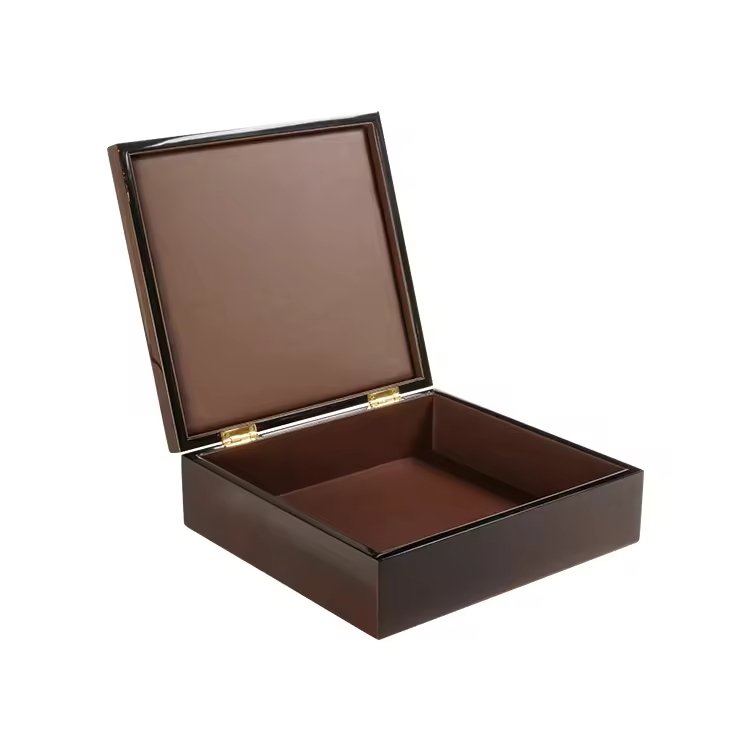
Many brands believe solid wood is always the best choice. But problems appear when paint finishes must stay perfectly smooth and consistent. Small surface waves or lines can ruin a luxury look.
In most luxury packaging projects that require solid color finishes, MDF is the most stable and predictable base material. Its uniform structure supports multiple paint layers, keeps surfaces smooth, and allows precise machining. This makes MDF ideal for high-end painted boxes produced at scale.
I have worked on many premium packaging projects over the years. At first, many clients request solid wood. But once the design requires a flawless painted finish, the conversation changes. The real priority becomes stability, precision, and predictable production results. That is where MDF performs better than most people expect.
Why MDF Is Widely Used for Premium Painted Packaging Boxes
Many clients worry that MDF sounds less “luxury” than solid wood. But when a project requires a perfect painted surface, solid wood often creates more risks.
MDF is widely used in premium painted packaging boxes because its uniform density prevents surface movement, reduces paint defects, and ensures a consistently smooth finish across large production runs.
Understanding the Material Structure
One important reason is the internal structure of MDF. Medium Density Fiberboard is made from fine wood fibers that are pressed under high pressure and temperature. The result is a panel with very consistent density.
Solid wood behaves very differently. Every piece of wood has its own grain pattern and fiber direction. Density can vary across the board. Even small variations can affect how paint layers behave over time.
When I compare the two materials during production, the differences become very clear.
| Propiedad | MDF | Madera maciza |
|---|---|---|
| Internal density | Very uniform | Varies across grain |
| Surface smoothness | Muy estable | Depends on wood species |
| Reaction to humidity | Minimal movement | Expands and contracts |
| Paint finish stability | Highly predictable | Can develop lines or texture |
Why Painted Surfaces Reveal Material Problems
Paint finishes do not hide material issues. In fact, they often expose them.
Luxury boxes often require several layers of coating. In many projects, we apply:
- 4–6 layers of primer
- multiple sanding steps
- final color coating
- optional polishing or gloss finishing
Each layer adds tension to the surface. If the base material moves even slightly, small defects appear.
Common problems include:
- micro surface lines
- uneven light reflection
- slight warping near joints
Solid wood is beautiful when the grain remains visible. But when the design requires a completely smooth painted surface, that natural structure becomes a challenge.
Why Luxury Brands Choose Predictability
When brands scale their packaging production, they value one thing very highly: predictability.
They need every box to look the same. Color must match exactly. Surfaces must reflect light in the same way. Lids must align perfectly.
MDF supports this goal because every sheet behaves almost identically during production.
This consistency reduces:
- paint defects
- rejection rates
- production delays
In my experience, that reliability is why MDF remains the most common base material for luxury painted packaging boxes.
How Solid Color Finishes Help Brands Achieve a Clean, Luxury Look
Many luxury brands today prefer clean and minimal packaging. A solid color finish often communicates elegance better than complex decoration.
Solid color finishes create a luxury appearance by delivering smooth surfaces, precise reflections, and consistent brand colors that reinforce premium brand identity.
Why Solid Colors Feel More Premium
When people think about luxury packaging, they often imagine rich textures and decorative elements. But modern premium brands often move in the opposite direction.
They choose simplicity.
A perfectly smooth matte black box can feel more luxurious than a highly decorated one. The same is true for soft matte white or deep navy finishes.
The key is surface perfection.
Luxury solid color finishes typically require:
- perfectly flat surfaces
- even paint thickness
- consistent color across batches
- controlled light reflection
If the surface has any distortion, the finish immediately looks cheaper.
Common Solid Color Finishes in Luxury Packaging
Over the years, I have seen certain finishes appear repeatedly in premium packaging projects.
| Tipo de acabado | Brand Impression | Uso típico |
|---|---|---|
| Matte Black | Modern, powerful | Watches, electronics |
| Matte White | Clean, minimalist | Cosmetics, jewelry |
| Piano Gloss Black | Ultra luxury | High-end watches |
| Deep Brand Colors | Identidad fuerte | Fashion and branding |
Each finish has different technical challenges. For example, high gloss surfaces are extremely sensitive to imperfections. Even tiny surface waves become visible under light.
Why MDF Works Better with Solid Colors
Solid color paint behaves differently from wood stain. Stain highlights natural grain. Paint hides it.
When paint hides the grain, the surface underneath becomes more important.
MDF offers several advantages here:
- No grain pattern
- Uniform density across the board
- Very smooth machined surfaces
This allows the paint layers to remain visually consistent.
The Relationship Between Surface Flatness and Light
Luxury packaging often sits under strong retail lighting. In those conditions, reflections reveal every surface imperfection.
A perfectly finished box reflects light evenly.
But if the base material moves or warps slightly, the reflection becomes distorted. That distortion breaks the premium feeling.
That is why stable materials like MDF are often the safest option when brands want extremely clean painted surfaces.
Key Structural Advantages of MDF in Precision Box Manufacturing
Luxury packaging boxes require much more precision than many people realize. Even tiny alignment errors can affect the perceived quality.
MDF provides structural advantages for precision manufacturing because it machines cleanly, holds tight tolerances, and maintains stable dimensions during assembly and finishing.
Machining Accuracy Matters in Luxury Boxes
High-end boxes often include hardware components such as:
- metal hinges
- cierres magnéticos
- decorative plates
- internal frames
Each component requires accurate positioning.
For example, hinge alignment is extremely important in watch boxes. If the hinge is slightly misaligned, the lid will not close smoothly.
In many luxury projects, the tolerance requirement is very tight.
| Componente | Typical Tolerance |
|---|---|
| Hinge positioning | 0.2–0.3 mm |
| Alineación de la tapa | 0.3 mm |
| Panel cutting accuracy | 0.1–0.2 mm |
Materials that chip or split easily can cause problems during machining.
How MDF Improves Cutting Precision
MDF has a very fine internal structure. That structure allows clean cutting during CNC or panel saw operations.
Edges stay smooth. Corners remain sharp. Small parts hold their shape.
Solid wood behaves differently. The grain direction can cause uneven cutting. Sometimes small chips appear along the edges.
This is not always a problem for natural wood finishes. But it becomes an issue when a box requires a perfectly painted surface.
Stable Panels Support Better Assembly
Another advantage appears during box assembly.
Panels must remain flat when they are glued together. If panels bend slightly, the box geometry changes.
That change can cause problems such as:
- uneven lid gaps
- hardware misalignment
- visible corner joints
MDF panels usually remain very stable because their fiber structure distributes internal stress evenly.
Consistency Across Production Runs
Luxury brands rarely produce just a few boxes. Many projects involve hundreds or thousands of units.
Consistency becomes critical.
If the base material changes behavior between batches, production quality becomes unpredictable.
MDF solves many of these issues because manufacturers produce it under controlled industrial conditions. Each sheet behaves very similarly during machining and finishing.
For large-scale luxury packaging production, that consistency is extremely valuable.
Production Factors That Affect the Quality of Painted MDF Boxes
Even when MDF is used as the base material, achieving a flawless painted surface still requires strict production control.
The quality of painted MDF boxes depends on primer layering, sanding accuracy, paint environment control, and careful inspection during each production stage.
The Importance of Primer Layers
Primer layers create the foundation for the final paint finish.
In many luxury box projects, we apply between four and six primer layers.
The process usually follows a sequence like this:
| Paso | Propósito |
|---|---|
| Primer 1 | Seal MDF surface |
| Primer 2 | Fill micro pores |
| Primer 3 | Improve surface flatness |
| Primer 4–6 | Build uniform base |
Each layer must dry completely before the next one is applied.
Sanding Between Each Layer
Sanding is one of the most important steps. It ensures the surface stays perfectly flat.
The process often includes multiple sanding stages:
- rough sanding after first primer
- intermediate sanding after several layers
- fine sanding before final paint
If sanding is skipped or rushed, surface waves may appear after the final coating.
Environmental Control in Painting
Paint quality also depends heavily on the environment.
Dust particles can easily settle on wet paint surfaces. Even very small particles become visible after drying.
For this reason, many factories use controlled spray rooms with filtered airflow.
Key environmental factors include:
| Factor | Impacto |
|---|---|
| Dust control | Prevents surface particles |
| Temperatura | Affects paint drying |
| Humedad | Influences curing behavior |
Without proper control, even high-quality paint cannot deliver a perfect finish.
Final Polishing and Inspection
For high-gloss finishes, polishing may follow the painting stage.
This process can include:
- ultra fine sanding
- compound polishing
- mirror surface inspection
At this stage, even small imperfections are visible.
The goal is simple: every box must look identical under strong light.
This level of consistency is what luxury brands expect.
Best Applications for MDF with Solid Color Paint in Luxury Packaging
Not every packaging project requires MDF. But certain categories benefit greatly from its stability and paint compatibility.
MDF with solid color paint works best in luxury packaging categories that demand smooth surfaces, precise structure, and consistent visual identity.
Luxury Watch Boxes
Watch packaging often requires:
- rigid structure
- precise hinge installation
- deep glossy finishes
Many premium watch brands prefer piano gloss black boxes. This finish requires extremely smooth surfaces.
MDF provides the stability needed for this level of finishing.
Jewelry Packaging
Jewelry boxes usually combine several elements:
- painted exterior surfaces
- soft interior lining
- small hardware components
Precision is critical because jewelry boxes often use compact designs.
MDF allows accurate machining and consistent painted finishes.
Premium Gift Boxes
Luxury gift boxes often use bold brand colors.
Examples include:
- fashion brand packaging
- promotional luxury gifts
- limited edition product boxes
Color consistency becomes very important when these boxes appear in retail displays.
MDF helps maintain uniform surfaces that reflect light evenly.
Electronics and Technology Packaging
High-end electronics brands often prefer minimal packaging designs.
Typical characteristics include:
| Característica | Propósito |
|---|---|
| Acabados mate | Clean modern look |
| Bordes afilados | Precision aesthetic |
| Uniform color | Strong brand identity |
These designs work well with MDF because the material supports precise machining and smooth painted surfaces.
When Solid Wood Is Still Better
Solid wood still has an important place in luxury packaging.
It works best when the natural grain remains visible.
Examples include:
- whiskey presentation boxes
- humidificadores de puros
- heritage brand packaging
In these cases, the beauty of natural wood becomes part of the product story.
But when the goal is a flawless painted surface, MDF often delivers the most reliable results.
Conclusión
For luxury packaging that requires flawless solid color finishes, MDF provides the stability, precision, and predictable production quality that premium brands rely on.
WoodoBox: cajas de madera personalizadas, elaboradas a la perfección.

 Español
  English
  Português
  Deutsch
  Français
  Italiano
  العربية