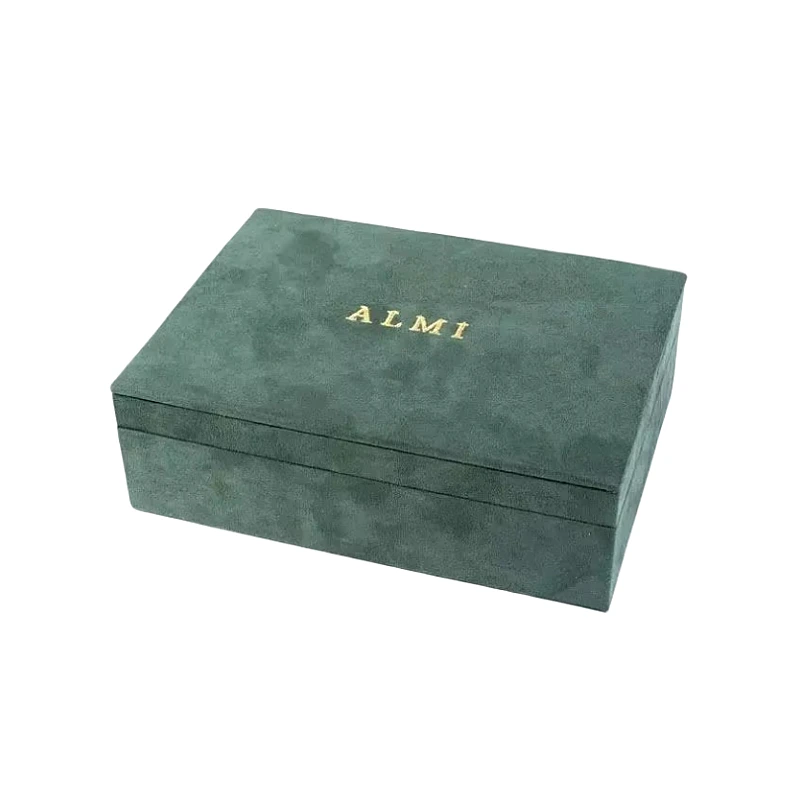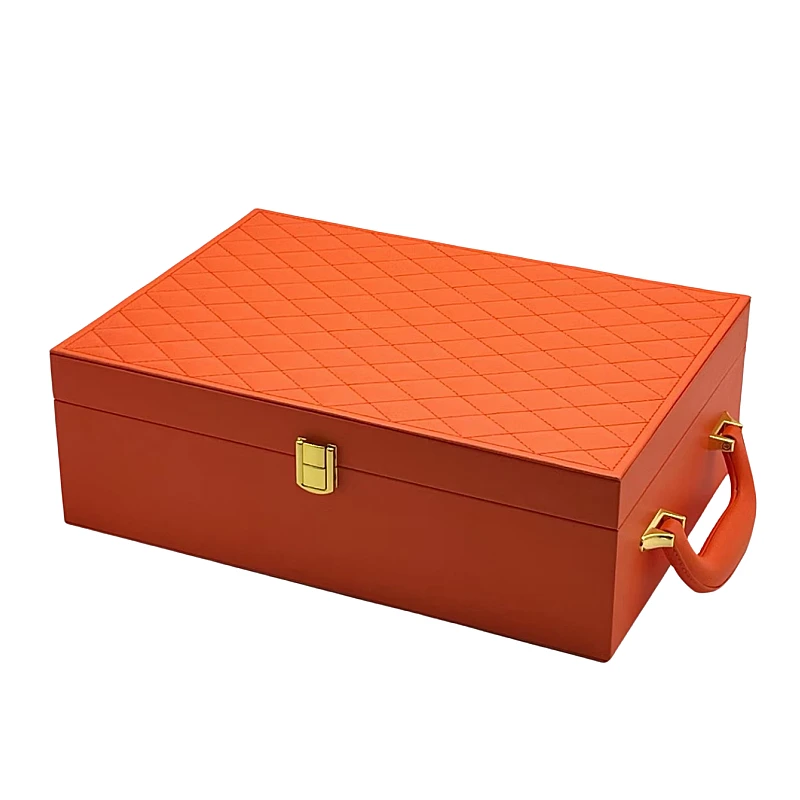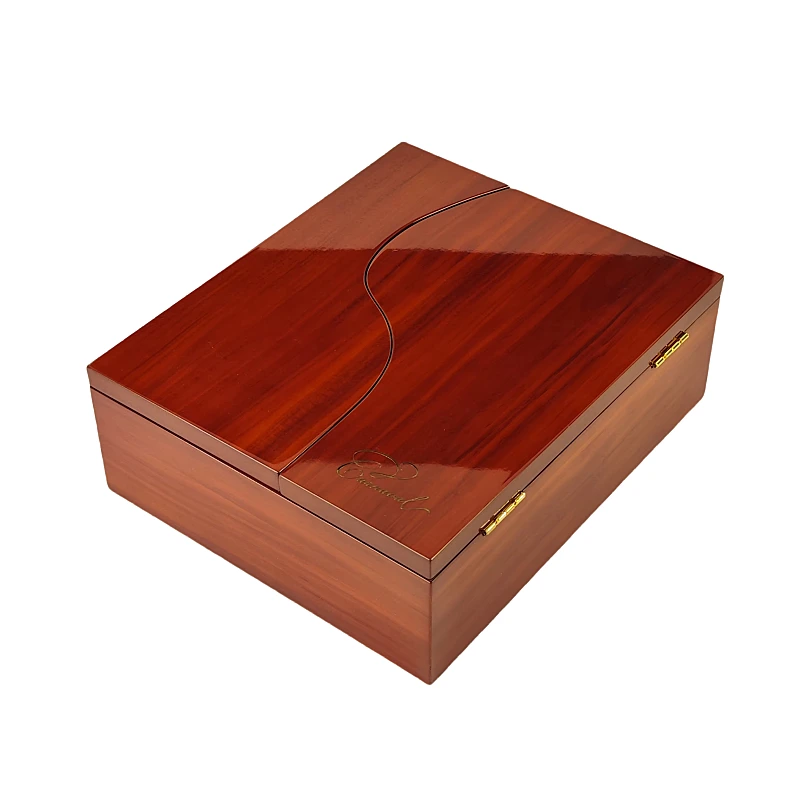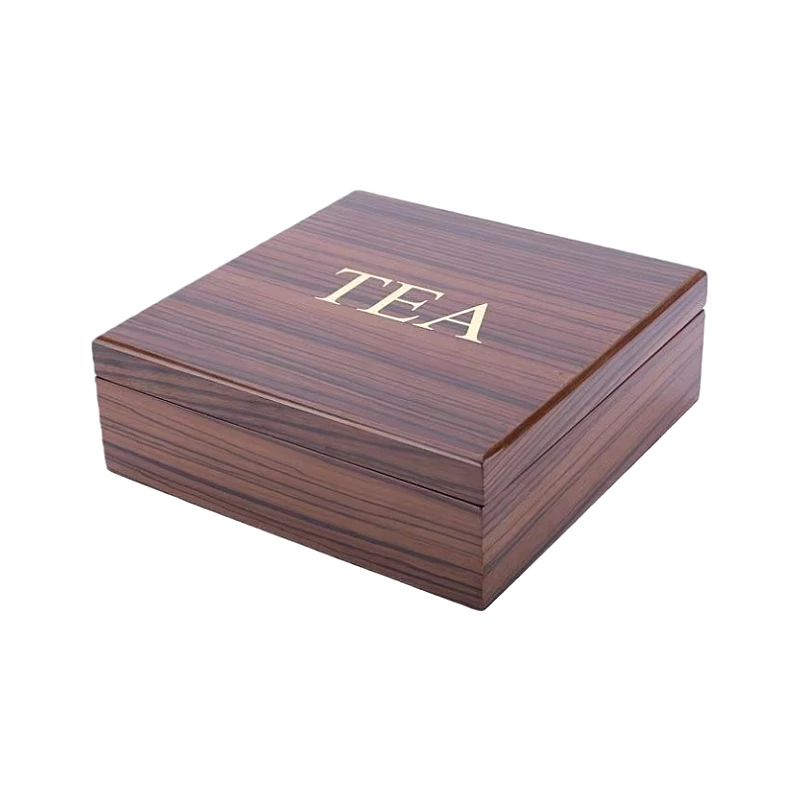
You want luxury. You want visual impact. But you also want to control cost and avoid the risks of full solid wood.
Hybrid wooden boxes combine wood with acrylic and metal elements to elevate perceived value while maintaining structural stability and reasonable cost control, as long as the materials are engineered to work together properly.
In my 16 years of experience, hybrid structures are often the smartest upgrade path. They create strong visual impact without fully switching to expensive solid wood construction. But success depends on engineering, not decoration alone.
What “Hybrid Structure” Really Means in Wooden Packaging
Many people misunderstand the term hybrid. They think it means mixing MDF and plywood.
In wooden packaging, a hybrid structure means combining wood with materials like acrylic, metal plates, decorative trims, or hardware elements to enhance both function and visual appeal.
Hybrid does not refer to mixing wood cores. It refers to integrating different material categories.
Common Hybrid Combinations
In our factory, hybrid designs often include:
- MDF or plywood base structure
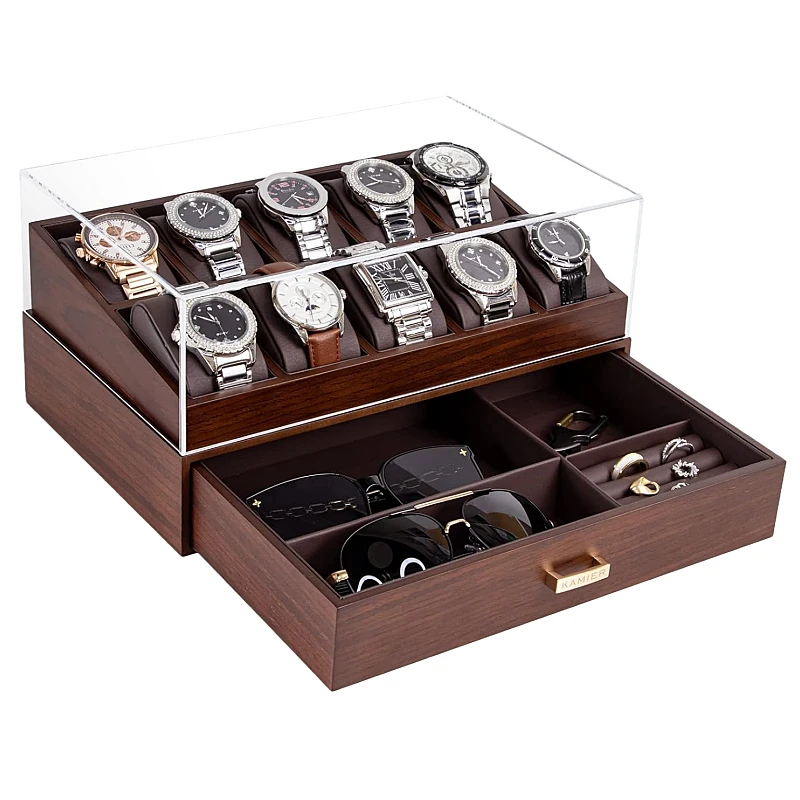
- Acrylic viewing windows
- Brass or stainless-steel nameplates
- Decorative metal corners
- Aluminum trims
- Magnetic closures
Each material adds a different function.
Why Brands Choose Hybrid Designs
Hybrid structures allow brands to:
- Increase perceived luxury
- Improve product visibility
- Add tactile weight
- Highlight logos more prominently
Instead of upgrading the entire box to solid walnut, adding carefully designed accents can achieve similar premium perception at lower cost.
The Engineering Mindset
The key is balance.
Each material:
- Expands differently
- Reacts differently to humidity
- Requires different fixing methods
If the integration is careless, problems appear after shipping.
Hybrid is not about decoration. It is about controlled integration.
How Acrylic Windows and Panels Enhance Product Visibility
Customers like to see the product. Transparency builds trust.
Acrylic windows increase product visibility and retail appeal, but proper tolerance and expansion control are critical to prevent cracking during shipping.
Acrylic panels are popular in:
- Wine boxes
- Perfume gift sets
- Watch presentation cases
- Limited edition collections
They allow customers to view the product without opening the box.
The Visual Advantage
An acrylic window:
- Creates curiosity
- Reduces handling damage in retail
- Enhances shelf display impact
It also supports storytelling. Customers can see craftsmanship before opening.
The Expansion Challenge
Acrylic and wood expand differently under temperature changes.
During sea shipping:
- Containers heat up during the day
- Cool down at night
- Humidity fluctuates
If acrylic is locked too tightly inside wood panels, stress builds.
This can lead to:
- Hairline cracks
- Edge pressure marks
- Panel distortion
Our Engineering Approach
We always:
- Leave a small expansion gap
- Avoid rigid glue bonding on all sides
- Use flexible fixing methods when possible
Tolerance control is essential. Even a few millimeters matter.
Hybrid design works only when these small technical details are handled correctly.
Using Metal Plates, Corners, and Decorative Hardware for a Premium Touch
Metal elements add instant luxury perception.
Brass nameplates, protective corners, and metal trims increase perceived value and weight, but require reinforcement and careful screw positioning to avoid structural damage.
Metal accents create contrast against wood surfaces.
Perceived Value Increase
Metal elements:
- Reflect light
- Add physical weight
- Emphasize branding
- Suggest durability
A brass logo plate immediately upgrades visual impact.
Protective corners give a classic premium look, especially for:
- Cigar boxes
- High-end gift chests
- Collector editions
Structural Risks
Improper installation causes problems.
On MDF edges, screws can:
- Split the corner
- Create surface cracking
- Weaken structural integrity
To prevent this, we:
- Pre-drill screw holes
- Insert internal reinforcement blocks
- Use correct screw length and diameter
Weight Distribution
Metal adds weight. Extra weight affects:
- Hinge stress
- Lid balance
- Shipping cost
We must calculate these factors before confirming final design.
Luxury feeling is not just about adding metal. It is about placing it intelligently.
Structural Integration: How to Combine Materials Without Weak Points
The most important part of hybrid design is integration.
Successful hybrid wooden boxes require engineered connections, correct material spacing, and reinforcement to prevent stress concentration and long-term failure.
When different materials meet, weak points can appear.
Common Weak Areas
- Acrylic-to-wood joints
- Metal plate screw positions
- Hinge mounting zones
- Edge corners with layered materials
These areas must handle stress from:
- Opening and closing
- Shipping vibration
- Temperature change
Reinforcement Strategies
We apply:
- Internal wooden support blocks
- Controlled gap spacing
- Balanced screw placement
- Edge sealing protection
For example, if a metal plate is mounted on MDF:
- We avoid placing screws too close to edges.
- We ensure internal density is sufficient.
- We distribute pressure evenly.
Long-Term Durability Thinking
Hybrid designs must survive:
- 25–40 days of sea freight
- Warehouse storage
- Retail handling
- End-user daily use
Engineering decisions must consider the full lifecycle.
Decoration without structural planning leads to failure.
Cost Control and Production Planning in Multi-Material Designs
Hybrid designs look impressive. But they also affect production workflow.
Multi-material wooden boxes require coordinated production planning, slightly longer lead times, and careful supplier alignment to maintain cost control.
Adding materials increases complexity.
Lead Time Impact
Compared to a standard wooden box:
- Production time usually extends 5–7 days
- Extra finishing coordination is required
- Additional quality checks are necessary
Acrylic panels may come from one supplier. Metal plates from another. Wood structure from our own production line.
Synchronization is critical.
Cost Balance
Hybrid designs typically:
- Cost more than standard MDF boxes
- Cost less than full solid hardwood construction
Here is a simplified comparison:
| Structure Type | Cost Level | Luxury Perception | Production Complexity |
|---|---|---|---|
| Standard MDF | Low | Medium | Low |
| Full Solid Wood | High | Very High | Medium |
| Hybrid Structure | Medium | High | Medium to High |
Hybrid provides strong value for brands that want visible upgrades without extreme material cost increase.
Planning Tips
Before confirming hybrid design, I ask:
- Is the retail price high enough to support added accents?
- Is there enough development time?
- Are shipping conditions stable?
- Is brand positioning aligned with visible hardware elements?
If the answers support the design, hybrid is often the smartest compromise.
Conclusion
Hybrid wooden boxes deliver luxury impact through smart material integration, offering a balanced solution between premium perception and controlled production cost.
WoodoBox - Premium Wooden Packaging Manufacturer in China
Custom Wooden Boxes, Crafted to Perfection