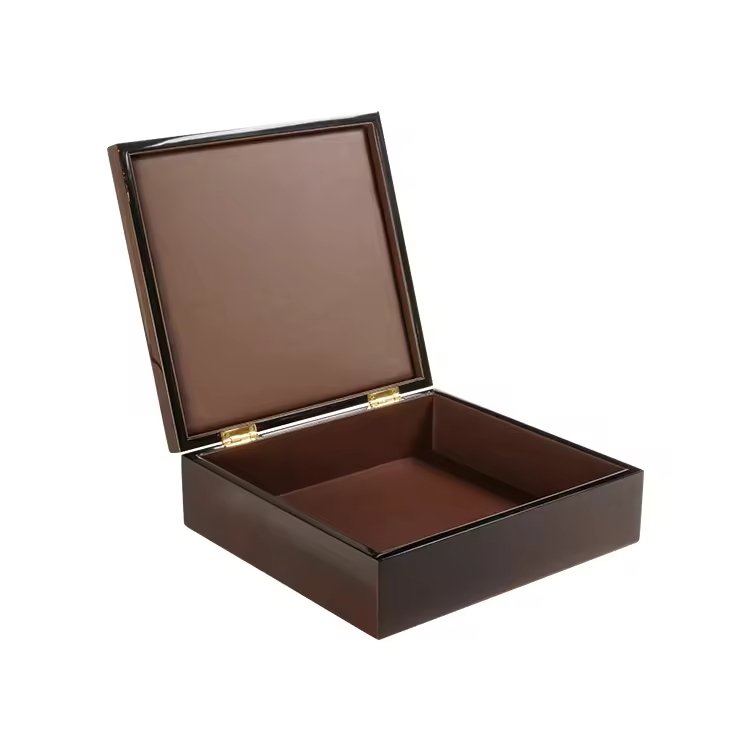
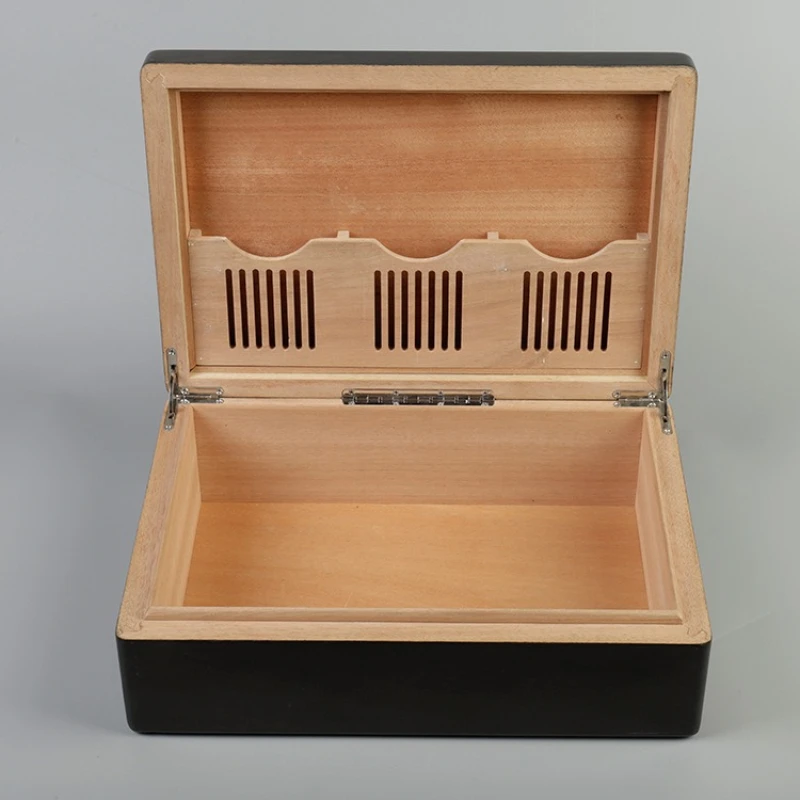
When you make a cigar box lighter, you risk losing humidity stability. Many people worry the thinner walls cannot protect cigars as well.
A lightweight cigar box can still hold humidity if you keep the seal tight, use smart materials, and design with air control in mind.
I have worked on many lightweight wood box projects. Buyers always want portability without losing function. The truth is, we can balance both with careful choices.
Which parts can be thinned or hollowed without hurting the seal and RH stability?
When people reduce box weight, the first thought is thinner walls. But they fear the box will not hold moisture.
You can reduce weight by thinning non-critical panels, but you must keep the lid seal, base frame, and joints strong to protect humidity.
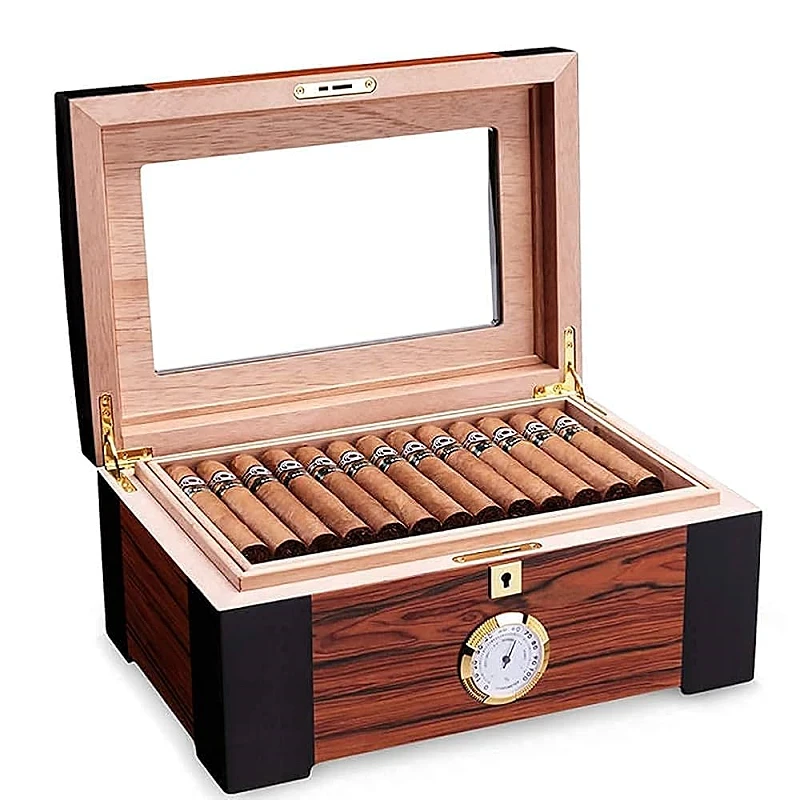
If you look at a cigar box, not every part contributes equally to humidity retention. The lid seal is the most critical. The lip, gasket, and closure hardware keep moisture inside. You cannot compromise here. However, the outer walls can be thinned or hollowed if you keep the inner surface continuous.
For example, I once made a travel humidor where we reduced side wall thickness from 12mm to 8mm. We reinforced the corners with hidden dowels. The seal was unchanged. The weight dropped by 20%, but the RH performance stayed stable.
Practical Breakdown
| Part of Box | Can Reduce Thickness? | Razón |
|---|---|---|
| Lid Seal & Lip | No | Directly controls air leakage |
| Base Frame | Mínimo | Must resist warping |
| Side Walls | Sí | If reinforced inside |
| Outer Veneer | Sí | Does not affect moisture |
| Hardware Zone | No | Needs strength for hinges/locks |
The idea is simple: keep the sealing geometry intact, but optimize weight in the “non-seal” areas. This balance makes a lighter but still reliable cigar box.
Do lighter materials (thin wood, composites, aluminum frames) keep humidity as well as solid wood?
Many think only heavy solid wood can keep cigars safe. When people hear “lightweight,” they fear unstable humidity.
Lighter materials can work well if the inner surface is moisture-stable and sealed, even better when combined with engineered composites.
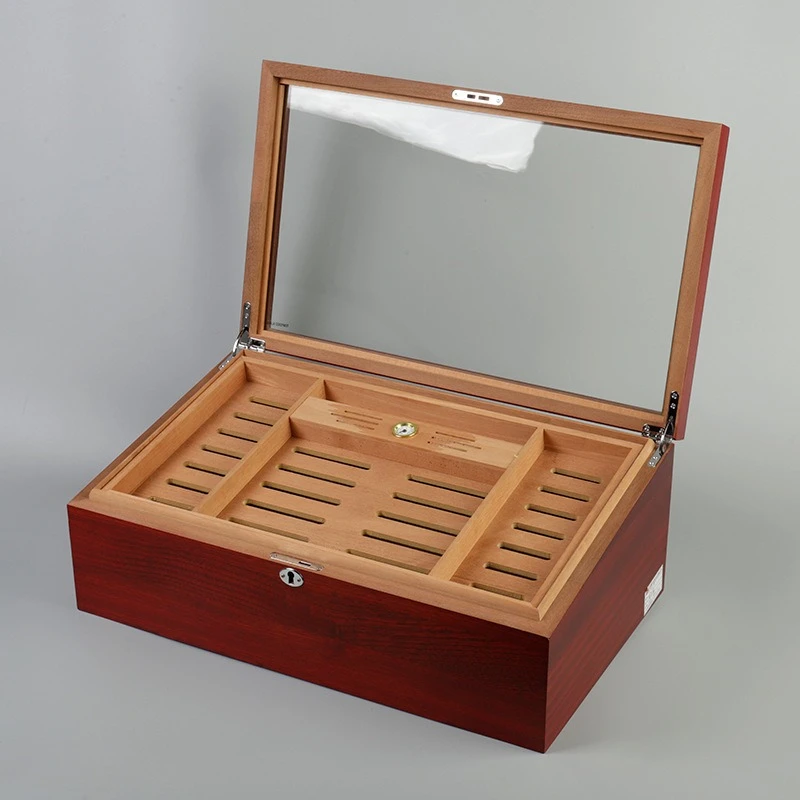
Solid Spanish cedar is classic, but it is heavy. For portable boxes, we can use MDF with cedar veneer, plywood cores, or even aluminum frames with cedar liners. The key is not the bulk weight. The key is if the inside surface absorbs and releases moisture in a balanced way. Spanish cedar veneer as thin as 1.5mm still works, because humidity interaction is surface-based, not volume-based.
I once supplied a client with an aluminum-framed travel case lined with cedar. It was 40% lighter than solid wood but kept cigars stable for weeks. The reason was clear: the air exchange was low, and the cedar lining was enough to buffer RH swings.
Comparing Materials
| Material | Peso | Control de la humedad | Durabilidad |
|---|---|---|---|
| Madera maciza | Pesado | Excelente | Fuerte |
| MDF + Chapa de madera | Medio | Bien | Stable if sealed |
| Contrachapado + Chapa | Medio | Bien | Warp-resistant |
| Aluminum + Cedar Liner | Luz | Bien | Muy fuerte |
| Plastic + Cedar Insert | Luz | Feria | Less premium |
The material choice is flexible as long as we respect humidity principles. Light does not always mean weak if you design it right.
How can gaskets, bevel lips, and precise tolerances compensate for thinner walls?
If the box walls are thin, many people fear air leakage will increase. They think weight means seal.
A precise seal with bevel lips, gaskets, or tongue-and-groove joints is more important than wall thickness for keeping humidity.
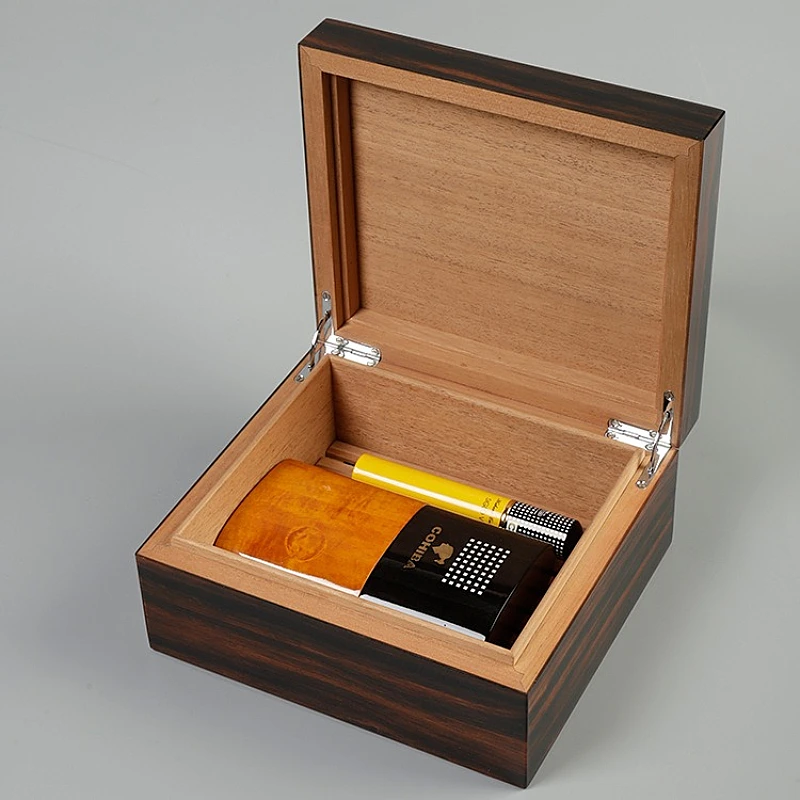
I always tell clients: a 20mm thick wall with a poor lid fit will leak more than a 6mm wall with a precision lip. The air seal geometry matters most. We use methods like rubber gaskets hidden under the lid edge, or a double bevel lip. CNC machining gives tight tolerances, which makes a huge difference.
In one project for a jewelry brand, we added a 1mm silicone gasket inside a thin MDF box. The RH loss dropped by 50% compared to the same box without gasket. The box was light, but the seal was professional.
Seal Methods That Work
- Bevel Lips: Lid and body angled to lock tightly
- Tongue-and-Groove: Creates a labyrinth path for air
- Gaskets: Adds elasticity for movement tolerance
- Magnetic Closure: Keeps pressure consistent across lid
Even with thin walls, if the closure design is right, the cigars stay safe. It is not about thickness. It is about precision.
Is a double-skin or ribbed structure better than a single thin panel for moisture control?
When panels get thin, people worry about warping and leaking. Some ask if double layers or ribs can help.
Double-skin panels and ribbed reinforcement make thin boxes stiffer and more stable, improving long-term humidity performance.
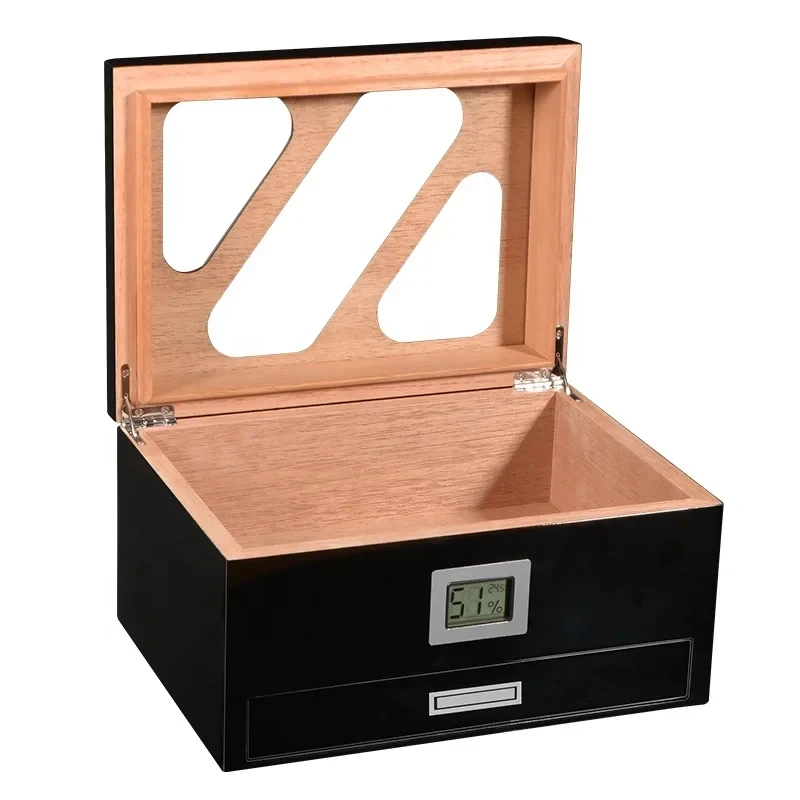
I experimented with two methods: a single 6mm MDF wall, and a 3mm MDF wall with ribs every 5cm. The ribbed design resisted bending better. We also tried double-skin panels, where the outside was lightweight composite and the inside was cedar veneer. This made the box both stiff and moisture-friendly.
Think of airplane panels. They are thin, but ribs and honeycomb cores make them stable. A cigar box can use the same idea. The inner cedar layer contacts the cigars and controls RH. The outer shell can be aluminum, carbon fiber, or MDF. Between them, ribs or hollow cores cut weight but add rigidity.
Structural Options
| Estructura | Peso | RH Stability | Durabilidad |
|---|---|---|---|
| Single Thin Panel | Luz | Pobre | Se deforma fácilmente. |
| Ribbed Thin Panel | Medio | Bien | Stronger |
| Double-Skin (Composite + Cedar) | Medio | Excelente | Best option |
| Honeycomb Core + Cedar | Luz | Bien | Avanzado |
This design path gives both portability and professional stability.
Where should the humidifier and air channels be placed in a compact, lightweight design?
A lighter cigar box is usually smaller. The airflow space is limited, and people fear uneven RH.
Humidifiers should be placed near the lid or side wall with small air channels to distribute moisture evenly.
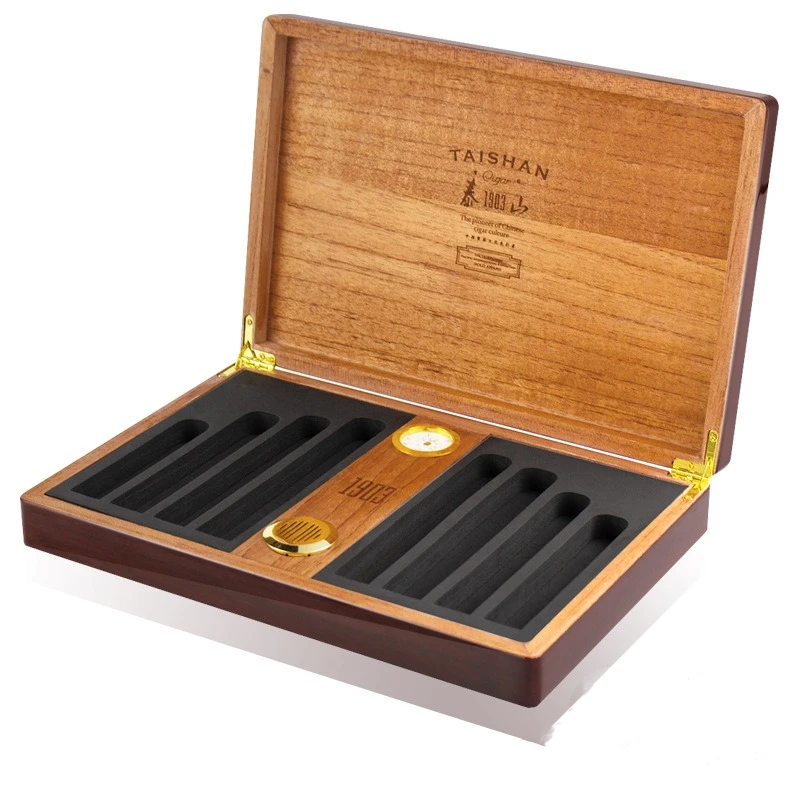
If you only place a humidifier at one end, the cigars near it may over-humidify while the far end dries out. In compact boxes, air movement is less natural. This is why smart placement is important. I prefer mounting the humidifier on the lid interior. When you open the box, it does not touch cigars. The moisture also drops evenly downwards.
Some designs use small hidden air grooves along the side panels. These grooves guide RH movement and balance faster. I have tested boxes with no air channels versus ones with small 1mm channels, and the difference in RH uniformity was clear within hours.
Tips for RH Balance in Lightweight Boxes
- Put the humidifier in the lid center for downward flow
- Add tiny air grooves or holes hidden in side walls
- Use multiple small units instead of one large unit
- Make sure humidifier is easy to refill without removing cigars
In a lightweight design, airflow matters more than storage volume. Proper channels prevent uneven humidity.
What tests (RH decay per 24h, drop/vibration, thermal cycling) prove “light but stable” performance?
Many buyers ask how to be sure a lighter box still works well. They want proof.
Tests like RH decay, vibration, and thermal cycling show if a lightweight box can protect cigars in real-world use.
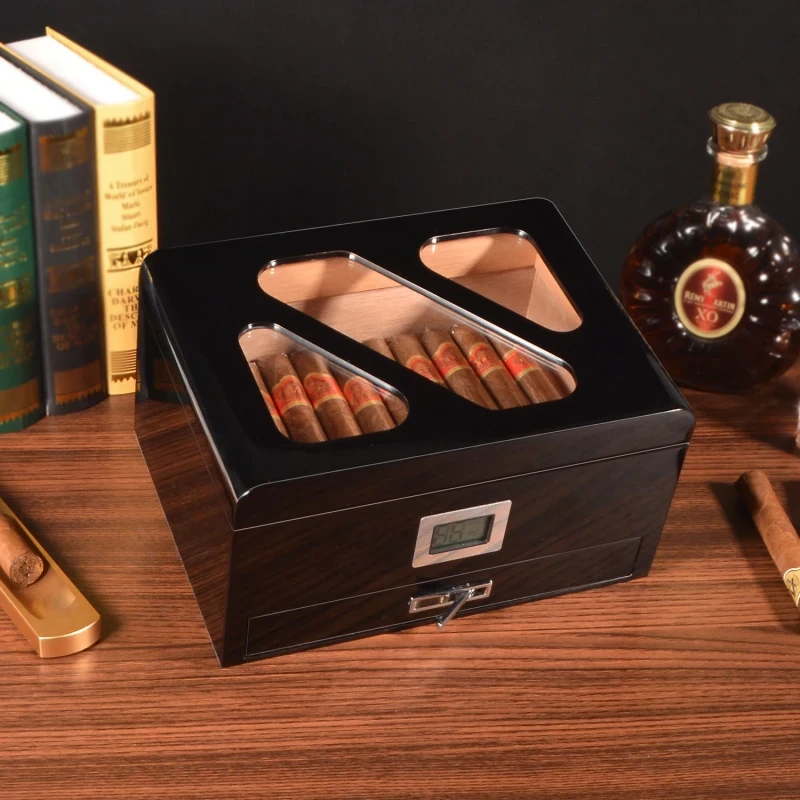
When I design new prototypes, I do at least three tests. First, the RH decay test: I put a digital hygrometer inside, charge it to 70% RH, and measure the loss per 24 hours. A good portable box loses less than 1% RH per day.
Second, drop and vibration testing: travel cigar boxes must survive bags and cars. We drop them from 1m and shake them for 30 minutes. If the seal holds, RH stability is proven.
Third, thermal cycling: I put the box in 15°C and then 35°C chambers, alternating every 12 hours. This simulates climate changes during travel. If the seal warps, the RH decay will show it.
Common Test Methods
| Prueba | What It Shows | Good Result |
|---|---|---|
| RH Decay (24h) | Seal tightness | <1% loss |
| Drop Test | Structural durability | No cracks, no leaks |
| Vibration | Travel resistance | Lid still flush |
| Thermal Cycling | Material stability | No warping |
These tests prove that light does not mean weak. A well-designed box can be light, portable, and still protective.
Conclusión
A cigar box can be light and still stable if the seal, materials, and design are right.
Marca: WoodoBox
Eslogan: Cajas de madera personalizadas, hechas a la perfección
Página web: www.woodobox.com
WhatsApp: +86 18359265311

 Español
  English
  Português
  Deutsch
  Français
  Italiano
  العربية