Zum Inhalt wechseln
Moisture is the silent enemy of wooden cigar boxes. Printing technology can either protect or weaken their surface.
UV-printed wood veneer is suitable for cigar boxes because it resists fading, enhances design, and adds a protective layer. Its moisture resistance depends on veneer thickness, substrate, and proper sealing.
With the right material choice and finishing, UV-printed veneer can deliver both luxury appearance and practical durability.
What makes UV printing on wood veneer different from traditional printing methods?
Traditional printing uses heat and solvents. UV printing uses light-cured inks that bond instantly.
UV printing on wood veneer is different because inks are cured by ultraviolet light, producing a hardened, scratch-resistant layer without heat or solvent absorption.
When I first tested UV printing on veneer, I noticed how the ink stayed on the surface instead of sinking into fibers. Traditional printing methods rely on absorption, which creates duller colors and weaker adhesion. UV curing hardens ink instantly. The result is sharp detail, vibrant colors, and strong resistance to rubbing.
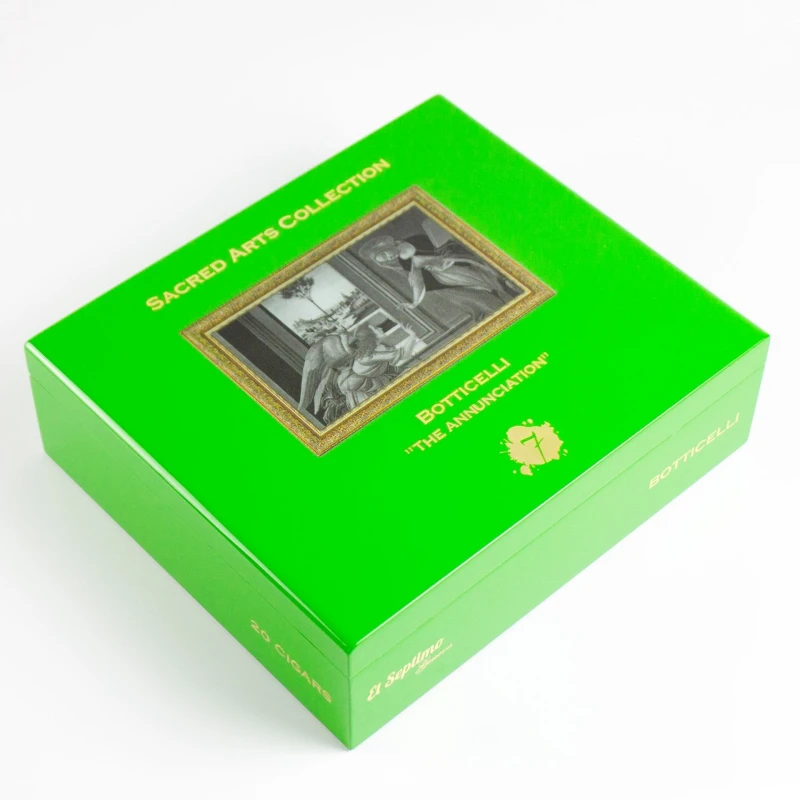
This technology also allows direct printing on irregular grain surfaces. The ink sits like a micro-coating, sealing part of the veneer’s pores. For brands, this means custom designs, logos, or patterns can be applied directly onto natural wood, blending luxury material with modern graphics.
Wesentliche Unterschiede
| Merkmal | Traditional Printing | UV-Druck |
|---|---|---|
| Ink absorption | Absorbs into wood fibers | Stays on surface |
| Color brightness | Lower, muted | High, vibrant |
| Drying method | Heat / solvent evaporation | UV light curing |
| Surface protection | Begrenzt | Scratch-resistant, semi-sealed |
| Environmental impact | More VOC emissions | Eco-friendlier, less waste |
This makes UV printing especially attractive for luxury cigar packaging, where appearance and durability must coexist.
How well does UV-printed veneer perform in humid environments compared to solid wood?
Solid wood moves with humidity, while veneer has structural support from its substrate.
UV-printed veneer performs better in humid environments than solid wood because the thin layer is stabilized by engineered cores, reducing warping and cracking.
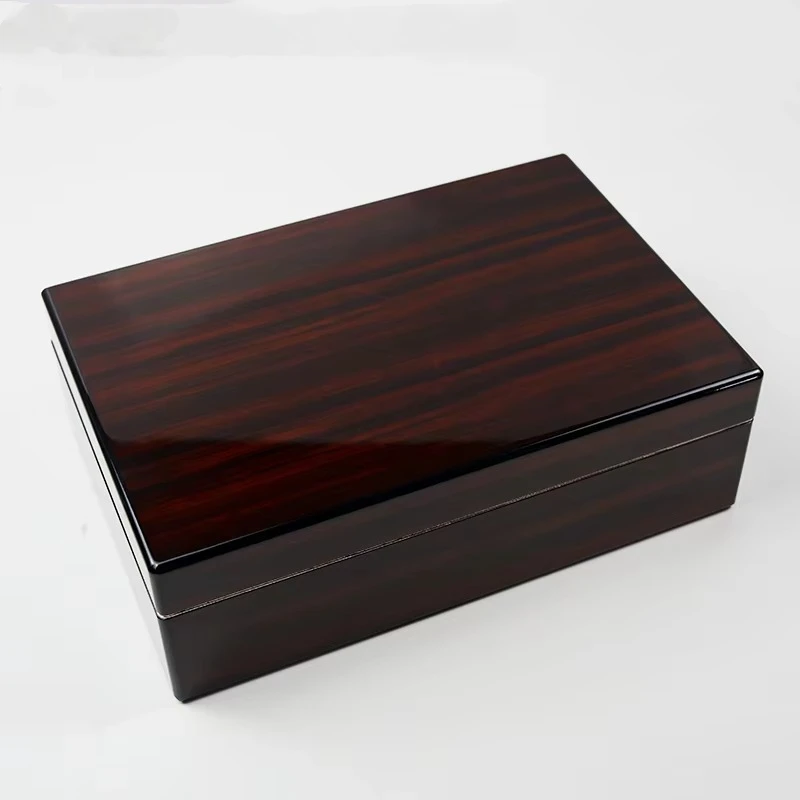
I often tell clients that solid wood breathes like a sponge, absorbing and releasing moisture unevenly. Veneer, however, is very thin. When glued to MDF or plywood cores, its movement is minimal. This means veneer panels remain flat, even in humid storage rooms where cigars are kept.
The UV-printed layer also adds partial sealing. It slows down moisture penetration through the veneer’s surface. Combined with balanced construction, veneer boxes withstand humidity swings far better than solid cedar lids.
Performance Comparison
| Eigentum | Massivholz | UV-Printed Veneer on MDF Core |
|---|---|---|
| Moisture Movement | High, uneven | Low, balanced |
| Risk of Warping | Hoch | Minimal |
| Cracking Potential | Frequent | Seltene |
| Humidity Tolerance | Mäßig | Hoch |
In my experience, UV-printed veneer cigar boxes survive international shipping better because they resist deformation caused by climate changes between countries.
Does the veneer thickness or substrate affect durability and moisture resistance?
Yes, both thickness and substrate play critical roles in stability.
Thicker veneer offers more texture but is slightly more vulnerable to movement, while engineered substrates like MDF or plywood provide strong moisture resistance and dimensional stability.
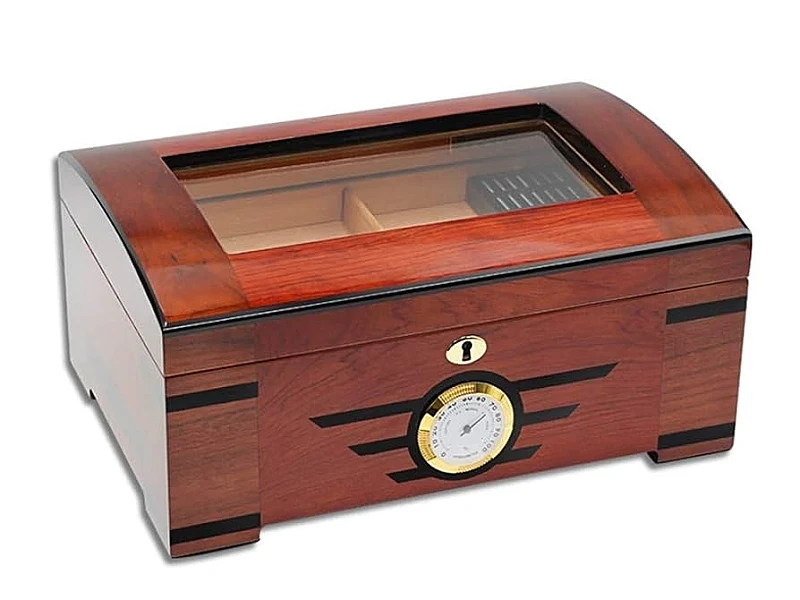
I have produced boxes with veneers as thin as 0.3 mm and as thick as 1 mm. Thinner veneers are almost entirely controlled by the substrate. They rarely warp but are more fragile during sanding. Thicker veneers show richer wood grain but carry more risk of minor surface cracking if not properly sealed.
The substrate is even more important. MDF has uniform density, making it stable in humidity changes. Plywood offers strength and better screw-holding power, but its layered structure sometimes shows through thin veneers. For cigar boxes, MDF is usually the best balance between cost, stability, and finish quality.
Veneer Thickness and Substrate Matrix
| Furnierdicke | Dauerhaftigkeit | Stabilität der Luftfeuchtigkeit | Best Application |
|---|---|---|---|
| 0.3–0.5 mm | Fragile | Very Stable | High-gloss luxury surfaces |
| 0,6-0,8 mm | Ausgewogene | Stabil | Standard veneer cigar boxes |
| 1,0+ mm | Stark | Mittel | Textured, rustic designs |
| Substrate Type | Profis | Nachteile |
|---|---|---|
| MDF | Smooth, stable, economical | Lower screw strength |
| Sperrholz | Strong, layered stability | Visible edges, harder to finish |
| Particle Board | Low cost, moderate stability | Poor strength, less luxury feel |
The correct combination of veneer thickness and substrate ensures long-term performance, even in humid cigar environments.
Can UV coating itself provide extra protection against humidity and cracking?
Yes, UV coating acts like a barrier layer.
UV coating provides extra protection by sealing surface pores, slowing moisture transfer, and reducing cracking risk, but it cannot fully replace proper construction and storage.
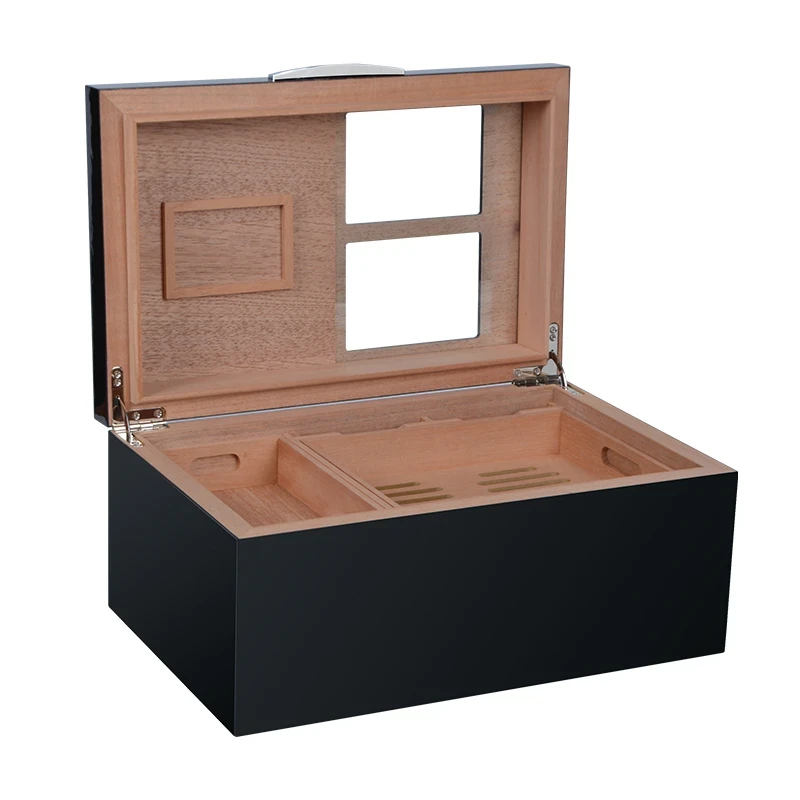
In my factory, I apply UV coatings not only for design but also as a functional layer. The cured ink forms a thin plastic-like surface that resists scratches and blocks part of the moisture exchange. This is especially useful for veneer, which is thin and normally porous.
However, UV coating alone is not enough. Edges, corners, and uncoated interiors still allow moisture penetration. Without full sealing, veneer can still lift or bubble if exposed to extreme humidity swings. That is why we often add an additional lacquer topcoat or clear UV protective layer on top of the printed design.
Protection Capabilities of UV Coating
- Scratch resistance: Strong surface hardness prevents dents.
- Moisture slowdown: Reduces but does not stop absorption.
- Color stability: Protects graphics from fading in light.
- Crack resistance: Minimizes surface stress cracks.
UV coatings are effective shields, but they work best when combined with good substrates and climate control.
What are the advantages and limitations of using UV-printed veneer for luxury cigar packaging?
UV-printed veneer gives design freedom and stability, but it also has constraints.
Advantages include vibrant designs, surface protection, and stability, while limitations are edge sealing issues and less natural “solid wood prestige.”
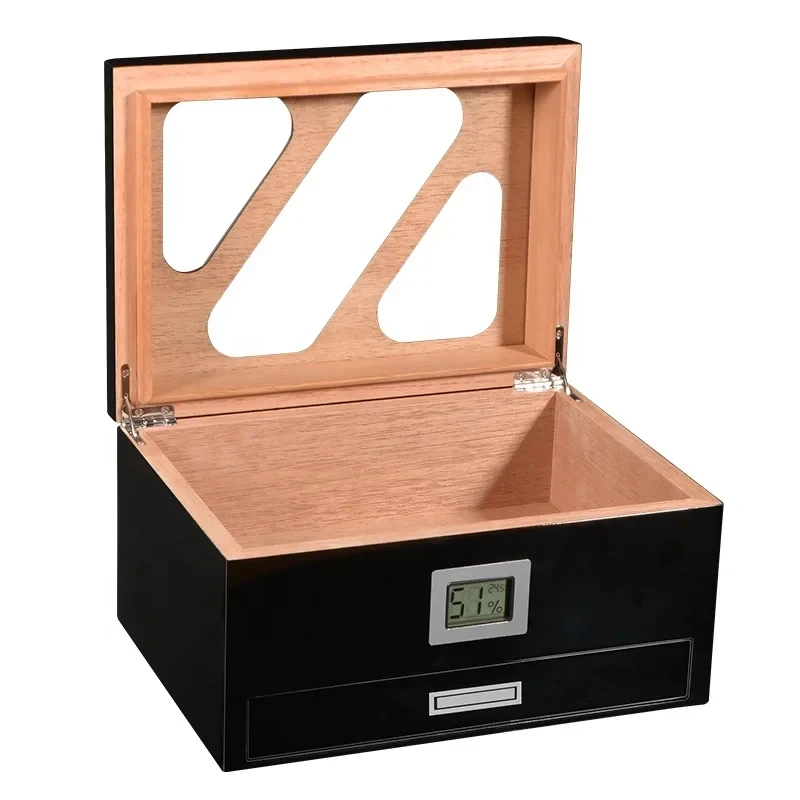
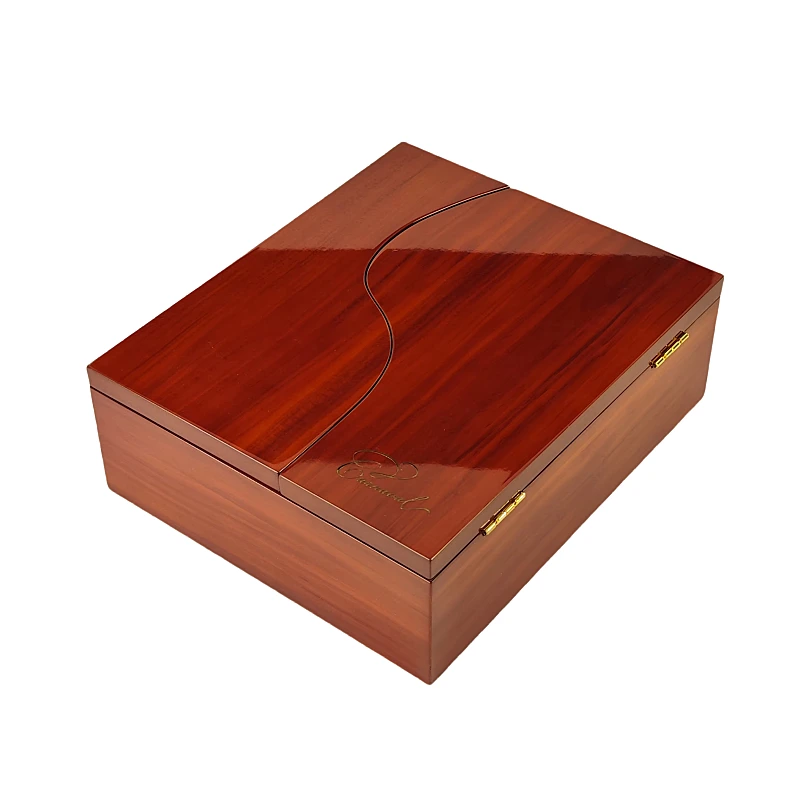
From my projects, clients often love the flexibility of UV printing. We can add branding, textures, or even metallic effects directly on veneer. This avoids paper labels or stickers that peel in humidity. The boxes look luxurious, modern, and durable.
But I also explain the limitations. The edges and corners are weak points. If not sealed properly, moisture can still enter. Another limitation is the perception of authenticity. Some cigar collectors value solid wood’s natural feel more than printed veneer, no matter how luxurious the finish looks.
Pros and Cons of UV-Printed Veneer
| Profis | Nachteile |
|---|---|
| High-quality print, vibrant colors | Less “authentic” than solid wood |
| Moisture-resistant with proper coating | Edges remain sensitive |
| Stable and durable with substrates | Higher cost than plain veneer |
| Customizable branding and patterns | Requires careful maintenance |
This balance makes UV-printed veneer ideal for luxury packaging that values branding and stability over “pure solid wood” appeal.
How can proper maintenance and storage extend the lifespan of UV-printed veneer cigar boxes?
Even the best design needs care to last.
Proper storage at stable humidity, careful cleaning, and avoiding sunlight can extend the lifespan of UV-printed veneer cigar boxes by many years.
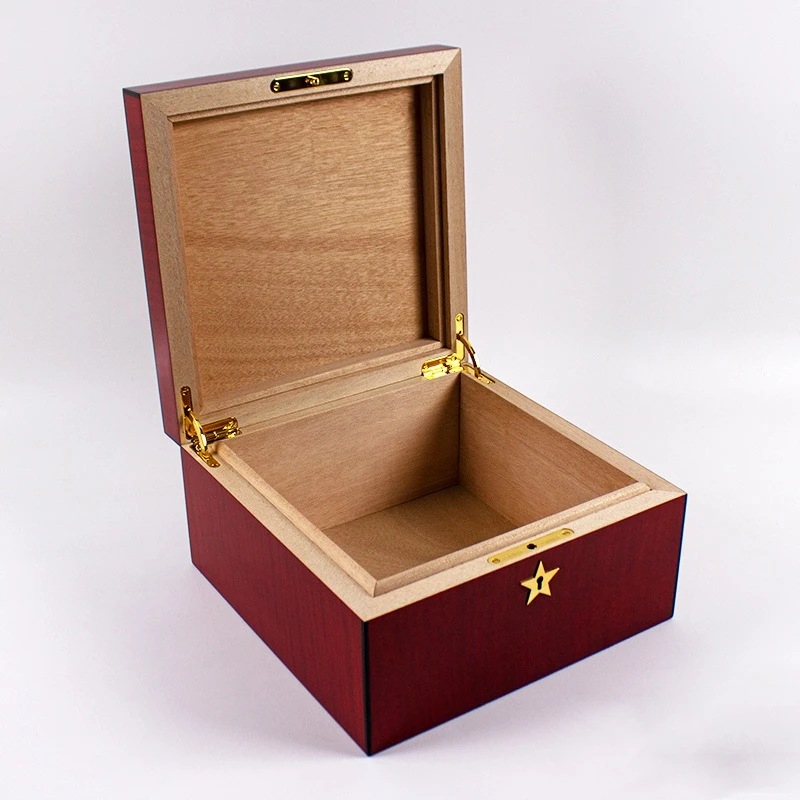
I always remind buyers that veneer boxes are strong, but they are not indestructible. Humid environments around cigars are challenging for any wood product. The key is stability. Sudden humidity changes are the real enemy.
Cigar boxes should be stored in rooms with consistent humidity around 65–70%. Direct sunlight should be avoided, as UV rays can damage both wood and printed surfaces. For cleaning, a soft dry cloth is enough. Harsh cleaners or water can weaken the veneer bond.
Maintenance Guidelines
- Keep humidity stable at 65–70%.
- Avoid direct sunlight and high heat.
- Wipe surfaces with a dry, soft cloth.
- Do not expose to water or alcohol cleaners.
- Store away from air vents or radiators.
I have seen UV-printed veneer boxes stay flawless for over 10 years when maintained this way. With proper care, they can protect cigars and preserve branding without losing their luxurious appeal.
Schlussfolgerung
UV-printed veneer cigar boxes combine beauty, stability, and branding potential. With proper substrates, coatings, and care, they outperform solid wood in humid environments.
Markenname: WoodoBox
Slogan: Maßgefertigte Holzkisten, handwerklich perfekt gefertigt
Website: www.woodobox.com
WhatsApp: +86 18359265311

 Deutsch
  English
  Español
  Português
  Français
  Italiano
  العربية