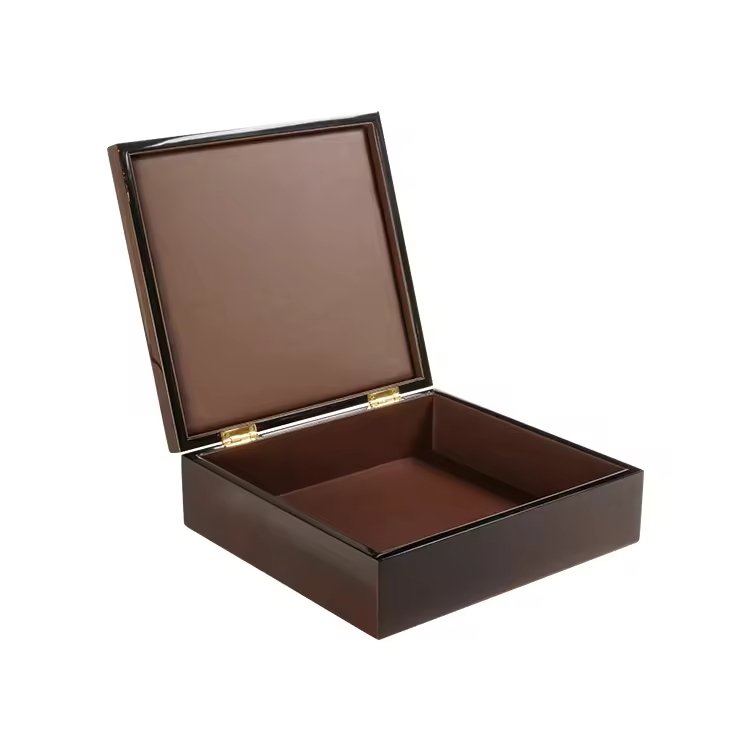
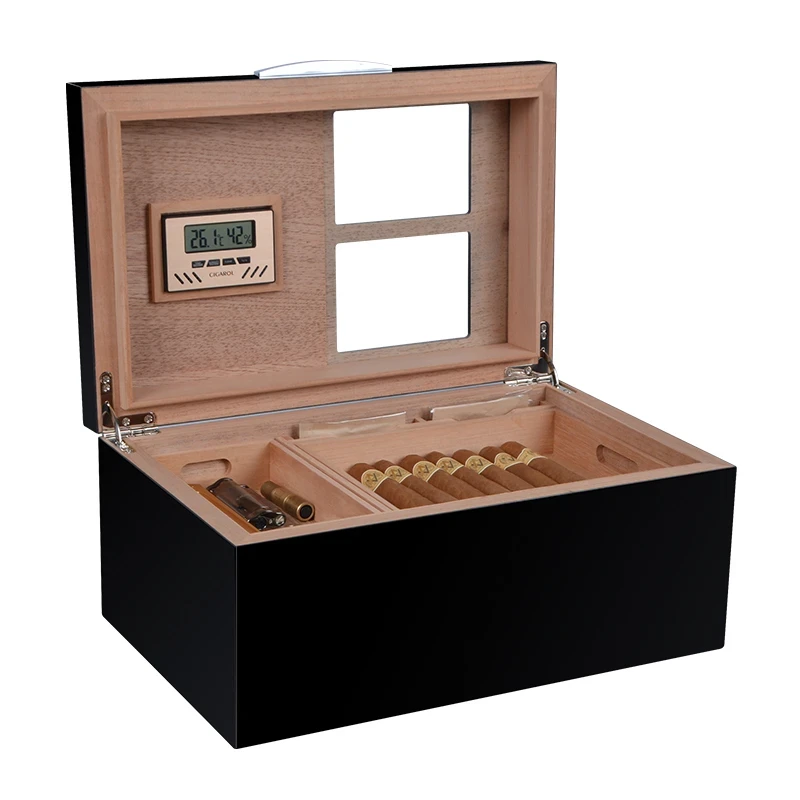
Adding a humidifier helps preserve cigars. But done poorly, it makes the box bulky, unbalanced, or unattractive.
The best way to integrate a humidifier is by embedding it invisibly in the lid, base, or wall, using smart mounting and airflow design that protects the box’s structure and elegance.
The goal is not just to install a humidifier—but to make it feel like it was part of the box from the beginning. Let’s explore how to achieve perfect function without sacrificing form.
Where should the humidifier sit (lid, base, or sidewall) to stay invisible yet effective?
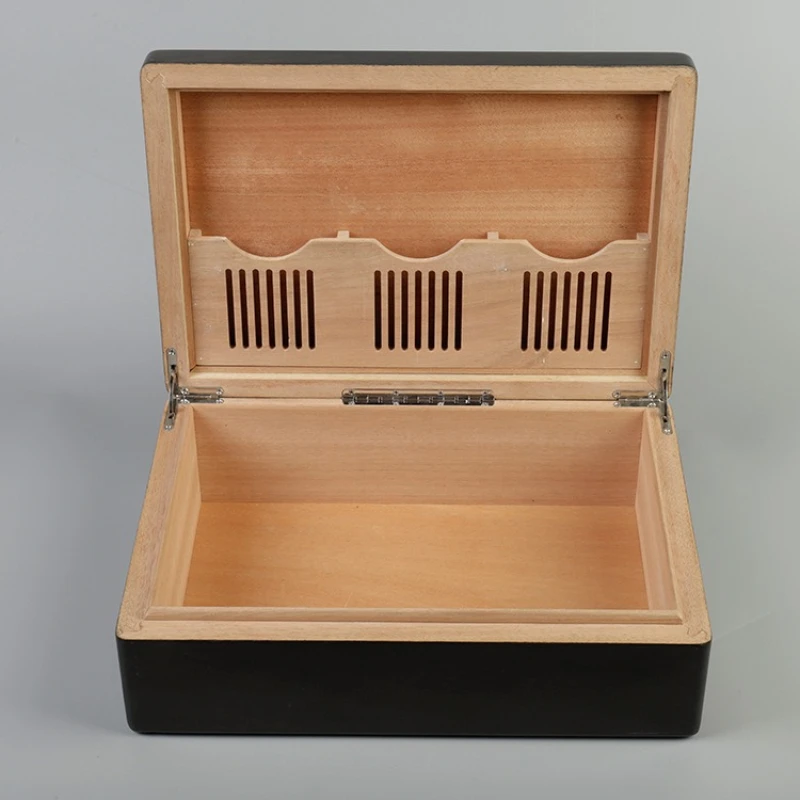
Most cigar box designs leave the humidifier as an afterthought—placed awkwardly or glued onto the inside wall.
The lid or sidewall is ideal for placing a humidifier module, where it stays hidden, balanced, and effective without taking up cigar space.
Placement is not just about visibility. It affects airflow, box balance, and even aging quality. Here's how different placements compare:
Placement Options Comparison:
| المنصب | Visibility | الفعالية | Design Impact | الملاحظات |
|---|---|---|---|---|
| Lid | Hidden | عالية | Requires hinge balance | Popular in high-end humidors |
| القاعدة | مرئي | معتدل | Adds box height | Easy to install, may cause wet spots |
| Sidewall | Semi-Hidden | عالية | Minimal intrusion | Great for magnet-mounted modules |
In our experience, lid-mounted units work best in display or luxury boxes, especially when paired with quadrant hinges. For travel or compact boxes, side-mounted humidifiers save space and can even be made completely flush.
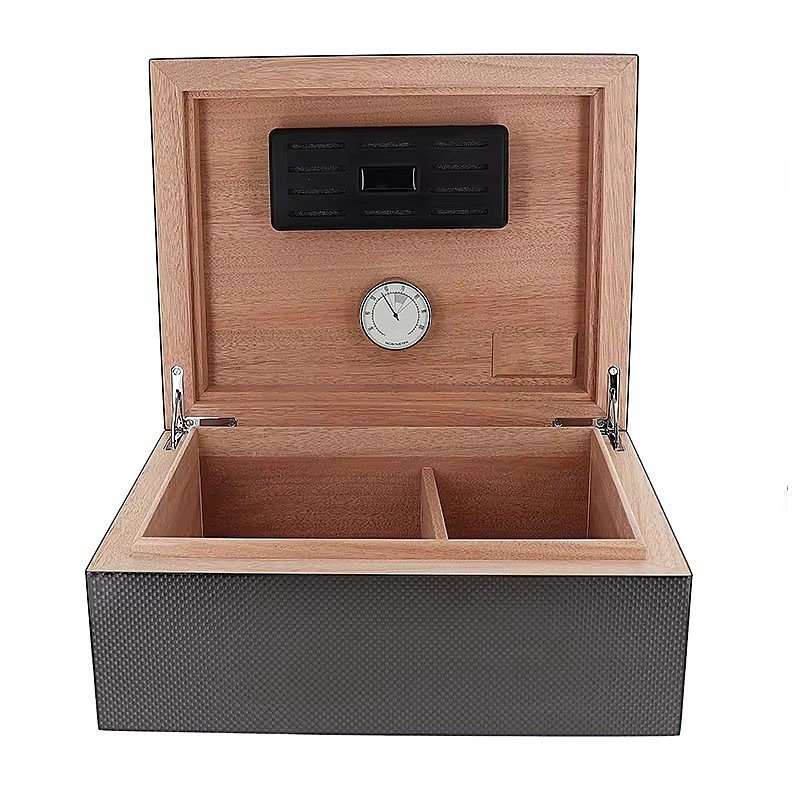
Many users avoid using humidifiers because they’re hard to refill or require tools to remove. That defeats the point of convenience.
Designing a magnetic or sliding access panel allows the user to service the humidifier easily—without affecting the box’s clean look.
In high-end boxes we build, we often hide a humidifier behind a veneered panel with invisible magnets. This keeps the design intact while allowing fingertip access.
Popular Hidden Compartment Concepts:
1. Magnetic Lid Inset
- Recessed into the lid’s underside
- Matches Spanish cedar grain
- Held by 2–4 neodymium magnets
- Easily pops out with a gentle pull
2. Sliding Cedar Panel
- Mounted with micro grooves
- Slides horizontally or vertically
- Blends into the box wall completely
3. Velvet-Faced Door
- Hidden behind a soft lining
- Push-to-open mechanism
- Often used in collector editions
No matter which method, the key is tool-free access that doesn’t stress the wood or reveal the mechanism. Most of our luxury clients prefer magnetic solutions because they’re silent, elegant, and durable.
Which mounting methods (brackets, magnets, or slots) secure the unit without stressing the wood joints?
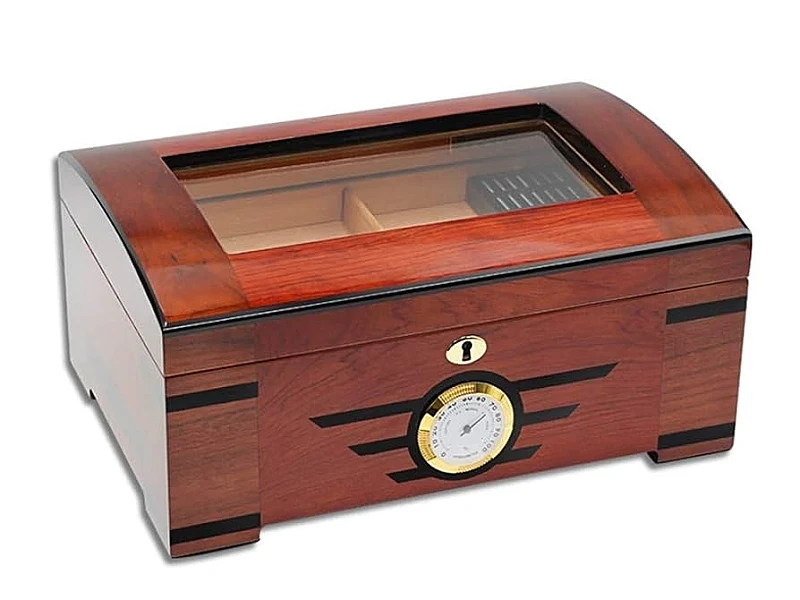
Humidity modules have weight. Improper mounting—especially with screws or glue—can damage thin cedar panels or cause warping over time.
Using embedded magnets, friction slots, or light-duty brackets is the safest way to mount a humidifier without harming the box structure.
Mounting Methods Overview:
| الطريقة | القوة | Wood Impact | Visibility | الملاحظات |
|---|---|---|---|---|
| Magnets (Neodymium) | متوسط | منخفضة | Invisible | Best for flush lid or wall installs |
| Friction Slots | منخفض-ميد | لا يوجد | Hidden | Ideal for custom cedar trays |
| Acrylic Brackets | عالية | Med | Semi-Visible | Better for heavy humidifiers |
| Adhesive Pads | منخفضة | منخفضة | مرئي | Not durable; only for budget builds |
We avoid metal screws unless the client insists on industrial-grade humidifiers. Most of our customers prefer minimalist interior looks. Magnet or slot-based methods allow us to keep the box clean, functional, and safe from wood splitting.
How do we guide airflow evenly to avoid “wet spots” while keeping the interior look clean?
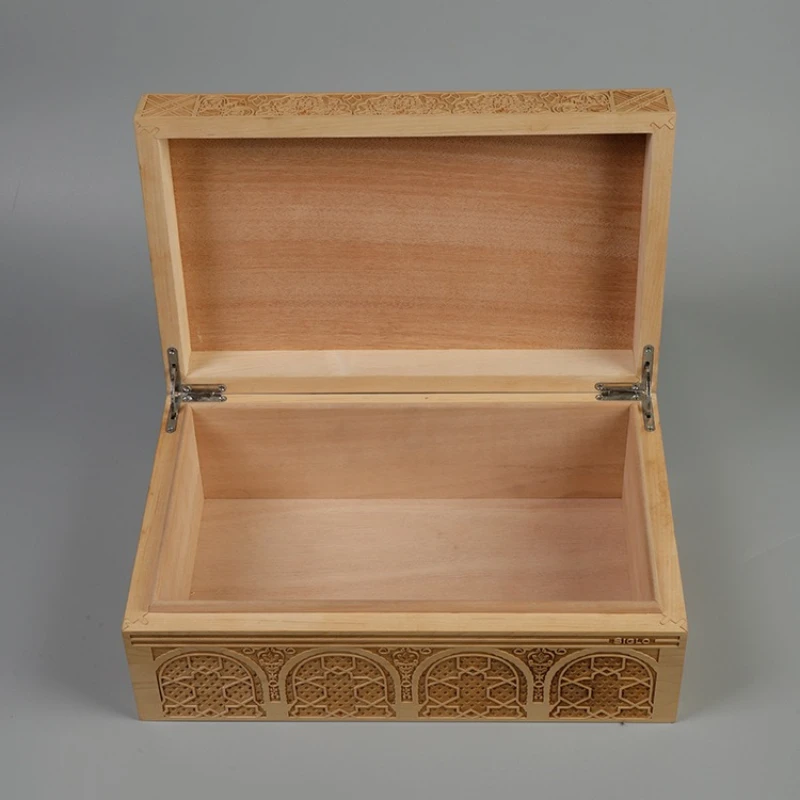
A humidifier that releases moisture in only one direction creates a “wet zone” where cigars absorb too much water.
Guided airflow design—using discreet spacing, perforated liners, or floating trays—spreads humidity evenly and prevents over-saturation.
We’ve run tests with and without airflow strategies. Without design control, cigars closest to the humidifier absorbed up to 12% more moisture.
Solutions for Balanced Airflow:
1. Floating Spanish Cedar Tray
- Sits 2–4mm above humidifier
- Allows moisture to rise evenly
- Prevents direct contact with cigars
2. Micro Channel Cutouts
- Routed into the cedar lining
- Channels moisture through air gaps
- Invisible to the casual viewer
3. Ventilation Grooves in Bottom Panel
- Lined with thin slots (1–2mm)
- Encourages upward air movement
- Compatible with base-placed humidifiers
4. Dual-Zone Humidifiers
- Split into two compartments
- Mounted on both lid and wall
- Maintains even RH distribution
We also use invisible bumpers—small 1mm pads under the tray or humidifier—that lift them just enough to allow passive airflow. These make a surprising difference without affecting the box’s elegance.
What materials and finishes prevent corrosion, leaks, and odor while matching Spanish cedar?
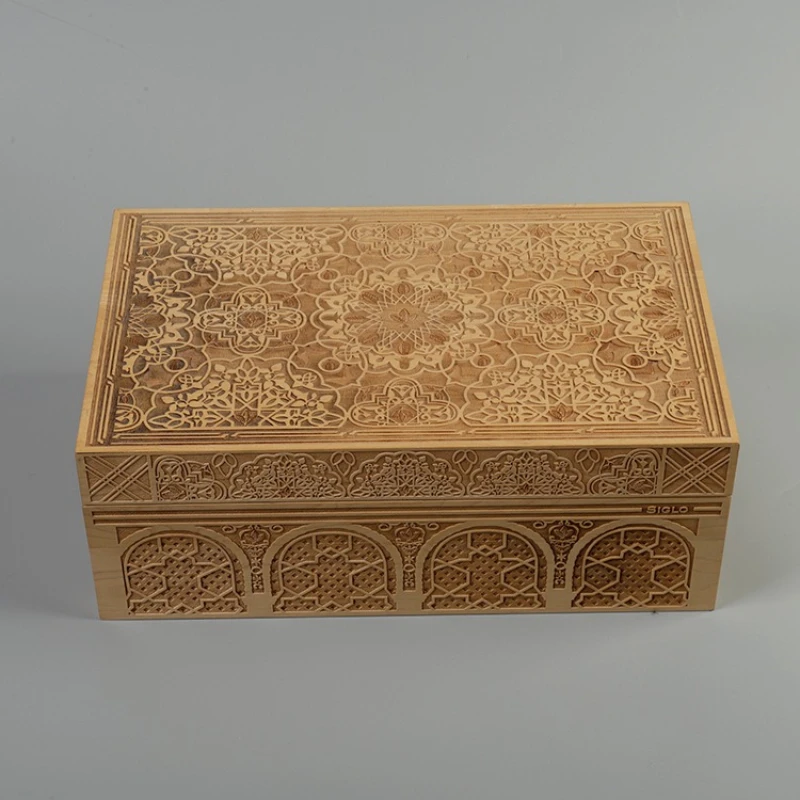
Plastic humidifiers can leak. Metal parts may rust. And some finishes emit smells that ruin cigar aroma.
Use food-safe ABS plastic, acrylic, or sealed aluminum for humidifier housings. Match finish tones to Spanish cedar for visual harmony.
Choosing the right material is critical—not just for performance, but for user trust. We test every humidifier accessory for:
- Leak resistance
- Odor emissions under humidity
- Surface corrosion after 60-day cycles
Best Material Choices:
| المواد | الإيجابيات | الملاحظات |
|---|---|---|
| أكريليك | Durable, odorless, smooth look | Easy to color match or frost |
| ABS Plastic | Lightweight, cheap, odor-free | Must be BPA-free for cigar use |
| Anodized Aluminum | Strong, corrosion-resistant | Works well for magnetic doors |
| Stainless Steel | Strong but heavy | Overkill for non-commercial boxes |
| Cedar Veneer | Perfect visual match | Used for hiding modules visually |
We avoid rubber seals unless they’re medical-grade. They often smell in high humidity and ruin the aging experience. Instead, we seal joints with foam or velvet edge tape, which both looks elegant and absorbs micro-leaks.
How do we manage weight balance, hinge loads, and wood expansion so the lid still closes perfectly?
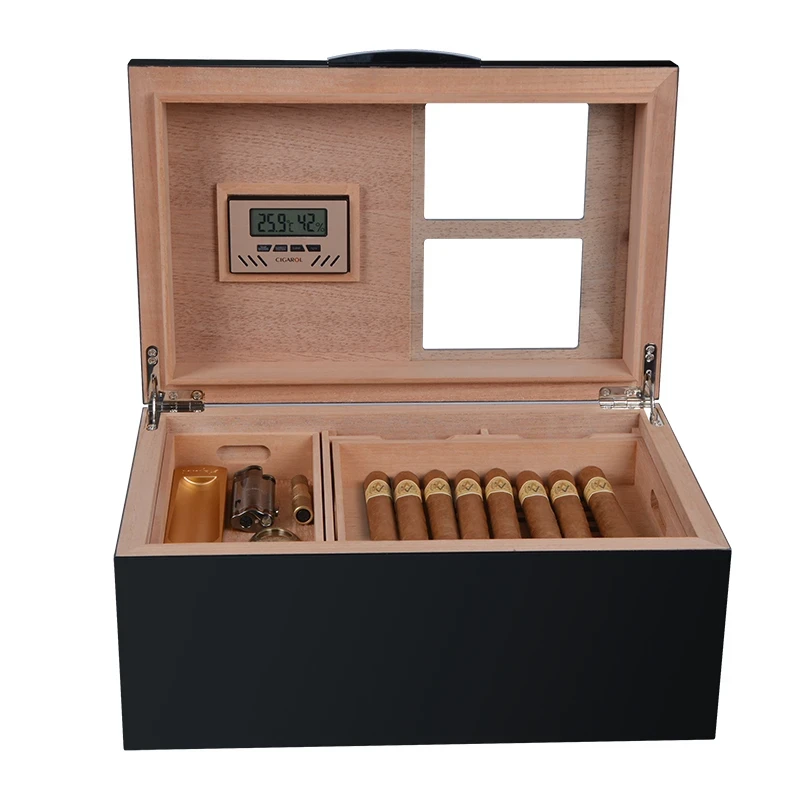
Adding a humidifier to the lid increases weight and shifts the center of gravity. Poor design can cause lids to slam shut—or stay slightly open.
Reinforce hinges, use quadrant stops, and choose balanced humidifier weights to maintain smooth lid operation under load.
This is often overlooked. When you add a 100g humidifier to a 5mm lid, the torque on the hinges increases significantly. Over time, this causes alignment problems or hinge failure.
Key Design Adjustments:
| المكوّن | Adjustment | الغرض |
|---|---|---|
| Quadrant Hinges | Use stronger brass or SS | Supports heavier lid weight |
| Lid Thickness | Increase by 1–2mm if needed | Adds structural strength |
| Balance Check | Simulate load before assembly | Prevents slamming or lift-off |
| Expansion Gap | Add 0.3mm to lid groove | Allows for seasonal wood movement |
At WoodoBox, we prototype all heavy-lid designs using dummy weights. If the lid doesn’t close flush with a 2-finger press, we modify the hinge ratio or lid interior. This ensures that even with aging and swelling, the box keeps its elegance and function.
الخاتمة
A humidifier shouldn’t look like an add-on. With smart design, it becomes invisible, functional, and perfectly balanced—just like the cigars it protects.
اسم العلامة التجارية: وودوبوكس
الشعار: صناديق خشبية مصممة حسب الطلب، مصنوعة بإتقان
الموقع الإلكتروني: www.woodobox.com
واتساب: +86 18359265311




 العربية
  English
  Español
  Português
  Deutsch
  Français
  Italiano